
Amaurote is a strange, isometric action game, developed by Binary Design and published by Mastertronic in 1987. It first appeared on the ZX Spectrum and was later ported to other systems.
Tag Archives: isometric

General Chaos, Megadrive/Genesis
General Chaos is a memorable multiplayer strategy/action game, developed by Game Refuge Inc. and published for the Sega Megadrive by Electronic Arts in 1993.
The game is basically a real-time, single-screen tactical action game, with two teams of soldiers fighting it out for overall domination. You can either take on the computer AI, or another person, and must capture your opponent’s base to win the game.

Raffles, Atari ST
Known as Inside Outing on 8-bit home computers, and Raffles on 16-bit computers, this excellent isometric platform game translates very well to the Atari ST.

Inside Outing, ZX Spectrum
The ZX Spectrum conversion of Michael St. Aubyn‘s Inside Outing was programmed by Pamela Roberts with graphics by Mike Smith.
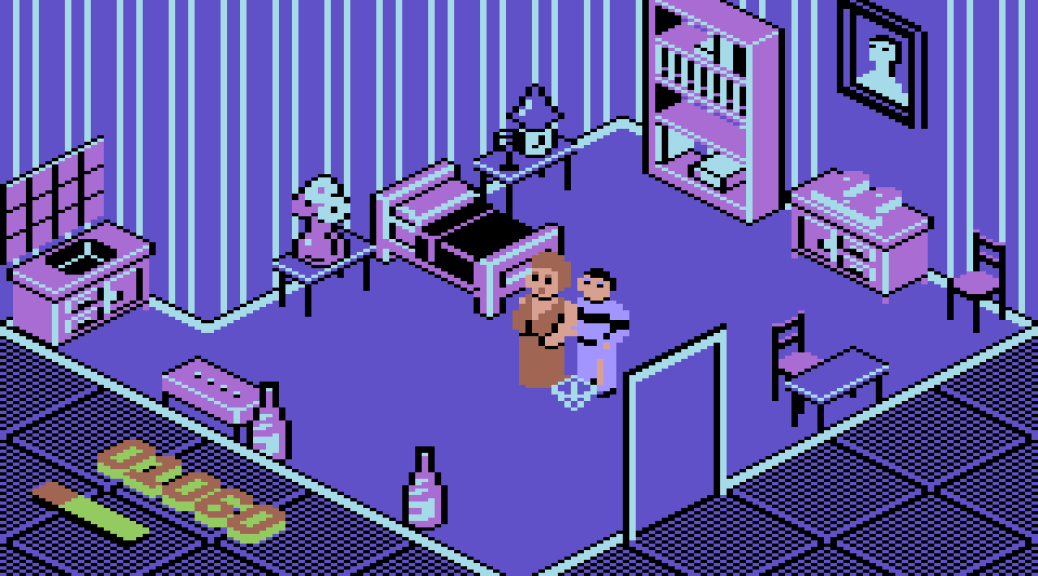
Inside Outing, Commodore 64
The Commodore 64 version of Inside Outing features graphics by the game’s original designer – Michael St. Aubyn – although the coding itself was done by Timedata/Pamela Roberts.

Inside Outing, Amstrad CPC
Inside Outing is an interesting isometric action/adventure game initially published by The Edge in 1988. It was designed by Michael St. Aubyn and converted to a number of different platforms, with this Amstrad version being the original.

Spindizzy Worlds, Super Nintendo
Paul Shirley‘s superb isometric puzzle/action game, Spindizzy Worlds, translates well to the Super Nintendo, even though this conversion did not have his blessing.

Spindizzy, Apple II
I’m not sure if it’s the game or the emulator – or something else – but controlling the spinning top-like device, GERALD, in the Apple II version of Spindizzy is like trying to navigate Cape Horn in a rowing boat in the depths of winter. It’s suicidal…

Spindizzy, Commodore 64
In my mind: one of the best 8-bit games ever made. Spindizzy is part Marble Madness tribute; part completely original game, with you controlling a spinning top-like device, called GERALD, exploring a large, isometric game world that is suspended in space.

Fairlight II, ZX Spectrum
Or, to give the game its full title: Fairlight II: A Trail of Darkness. First released in 1986 – one year after the original Fairlight – and again published by The Edge. It was definitely much more substantial than the first game.

