Cinemaware‘s Rocket Ranger was first released in 1988 to much critical acclaim.
The game follows the format of most Cinemaware games, with cut scenes interspersed between planning screens and action screens.
Cinemaware‘s Rocket Ranger was first released in 1988 to much critical acclaim.
The game follows the format of most Cinemaware games, with cut scenes interspersed between planning screens and action screens.
The Amstrad CPC version of Combat Lynx looks a bit like the BBC version (ie. chunky), but is thankfully more colourful – and more playable.
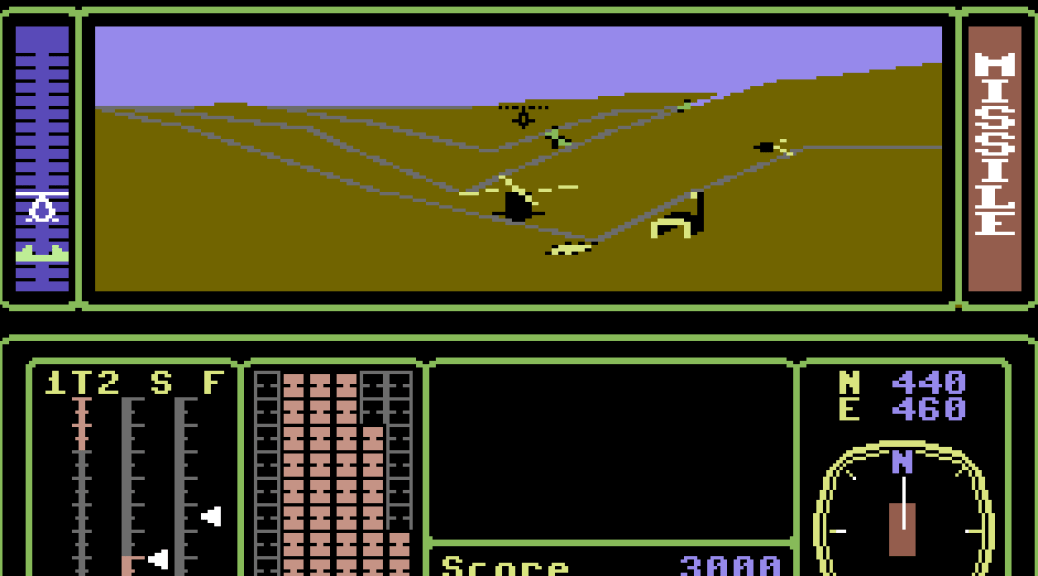
Combat Lynx on the BBC Micro is a bit gaudy, compared to other versions, and that’s probably down to the fact that – in this screen mode – the BBC can only display four colours.
Ron Jeff‘s Commodore 64 conversion of Mike Richardson‘s ZX Spectrum helicopter sim is actually pretty good.
Mike Richardson‘s Combat Lynx is a very effective helicopter combat sim, first released for the Sinclair ZX Spectrum by Durell Software in 1984.
Combat was designed by Atari, Inc. and first released for the Atari 2600 in 1977 and was the pack-in game for the system until 1982 (meaning: you got a Combat cartridge with the console, upon purchase).
It was one of the first home video games I ever played (probably the same for millions of others) and it enthralled me. Yes, Combat is very simple by today’s standards, but in 1977 it was a revelation and was much cloned by other developers.
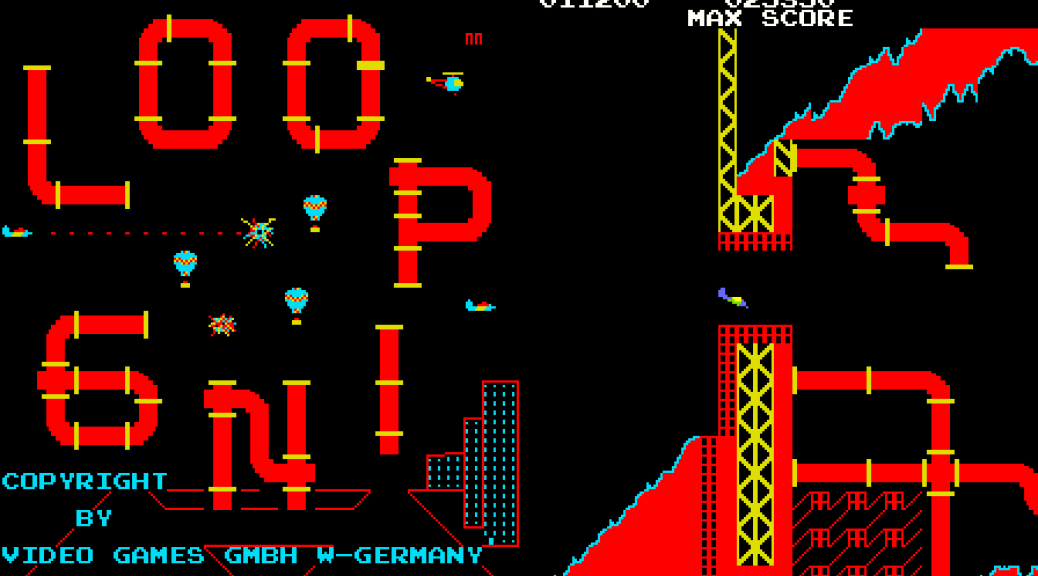
Looping is an old arcade game first released in 1982 by Venture Line.
In it you fly a plane across a horizontally-scrolling cityscape, doing loop-the-loops and trying your hardest not to hit the buildings.
H.A.T.E. is a pretty good conversion of a well-known ZX Spectrum shoot ’em up. It was published by Gremlin Graphics in 1989.
H.A.T.E. is subtitled “Hostile All-Terrain Encounter“, which it is, being a loose sequel to Vortex Software‘s classic Highway Encounter (H.A.T.E. was made by the same guy and uses the same viewpoint).
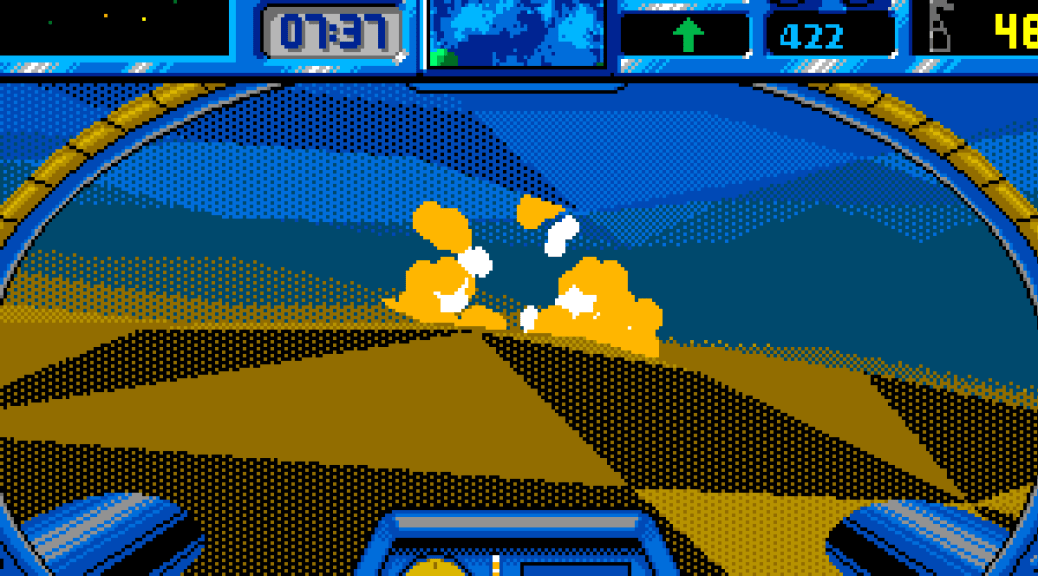
Flames of Freedom is the 1991 sequel to Midwinter – a sprawling, open-ended action/strategy game created by Maelstrom Games.
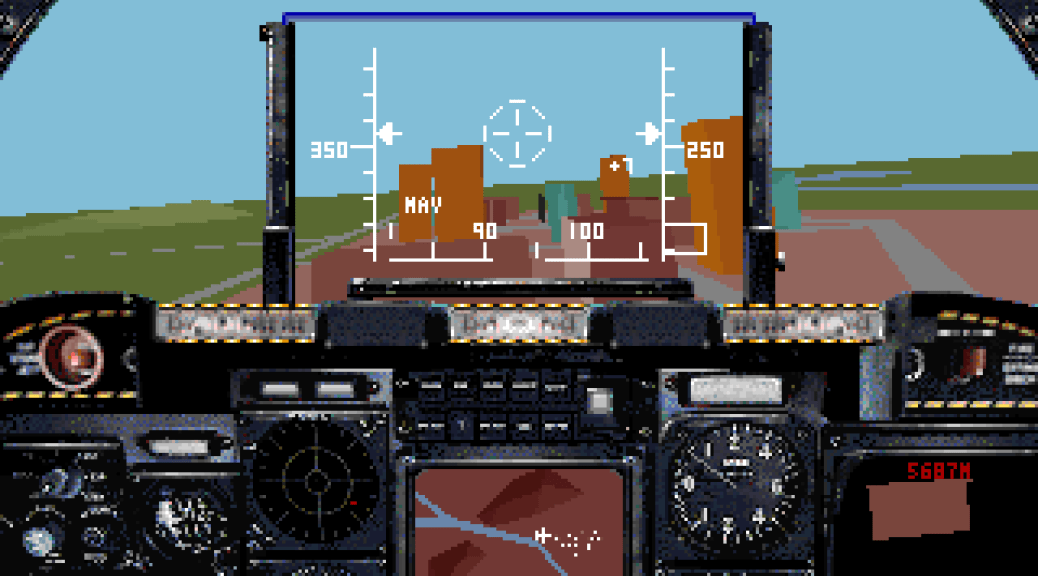
Dynamix‘s 1989 combat flight sim, A-10 Tank Killer, is fast and fluid on the PC, making it one of the first serious combat flight sims to offer more than 20 frames a second to games-players. In the early days of combat flight sims: the games were battling against weaker machine specs and lower CPU cycles. When 386 and 486 type PCs entered the market (in 1989), and VGA graphics cards became affordable, only then did the genre finally have the power to be “fast” and “fluid”.