
The ZX Spectrum version of Argonaut‘s classic Starglider is actually surprisingly good. Or, rather: the 128K version is very good (the 48K version plays well enough, but it lacks the digitised speech and other enhancements, so is a little plain). And the main reason Starglider on the Speccy is respectable, is because it was converted by Realtime Games Software, who were pioneers in the field of Spectrum-based 3D games, having created the legendary Starstrike, Starstrike II and Carrier Command (among others).
Tag Archives: David Lowe
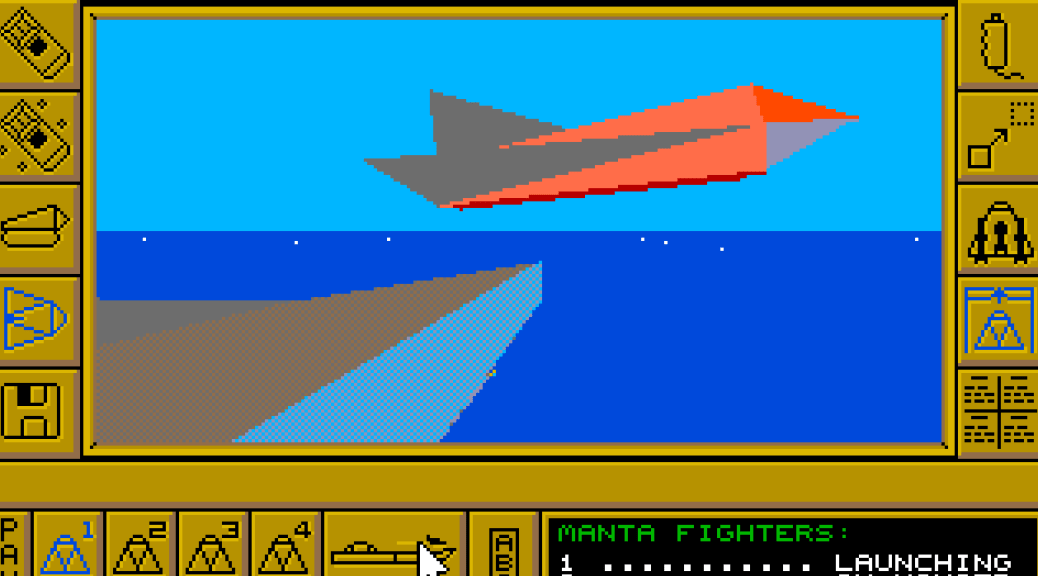
Carrier Command, Amiga
Realtime Software‘s classic Carrier Command is an early real-time strategy game that first came out for the Amiga and Atari ST in 1988 through Rainbird. In it you control a futuristic aircraft carrier battling for domination of a group of islands with an AI-controlled enemy carrier.

Carrier Command, ZX Spectrum
The ZX Spectrum conversion of Realtime Software‘s classic Carrier Command is arguably even better than the 16-bit originals. Mostly because it’s been tweaked a little to accommodate it on the humble Speccy, and as a result it plays really well as a strategy game, with extra action elements. Carrier Command on the Spectrum is for 128K machines only and was first published by Rainbird in 1989.
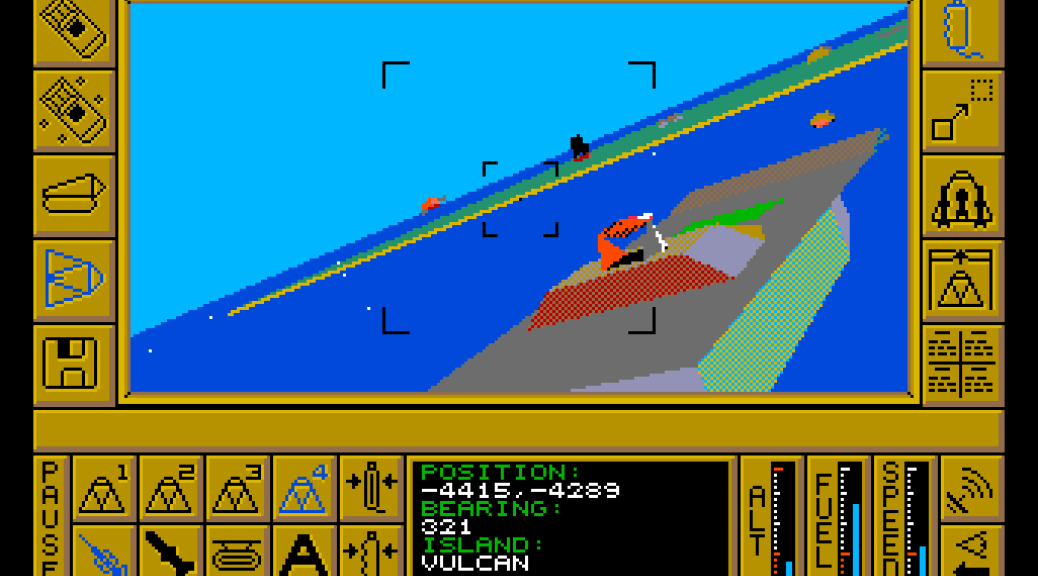
Carrier Command, Atari ST
Realtime Games‘ 1988 hit, Carrier Command, is a compelling mixture of 3D simulation and real-time strategy.
In it you take control of a futuristic, robotic aircraft carrier and must work your way through an island archipelago, taking control of each island and competing against a rival carrier.

Cybermorph, Atari Jaguar
Cybermorph: one of the first reasonably impressive releases on the much maligned Atari Jaguar. That said: it’s a very simple ‘fetch’ game with light shoot ’em up elements, and – apart from some impressively coloured graphics – there really isn’t much to it.

