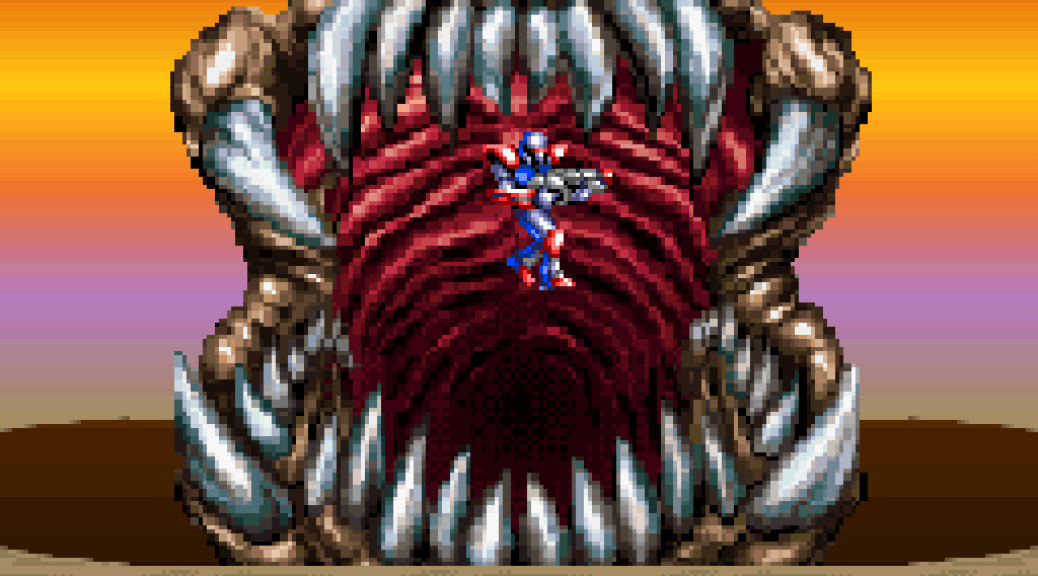
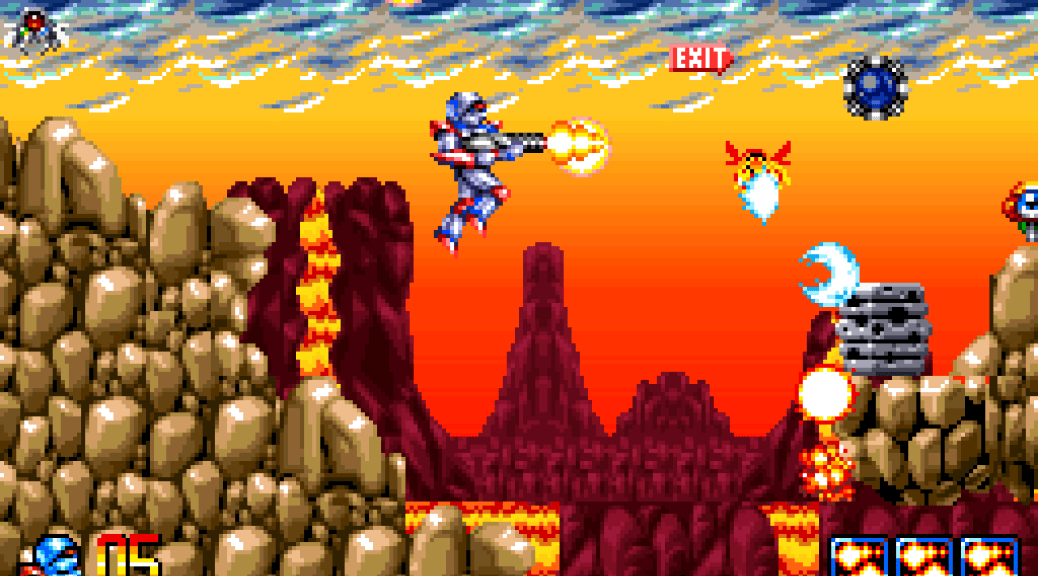
This sequel to Super Turrican was again created by German developer Factor 5 and was published by Ocean Software for the Super Nintendo in 1995.
Category Archives: Super Nintendo
Super Turrican, Super Nintendo
Super Turrican is an enhanced conversion of the original Turrican, created by German developer Factor 5 and published by Seika/Hudson Soft in 1993.
Emerald Dragon, Super Nintendo
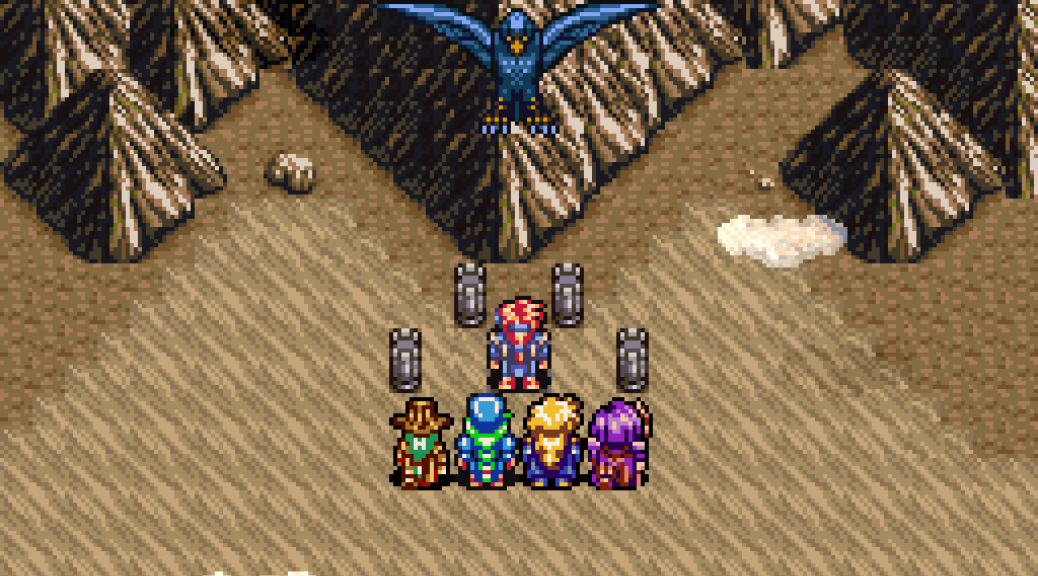
Emerald Dragon is a Japan-only RPG that was developed by Alfa System and published by MediaWorks for the Super Nintendo in 1995. It was given an English fan translation (by Translation Corporation) in 2014, which is great because it is an excellent game!
Out to Lunch, Super Nintendo
Or, to give the game its full title: Pierre le Chef is… Out To Lunch. This side-scrolling platform game is all about a French chef trying to collect ingredients for his dishes by travelling to a variety of different countries to catch them.
The 1993 Super Nintendo version is the original, with the Amiga and CD32 ports coming later, in 1994. A Game Boy version was also released in 1993.
Ghoul Patrol, Super Nintendo
Ghoul Patrol is the 1994 sequel to Zombies Ate My Neighbors and it features gameplay and graphics very similar to its predecessor, which is no bad thing on the face of it, considering that Zombies Ate My Neighbors is a fun game.
Ganbare Goemon Kirakira Dōchū: Boku ga Dancer ni Natta Wake, Super Nintendo
Also known (in English) as: “Go for it! Goemon: The Twinkling Journey – The Reason I Became a Dancer“, this fourth instalment of the much-loved Goemon [Super Nintendo] series is about as crazy, challenging and fun as a video game can be.
Many feel that this final Goemon game on the Super Nintendo is the best in the series, so it’s great that it’s finally been given an (unofficial) English translation. The game follows the same pattern as previously, with isometric exploration sections, interspersed with side-scrolling platform/action sections.
Continue reading Ganbare Goemon Kirakira Dōchū: Boku ga Dancer ni Natta Wake, Super Nintendo
Kyuuyaku Megami Tensei, Super Nintendo
Kyuuyaku Megami Tensei (aka Megami Tensei: The Old Testament), is an enhanced remake of the first two Megami Tensei games that were originally released on the Nintendo Famicom. It was published in Japan for the Super Famicom in 1995.
Like most of the early Megami Tensei games these two titles weren’t released in the West due to them having controversial content based on religious and occult themes. Thankfully, though, they were liked enough by gamers to be given fan translations into English, and this SNES re-release was first fan-translated in 2014. It has also been fan translated into Spanish.
Shin Megami Tensei If…, Super Nintendo
Shin Megami Tensei If… is a spin-off from the main Shin Megami Tensei series that is smaller and more confined than previous games. It was developed and published by Atlus in 1994.
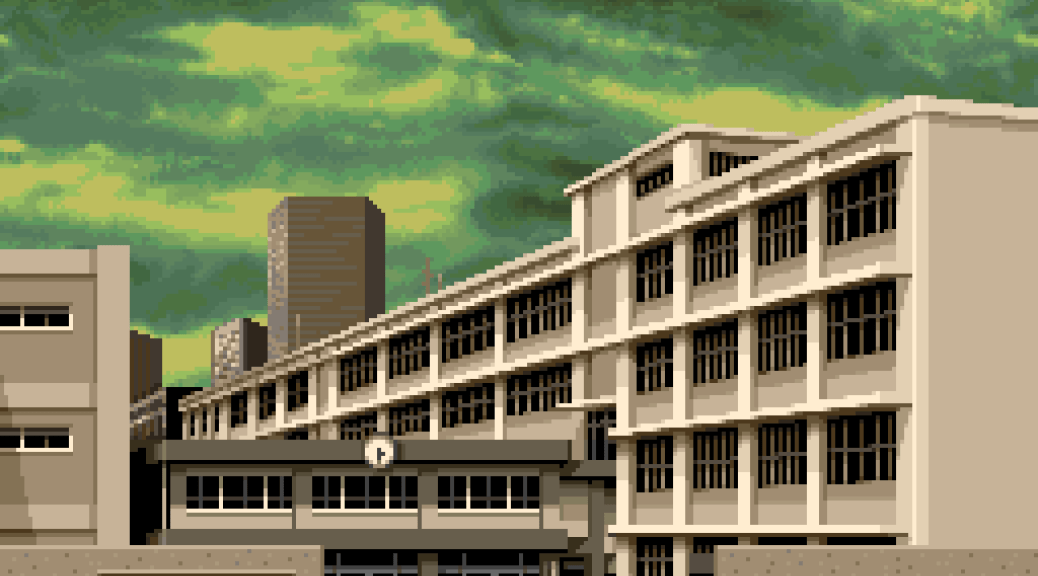
This time the story is set in a school where a bullied pupil tries to summon demons in the gym, to deal with his harassers, only to wind-up being possessed by them and threatening to destroy the world. You play a group of schoolkids who team-up to try to stop him.
Shin Megami Tensei II, Super Nintendo
Shin Megami Tensei II is the direct sequel to Shin Megami Tensei and was first published in Japan in 1994 by Atlus.
While the basic gameplay is essentially the same as before, with tile-based movement and first-person combat sections, overhead city map sections, and magic, occult and religious themes, the developers deliberately chose not to connect this sequel directly to its predecessor, so story-wise it is somewhat different, being set in the far-flung future.
Shin Megami Tensei, Super Nintendo
This cult Japanese Role Playing Game was originally released for the Super Nintendo in 1992 in Japan. It was developed by Atlus and is the third game in the Megami Tensei series, and the first in the central Shin Megami Tensei series.
The game mixes elements of philosophy, occultism, science fiction, religion, and role-playing in a somewhat unique way. It remained untranslated into English for a decade, because of its controversial content and Nintendo‘s strict policy guidelines. It wasn’t until 2002, and an unofficial fan translation patch by team Aeon Genesis, that the original SNES release received an English translation. An official English translation was eventually released on iOS in 2014 by Atlus.