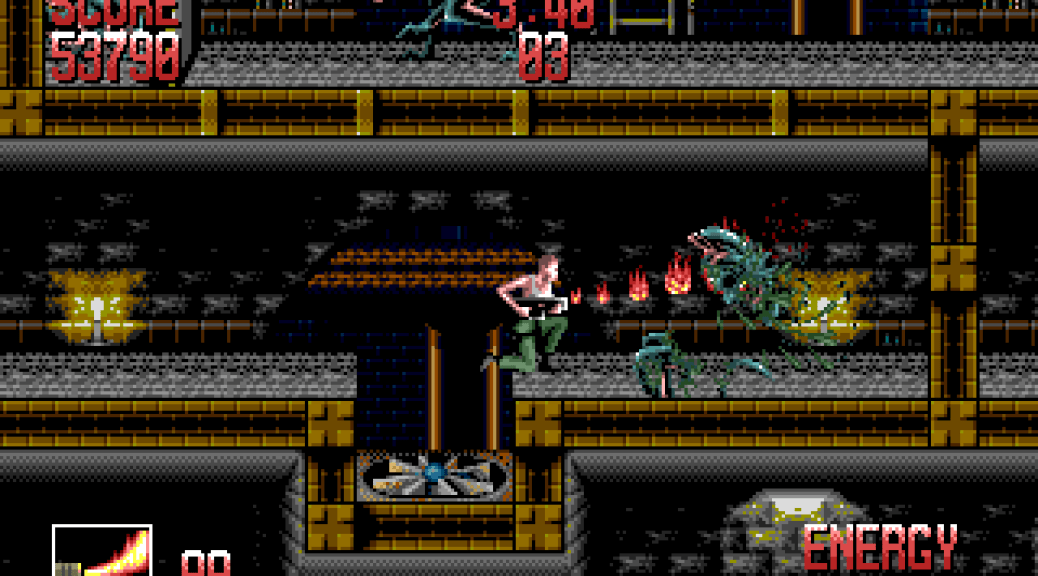
Probe Software developed this side-scrolling version of Alien 3 for Acclaim in 1992.
It is a run-and-gun platform game with you playing a bald Ripley trying to rescue cocooned prisoners while fending off waves of attacking aliens.
Probe Software developed this side-scrolling version of Alien 3 for Acclaim in 1992.
It is a run-and-gun platform game with you playing a bald Ripley trying to rescue cocooned prisoners while fending off waves of attacking aliens.
Jackie Chan himself was involved in the making of this Canadian PlayStation game, and not just in terms of lending his voice talents.
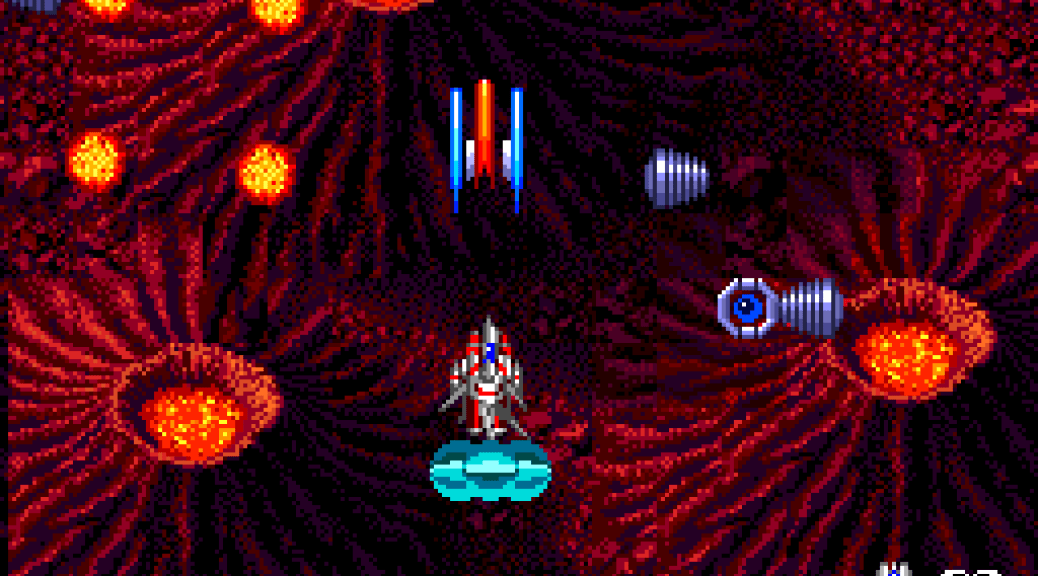
This 1992 sequel to the arcade classic Terra Cresta is a PC Engine exclusive – it did not appear in arcades first.
It’s more of a remake than a sequel, but is incredibly varied and a more than worthy successor to Terra Cresta. As far as mainstream ‘Bullet Hell’ shooters go there are few better.
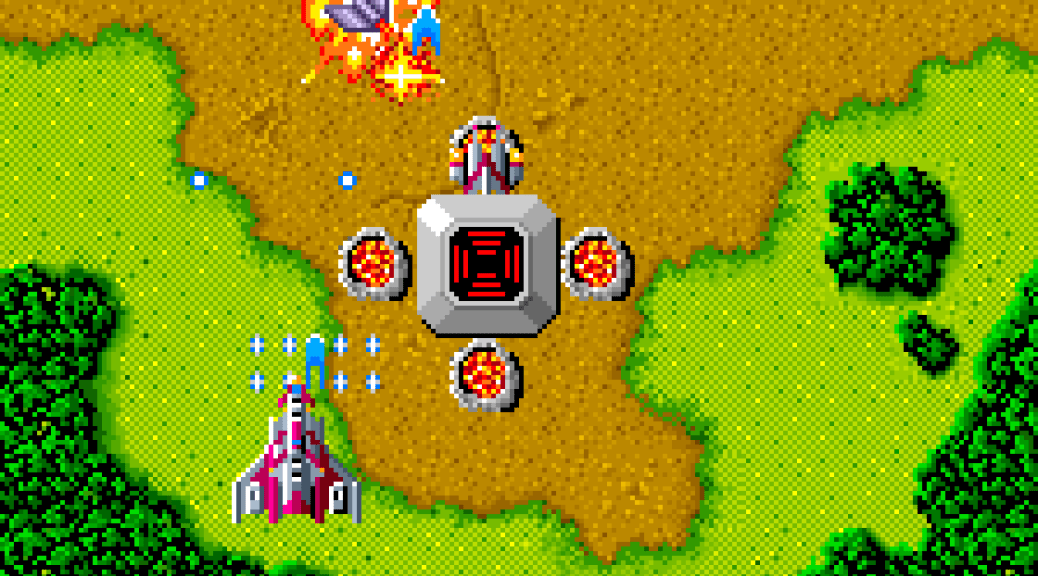
Terra Cresta is the sequel to the classic Moon Cresta and is a beautifully-made, vertically-scrolling shooter with progressive weapons build-up, and challenging ‘Bullet Hell’ action.
It was developed by Nichibutsu and released into arcades in 1985.
Looking Glass Technologies are probably best known for their Ultima Underworld series of games, but this 1996 tactical shooter from them is also a retro-gaming classic.
Terra Nova: Strike Force Centauri is a first-person, futuristic ‘combat suit’ type action game with an interesting mix of styles.
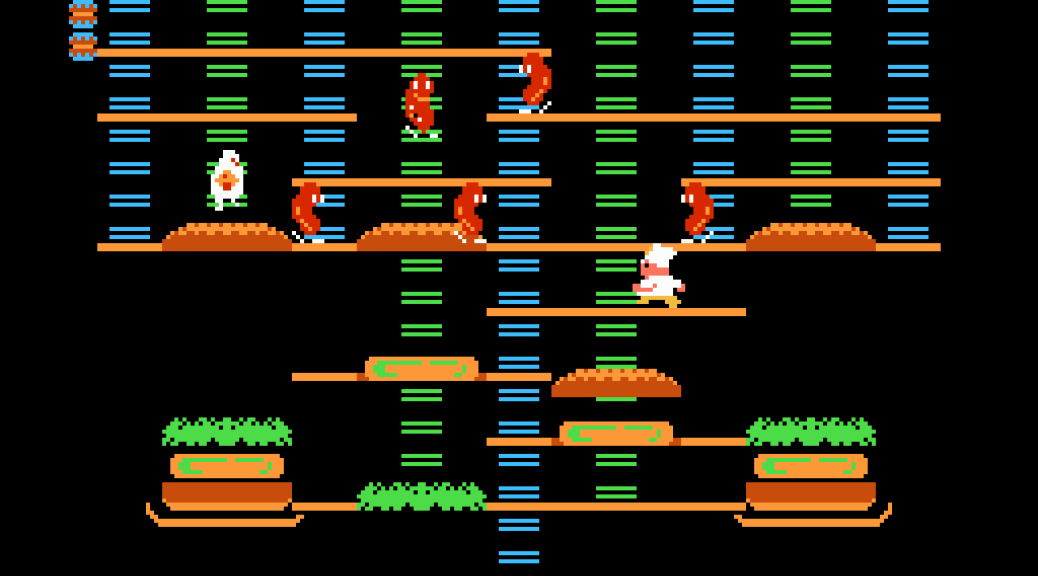
This 1985 Famicom Disk System conversion of BurgerTime is just as good as the arcade original – excepting for the slightly less colourful graphics.
The official conversion of BurgerTime for the MSX was created by Dempa Shimbunsha and Data East in 1986.
It looks a bit like a Spectrum game, which is ironic because there is no official BurgerTime on the ZX Spectrum (there are plenty of bad clones though).
Mattel Electronics produced this ColecoVision console conversion of BurgerTime in 1984.
It is arguably the most authentic – and most impressive-looking – of the early console conversions of BurgerTime and it retains the vertical screen-style design of the arcade game levels (which is most welcome).
The Atari 2600 version of BurgerTime is extremely basic and contains little of the character and playability of the arcade original.
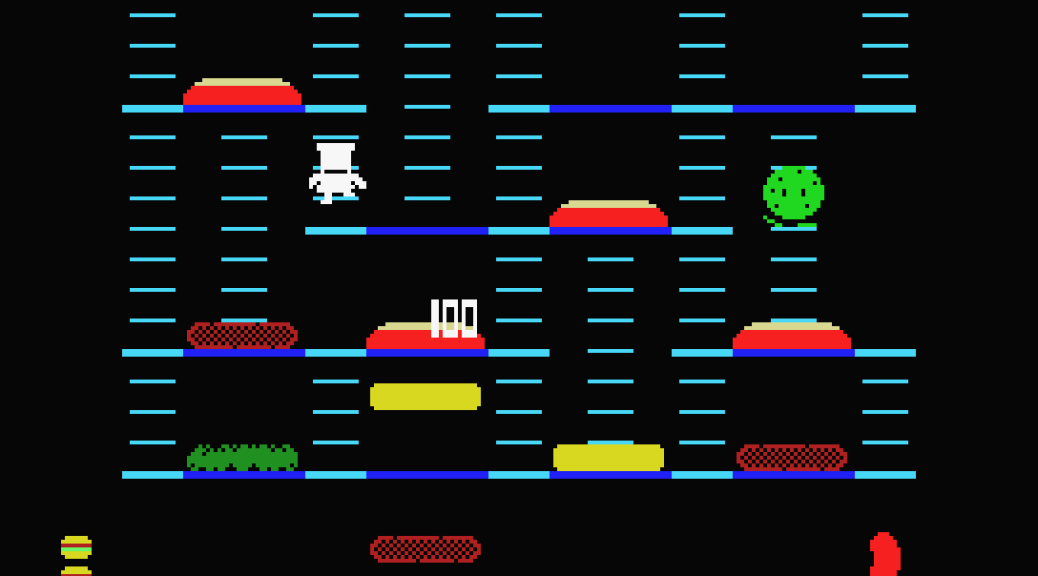
BurgerTime for PC MS-DOS was released by Mattel Electronics in 1982* and it is on a par with the Apple II version – at least graphically – and plays extremely well.