
Written by Tony Crowther and published by Mirrorsoft in 1987, Zig Zag is a weird and wonderful isometric shoot ’em up where you fly a wedge-shaped ship around a maze collecting crystals.
Tag Archives: Sprites

Gryphon, Commodore 64
Tony Crowther‘s 1985 release through Quicksilva, Gryphon, is a much misunderstood game. Most people don’t even get past the first stage, because they don’t know what’s going on…
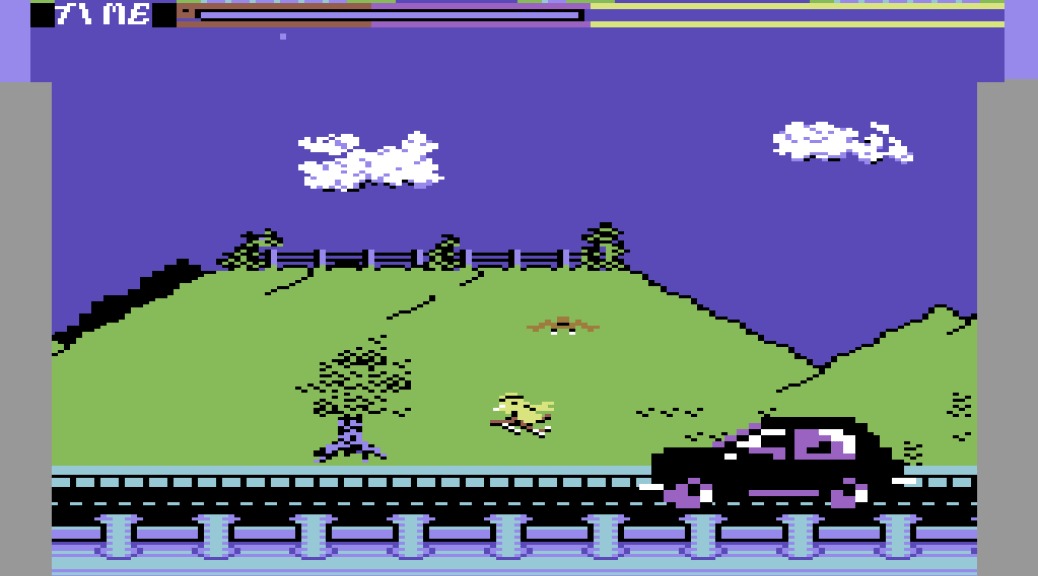
Potty Pigeon, Commodore 64
Percy the Potty Pigeon (to give the game its full title) was coded by Tony Crowther and published by Gremlin Graphics for the C64 in 1984. It was a minor hit at the time.
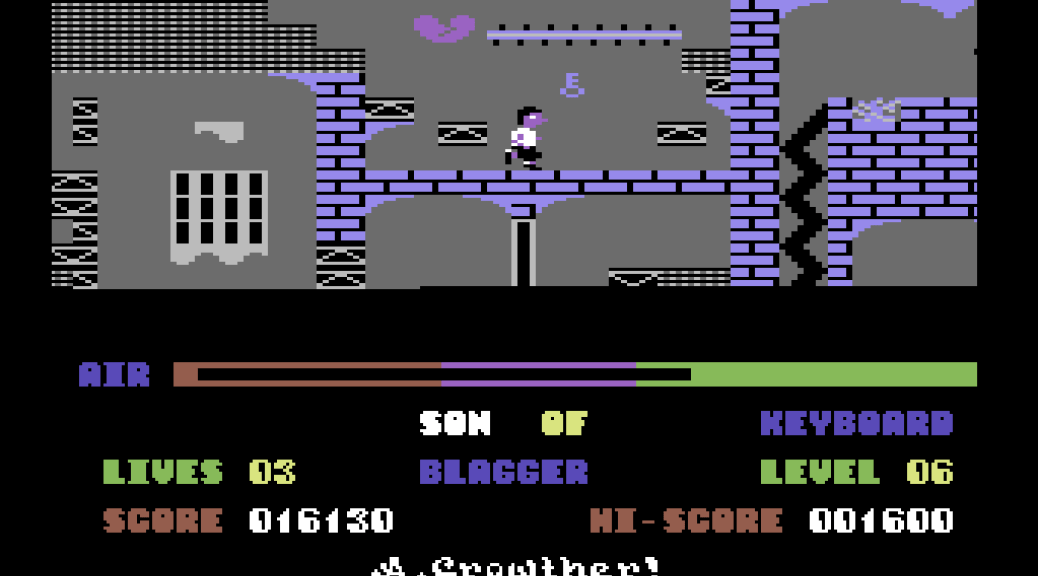
Son of Blagger, Commodore 64
The 1984 sequel to Blagger, Son of Blagger is different to its parent in that this time the platforming is done within a large, scrolling landscape, rather than the Manic Miner-style, single screen stages of the first game. It is basically the same game engine as another Tony Crowther game: Wanted! Monty Mole.

Auf Wiedersehen Monty, Commodore 16/Plus4
Although Auf Wiedersehen Monty is seen as a weak link in the classic Monty Mole series by some people, I’ve always very much liked it.
I liked the ideas; I liked Monty‘s new jump animation; I liked the variety.
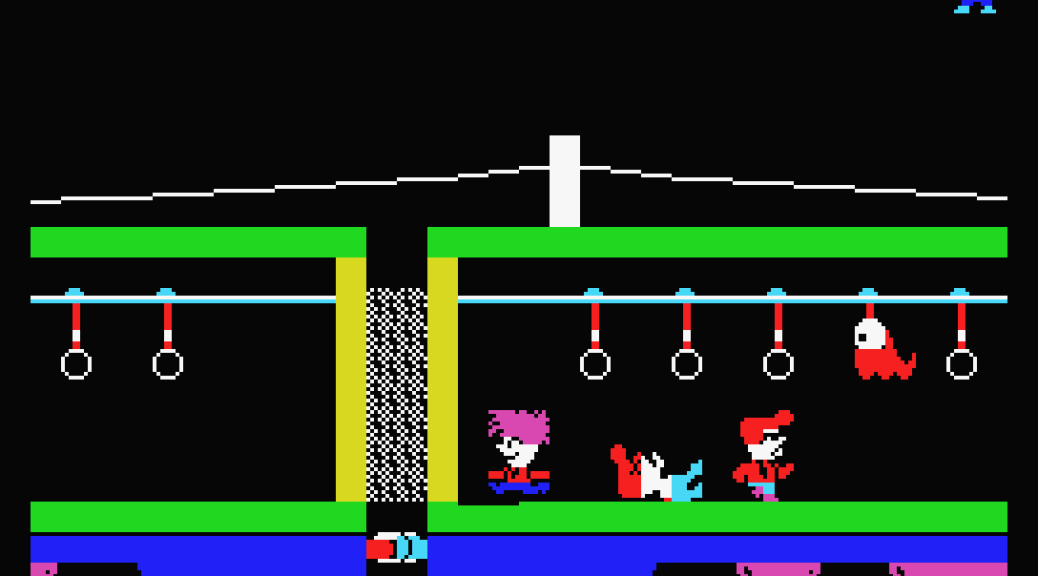
Stop The Express, MSX
Hudson Soft converted and published Stop The Express (aka Bousou Tokkyuu SOS) itself in Japan in 1984.

Stop The Express, Commodore 64
Converted from the ZX Spectrum original by Hudson Soft and published on the C64 by Commodore itself, Stop The Express is both an excellent conversion, and a great little game in its own right.

Santa’s Christmas Caper, Commodore 64
Developed and published by Zeppelin in 1990, Santa’s Christmas Caper is a rarity: it is a Christmas-themed “Bullet Hell” shooter that is actually not too bad.
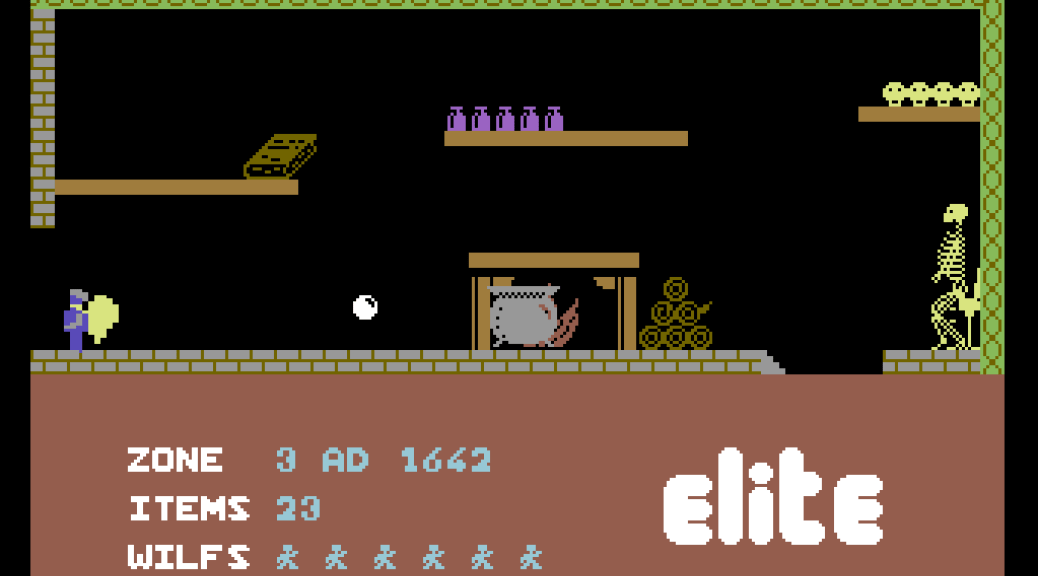
Kokotoni Wilf, Commodore 64
Of the three versions of Kokotoni Wilf released by Elite Systems, the Commodore 64 version is arguably the worst.
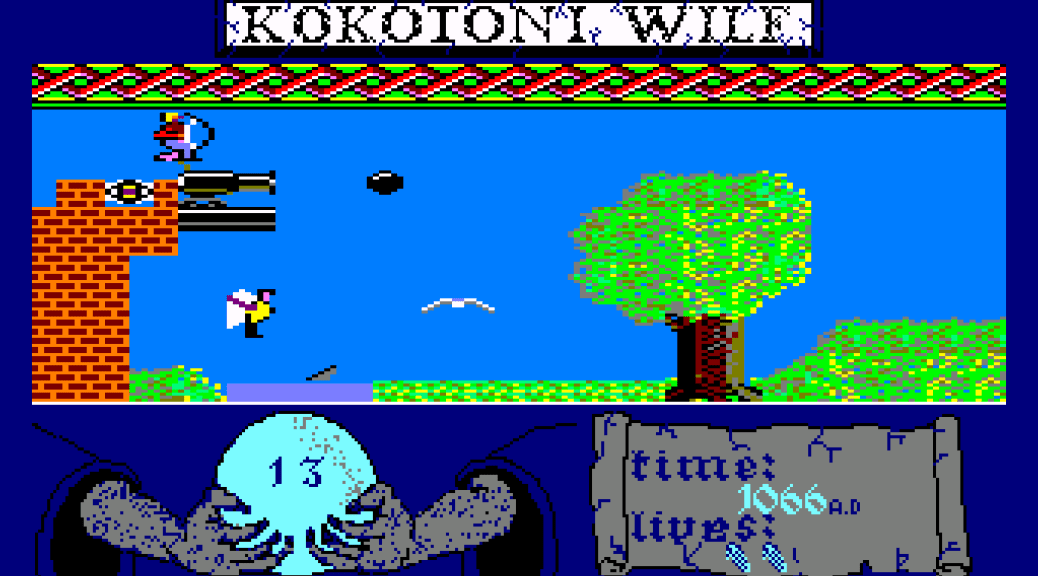
Kokotoni Wilf, Amstrad CPC
Compared to the Spectrum original, Amstrad Kokotoni Wilf is pretty ugly. The developers have chosen a dark blue background with green caves, and the odd splash of colour in the (very flickery) sprites and landscape decorations. The graphics are very poor in my opinion.

