
Super Mario Bros. 2 was initially released on the Famicom Disk System in Japan in 1986, but was not released in North America or Europe in its original form, as you might have expected. It was instead decided that the gameplay was “too difficult” for Western gamers (and also the video games market in North America was undergoing a crash at the time), so Nintendo decided not to release it in English language territories – at least until it was later re-branded as Super Mario Bros.: The Lost levels – and released a different Super Mario Bros.2 in North America instead.
Tag Archives: Nintendo Entertainment System
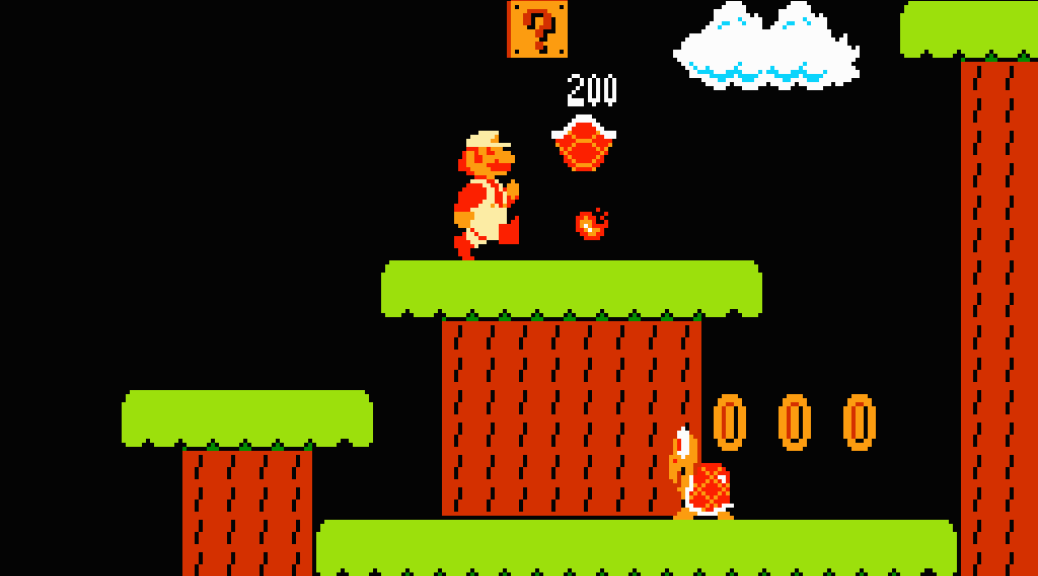
Super Mario Bros., NES
The successor to the 1983 arcade game Mario Bros., Super Mario Bros. was released in Japan and North America in 1985, although it wasn’t released in Europe until 1987.
It is considered by many gamers to be one of the greatest video games of all time, and I wouldn’t dispute that assessment.

Spy Hunter, NES
The 1987 Nintendo Entertainment System conversion of Spy Hunter was handled by Sunsoft and is an excellent addition to the Spy Hunter family.
In some respects this is better than the arcade original, because it’s not quite so mind-bendingly difficult…
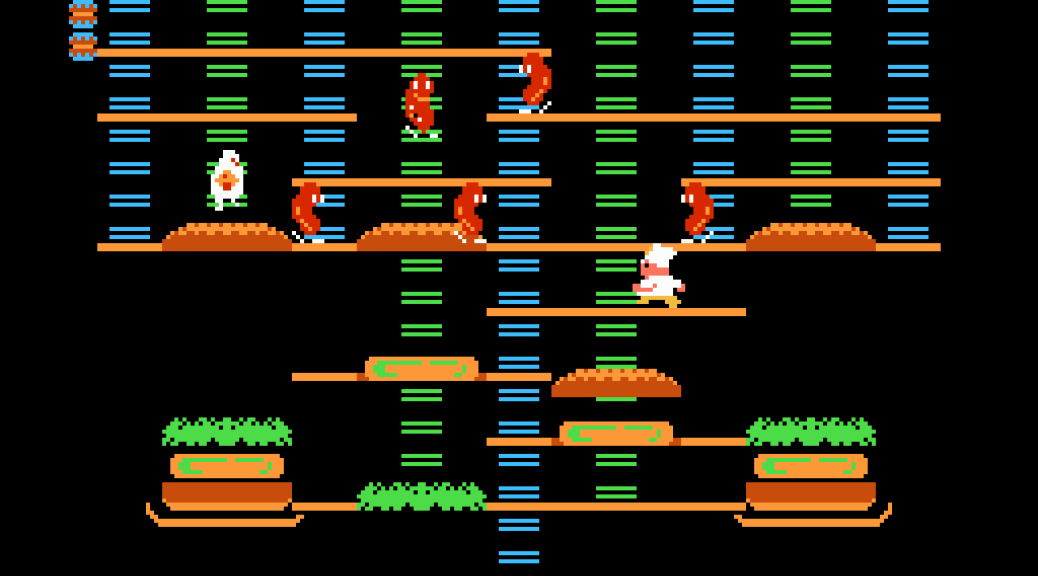
BurgerTime, Famicom Disk System
This 1985 Famicom Disk System conversion of BurgerTime is just as good as the arcade original – excepting for the slightly less colourful graphics.
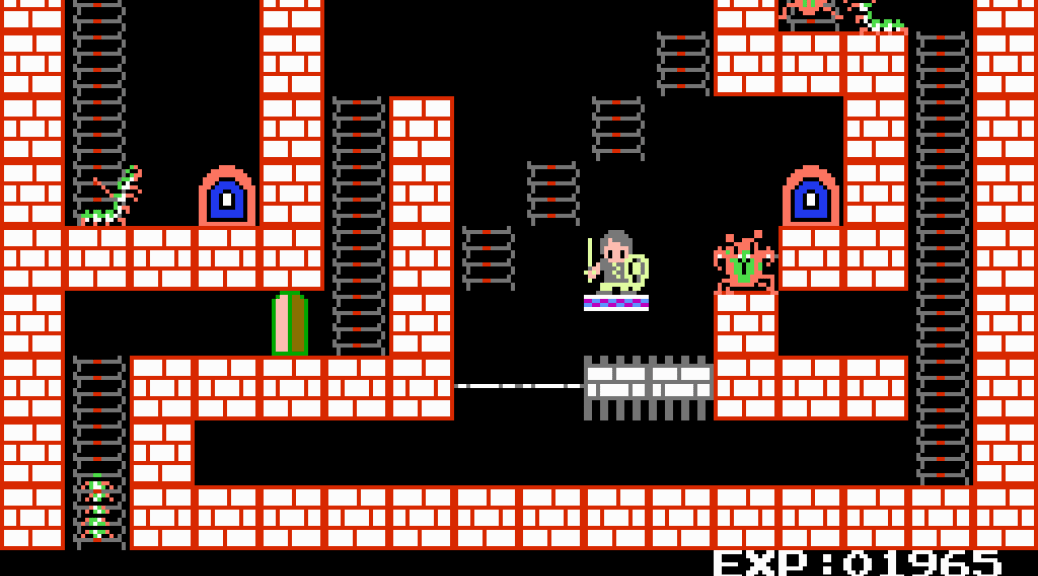
Lutter, Famicom Disk System
Lutter is an obscure-but-interesting combination of platform game and maze game, but with RPG elements – like levelling – also thrown into the mix.
You play the titular Lutter, a knight of the realm on a quest to rescue the princess from a maze-like castle of platforms, ladders, doors and monsters.

Ai Senshi Nicol, Famicom Disk System
Translating into English as “Love Warrior Nicol“, Ai Senshi Nicol is an obscure Konami shoot ’em up, released for the Famicom Disk System in 1987. It has, to date, never been released outside of Japan.

Otocky, Famicom Disk System
Otocky is a cute and colourful side-scrolling shooter with a unique and interesting take on the subject. It was developed by SEDIC for ASCII Corporation and first published in 1987.
You see, rather than firing bullets, you throw balls at enemies to destroy them. And you can throw the balls in eight directions, so in effect you can shoot at enemies behind you (and above and below you) too.
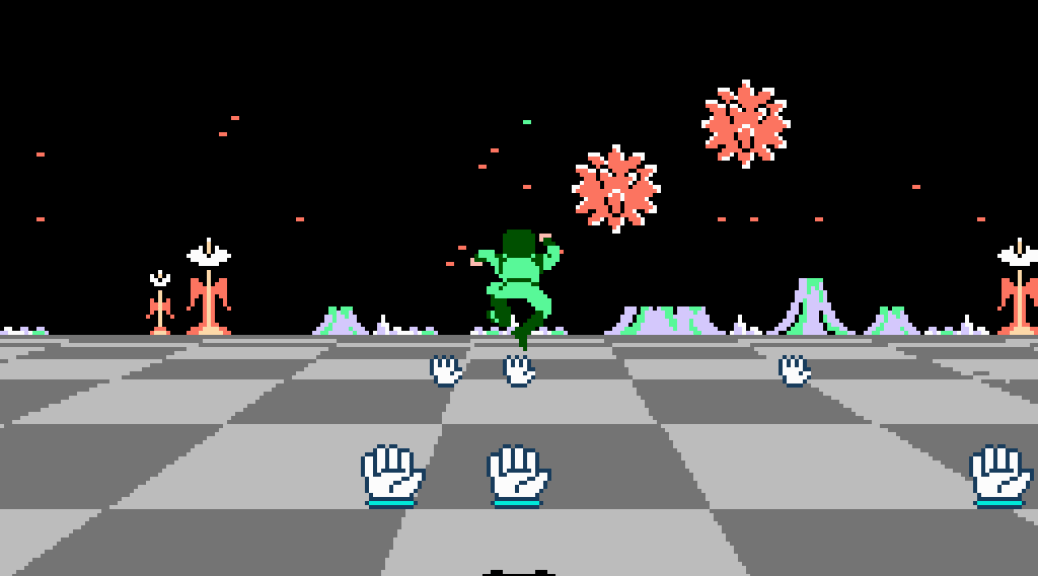
WorldRunner, Famicom Disk System
Known in its native Japan as Tobidase Daisakusen, in America as 3-D WorldRunner, and other territories as The 3-D Battles of WorldRunner – I’m sticking with the simpler and more familiar WorldRunner for this website.
WorldRunner is a third-person running and jumping game where you’re sprinting into the screen and must avoid hitting oncoming objects or falling into pits. It starts off easy but quickly gets very challenging. By stage two you’ll be tearing your hair out…
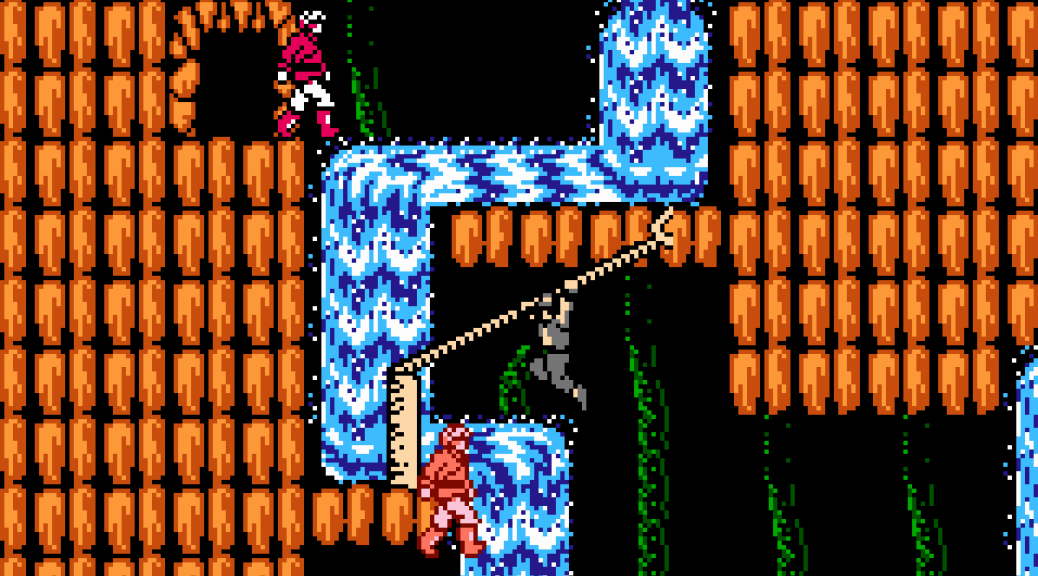
Arumana no Kiseki, Famicom Disk System
Konami released Arumana no Kiseki in Japan in 1987. It is an action platformer with a cool rope mechanic that you use to climb to out-of-reach platforms.

Knight Move, Famicom Disk System
Designed by the same guy who created Tetris (Alexey Pajitnov), Knight Move is a weird kind of puzzle game, with a bouncing chess piece knight who can only move in that funny ‘L’ shape that a knight moves in a real game of chess.
The knight must collect hearts by landing on top of them on the same square on the board.
 The King of Grabs