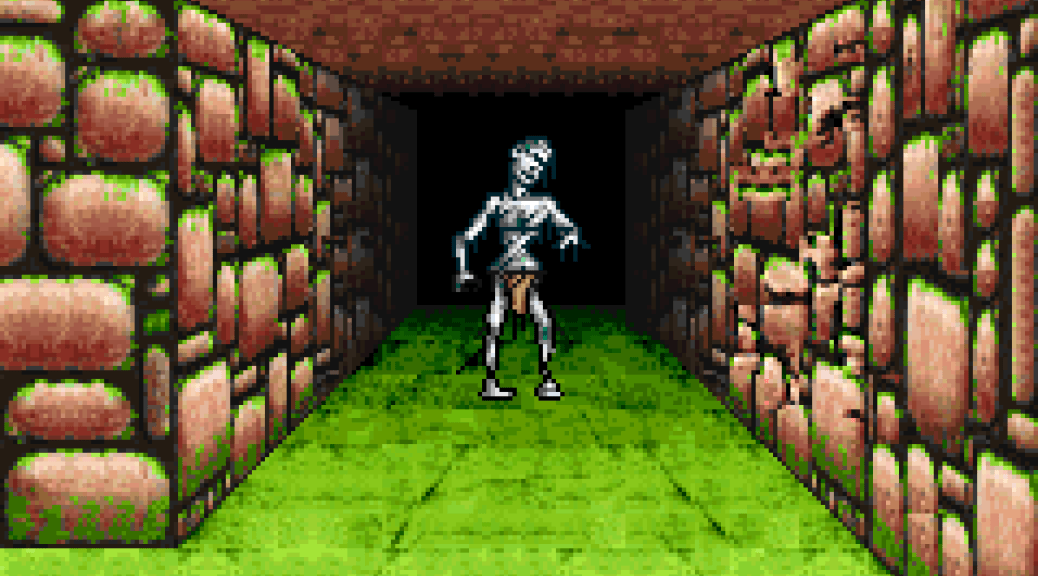
The Game Boy Advance version of the classic RPG, Eye of the Beholder, was developed by Pronto Games and first published by Infogrames in 2002. While it does follow the basics of the original, is it considerably different in many respects. It’s also a relatively poor conversion overall.
Tag Archives: bows

Eye of the Beholder, Sega CD

Eye of the Beholder, Super Nintendo
The Super Nintendo port of the classic RPG, Eye of the Beholder, was developed by Westwood Studios and published by Capcom in 1994. And it’s a bit of a messy conversion, the truth be told.

Eye of the Beholder, Amiga
Eye of the Beholder for the Amiga was developed by Westwood Studios and first published by SSI in 1991. I believe it came out at the same time as the MS-DOS version, so is one of the original versions. And it truly is a brilliant game.

Eye of the Beholder, Commodore 64
This amazing Commodore 64 port of the 1991 Amiga/MS-DOS RPG classic, Eye of the Beholder, was released on 21st November 2022 and is one of the best homebrew remakes I think I’ve ever played. It was written by “Jack Asser“, with the help of a number of other talented individuals, and comes as a CRT (cartridge) file for quick-loading.

Ultima IX: Ascension, PC
Ultima IX: Ascension is the ninth and final instalment of the core Ultima series and was developed by Origin Systems and published for Windows-based PCs by Electronic Arts in 1999. It was the first Ultima game to use polygonal rendering in a full 3D environment.
Ultima I: The First Age of Darkness, PC
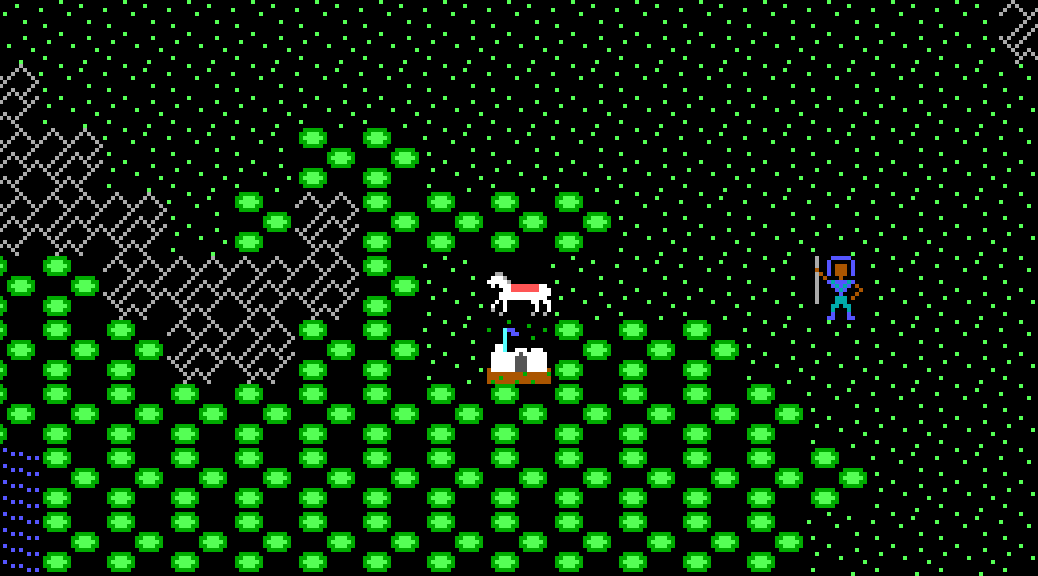
The first game in the Ultima series was initially released for the Apple II in 1981 by California Pacific Computer and was later completely re-coded and re-named as “Ultima I: The First Age of Darkness” for a re-release through Origin Systems. The 1987 MS-DOS re-code – shown here – is still available to buy as part of an Ultima 1+2+3 package on GOG.com (at the time of writing).

Ultima I: The First Age of Darkness, Commodore 64
Although the first Ultima game was an Apple II original, the Commodore 64 version of this early RPG is arguably the best-known. Re-made and released in 1986, the C64 version of Ultima [one] features colourful graphics and absorbing gameplay that is pretty much identical to the Apple II remake.
Continue reading Ultima I: The First Age of Darkness, Commodore 64
Ultima I: The First Age of Darkness, Apple II
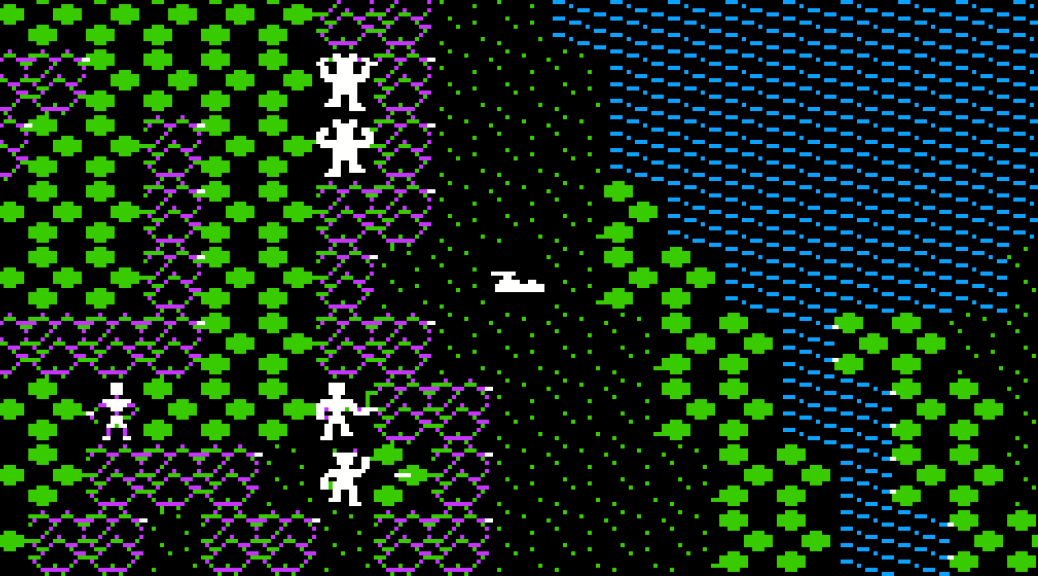
This first game in Richard Garriott‘s Ultima series was initially released for the Apple II in 1981 by California Pacific Computer and was originally called just “Ultima“. It was later re-named as “Ultima I: The First Age of Darkness” when it was re-made and re-released by Origin Systems in 1986. This 1986 re-code features improved graphics and gameplay, with a number of significant changes made to bring the game up-to-date with market conditions in the mid 1980s, and that is the version I’m featuring here. If you want to see the original 1981 version (and an explanation of how to play the game), click here.
Continue reading Ultima I: The First Age of Darkness, Apple II

Ultima, Atari 8-Bit
Released in 1983 by Sierra On-Line, Ultima on the Atari 8-bit is more archaic and frustrating than the original Apple II version. And it looks pretty awful too, with a real lack of colour – especially in towns where the game is in monochrome unless you play on a machine (and monitor) that supports “artifacting“. In artifacting mode the dungeon and town graphics look similar to Apple II graphics, but they don’t really take advantage of the Atari‘s superior graphics capabilities.
 The King of Grabs