
Ristar on the Game Gear is a reduced-size version of the classic Megadrive/Genesis platform game by Sega. It was first released for Sega‘s handheld console in 1995.
Tag Archives: 2D graphics
Flat, two-dimensional graphics, usually constructed of pixels. Not three-dimensional.

Alex Rider: Stormbreaker, Game Boy Advance
Alex Rider: Stormbreaker is an isometric action/stealth/fighting game, based on the 2006 film Stormbreaker, where you play as teenage spy Alex Rider who is recruited by MI6 to investigate a shady individual called Herod Sayle. The game was created by Razorback Developments and published by THQ in the same year as the release of the film.

Operation Thunderbolt, Arcade
Operation Thunderbolt is the sequel to the classic 1987 arcade game Operation Wolf. It was developed by Taito and first released in 1988, and is a first-person, simultaneous two-player shoot ’em up that uses cabinet-mounted positional gun controllers to shoot at the screen.

Operation Wolf, Atari ST
Taito‘s classic mounted gun arcade shooter, Operation Wolf, was ported to the Atari ST and Amiga by Ocean Software and first published in 1988. At the time it reviewed quite well, but my feeling has always been that it was never really any good to begin with. I had an Atari ST back in 1988 and remember not being that impressed with the game, even though magazines at the time were generally praising it.

Operation Wolf, Amiga
The 1988 Amiga conversion of Taito‘s classic gun-based arcade game, Operation Wolf, was developed by Ocean Software and was reasonably well recieved at the time of release, but the fact is: it hasn’t stood the test of time that well, and it isn’t anywhere near as good as the original reviews made out. It’s just merely okay.

Planet of the Apes, Game Boy Advance
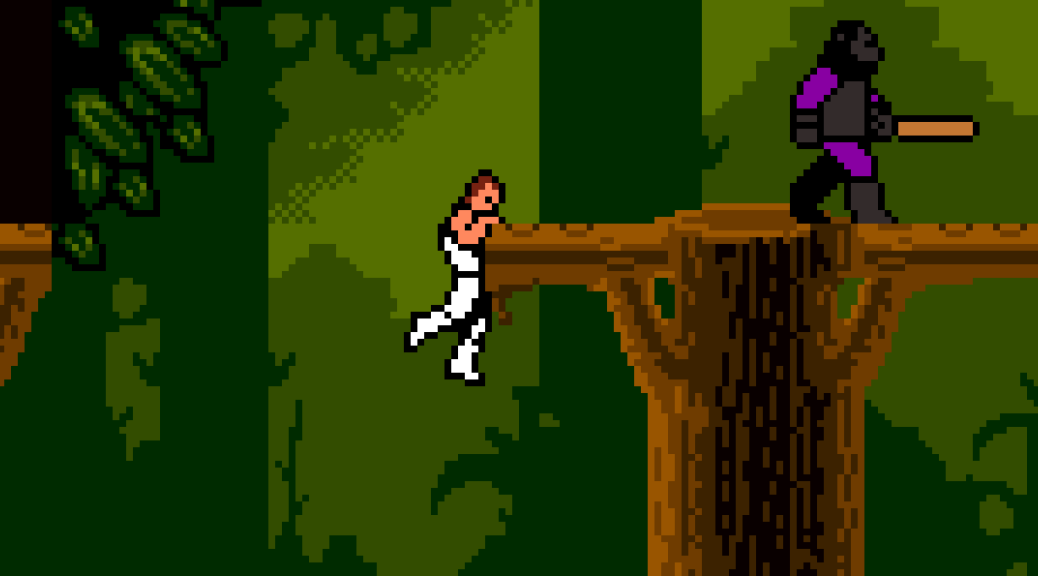
The Game Boy Advance version of Planet of the Apes is somewhat different, visually, to the Game Boy Color version, although it is basically the same game underneath. Graphically, the GBA version goes for a “digitised”, more realistic look, which I don’t think is as appealing as the pure 2D drawn look of the GBC version. It makes the game look more like an early ’90s Amiga game, which I think dates it significantly.
Planet of the Apes, Game Boy Color
Planet of the Apes for the Game Boy Color was developed by Torus Games/Visiware and was first published by Ubisoft in 2001. It is based on the 1968 film of the same name, which in turn was based on the 1963 book by Pierre Boulle. Actually, to be more accurate, the game follows the plot of the 1970 sequel, Beneath the Planet of the Apes, more closely than it does the first film, where Brent (played by James Franciscus) crash-lands on a post-apocalyptic Earth on a rescue mission to find Taylor (Charlton Heston), and eventually finds himself held prisoner in an underground city run by telepathic humans.

Postal, PC
Postal is an infamous, tongue-in-cheek, highly controversial shooter that satirises the process of “going postal” – a phenomenon whereby an individual ‘breaks’ and goes on a killing spree (called thus because “going postal” was once, in America, often associated with postal workers). It was developed by Running With Scissors and first published by Ripcord Games in 1997. The game – like every entry in the Postal series – is mindless, in poor taste, and designed to cause outrage, because outrageous things draw attention to themselves. In Postal‘s case it drew the attention of politicians who tried to ban it.
Alien 3: The Gun, Arcade
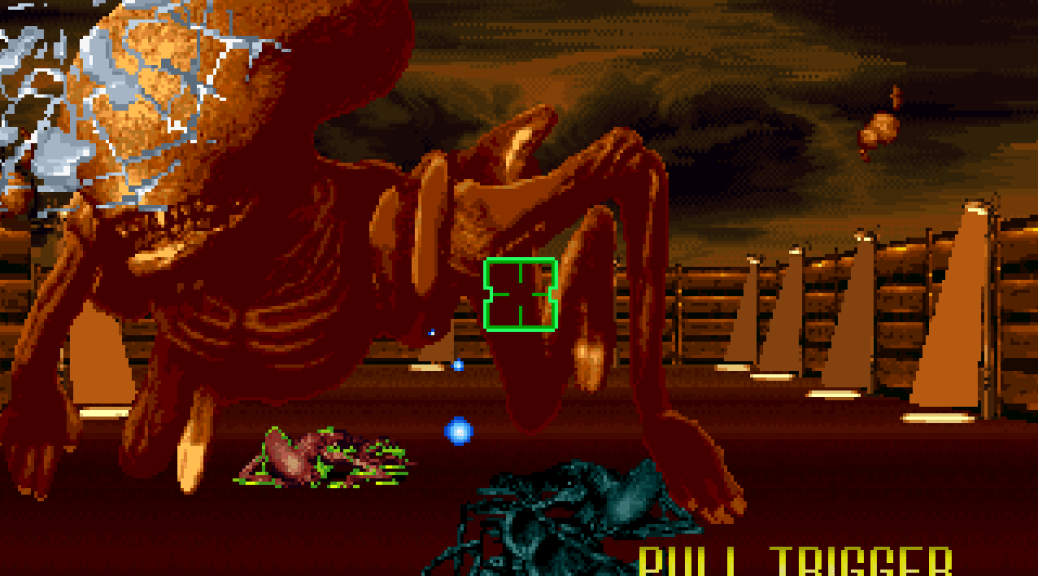
The funniest thing about this 1993 arcade game from Sega is that it is based on a film in which guns are decidedly absent. In fact: David Fincher‘s Alien 3 makes a point of removing guns from the story, because the characters exist on a prison planet where guns are not allowed. That said: I think many people would have preferred it if the film had had guns in it, so Alien 3: The Gun could be seen as something of a wish fulfilment for those who didn’t like the film.

Ristar, Megadrive/Genesis
Ristar is a cute and colourful scrolling 2D platform game developed and published by Sega in 1995. It first came out for the Megadrive/Genesis and was later ported to the Game Gear, but it was only ever initially released on Sega console hardware.
 The King of Grabs