
The second game in the Castlevania series, Castlevania II: Simon’s Quest, was originally released in Japan (as “Dracula II – Noroi no Fuuin“) for the Famicom Disk System in 1987, and in North America for the NES in 1988. Europe had to wait until 1990 for a release of the game.
Tag Archives: 1987
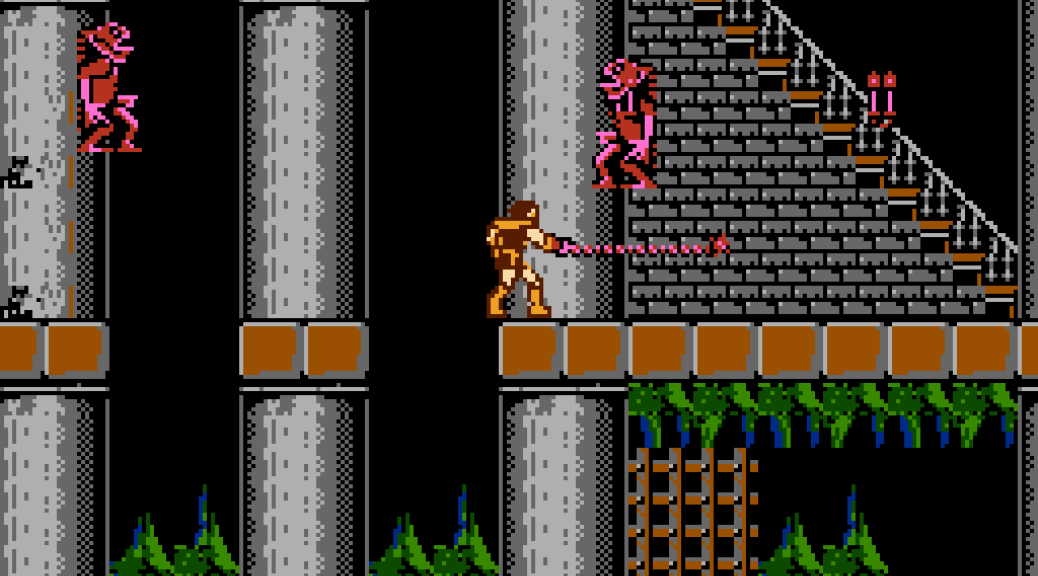
Castlevania, NES/Famicom
The first Castlevania game was initially released in Japan, by Konami, under the title of “Akumajō Dracula” in 1986. Versions for the MSX2 and Famicom Disk System were developed simultaneously, with the Famicom version coming out on 26th September, and the MSX version a month later, on 30th October. That same game was later released in Europe on 30th October 1987 – translated into English – under the title of “Vampire Killer“.
When it came time to convert the game to the Nintendo Entertainment System for a North American release it was decided to re-title the game as “Castlevania“*. This turned out to be a significant decision as it became a big hit and grew to become a popular and well-known series of video games. The name “Castlevania” entered into the lexicon of classic, instantly-recognisable game titles, later becoming a portmanteau of “Metroid” and “Castlevania” (“Metroidvania“) to describe an entire sub-genre of action/platform games that all share similar gameplay features.
*= Although it’s not clear who actually came up with the name “Castlevania” it has been reported that the change was due to Konami of America senior vice president Emil Heidkamp‘s discomfort with the religious connotations of the title “Akumajō Dracula“, which he believed translated as “Dracula Satanic Castle” (although some argue that it translates as “Demon Castle Dracula“).

Commando, Apple II
The 1987 Apple II conversion of Capcom‘s Commando was developed by Quicksilver Software, Inc. and published by Data East in North America only, and it is a reasonable port although the play window is probably the smallest out of the all the versions of Commando I’ve played so far.

Commando, MSX
The 1987 MSX version of Commando was a Japan-only release through ASCII Corporation, and – the truth be told – it’s a pretty awful conversion.
If you’re searching for the game you need to look for the title “Senjō no Ōkami” [“Wolf of the Battlefield“], which is the game’s Japanese title, as you’ll not find it under the name “Commando“.
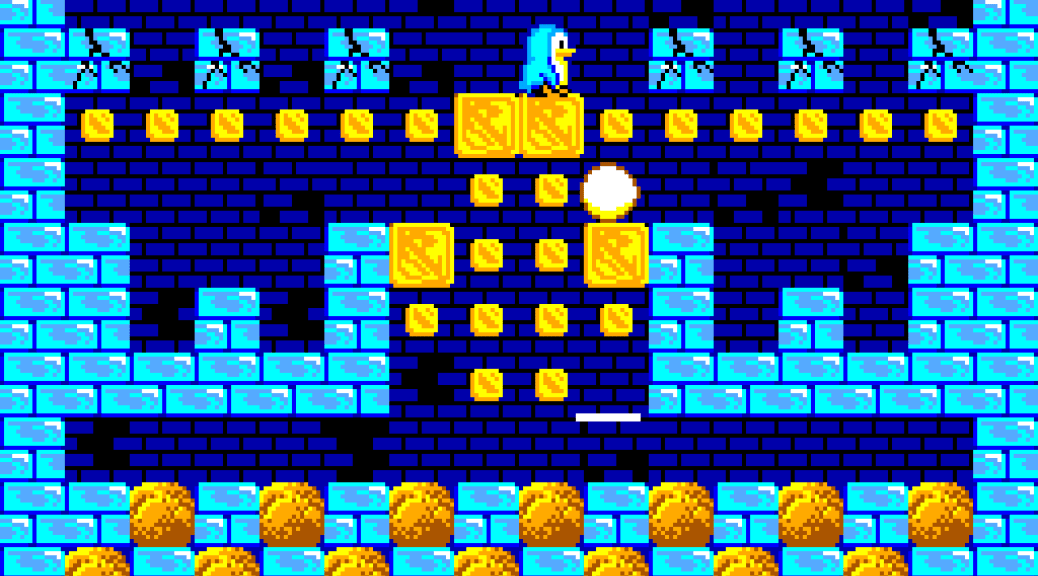
Penguin Land, Sega Master System
Penguin Land is a cute and devilish platform puzzle game developed and published by Sega – exclusively for the Sega Master System – in 1987. The original Japanese title of the game is “Doki Doki Penguin Land Uchū Daibōken“.

The Sentinel, ZX Spectrum
The ZX Spectrum version of Geoff Crammond‘s classic puzzle game, The Sentinel, was ported by Software Creations (with assistance from Mr. Crammond himself) and published by Firebird Software in 1987.

Wizards & Warriors, NES/Famicom
Wizards & Warriors is an action platform game developed by Rare and published by Acclaim (in North America and Europe) and Jaleco (in Japan) in 1987.
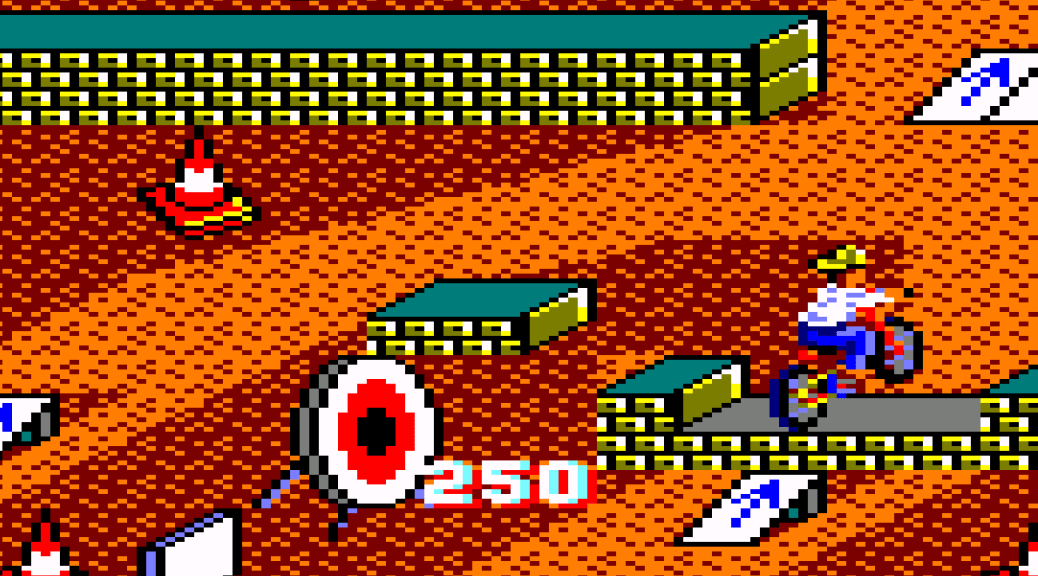
Paperboy, Amstrad CPC
The Amstrad CPC conversion of Paperboy was coded by Mark Haigh-Hutchinson, with graphics by Paul Walker, and first published by Elite Systems in 1987. Compared to other Paperboy conversions this is a mixed bag of good and badness…

Super Qix, Arcade
The sequel to the 1981 arcade game, Qix, Super Qix is more of the same line-drawing, area-capturing gameplay that made the original so challenging and compelling. It was first released by Taito in 1987.

Barbarian, Commodore 64
Palace Software‘s Barbarian: The Ultimate Warrior is a fondly-remembered and controversial one-on-one fighting game from 1987, where two gladiatorial combatants slug it out to the death in a variety of different locations. Actually, there are two different versions of this game, each with different backgrounds. The first version has a throne room and then a pit. The second version has a meadow and a clearing in a forest. I’m not sure why there are two versions of this game, but that definitely seems to be the case.
 The King of Grabs