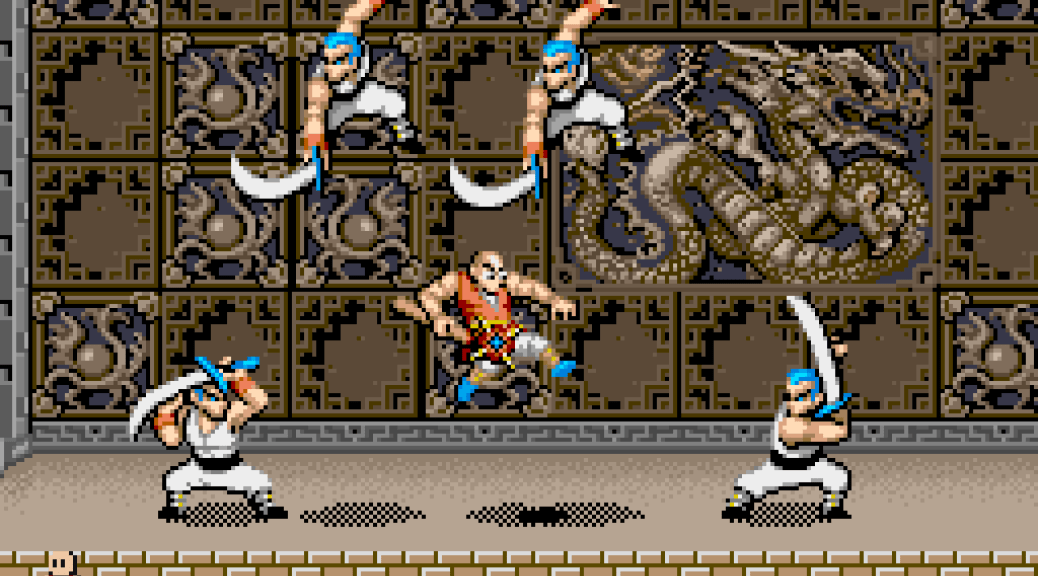
Tiger Road is a single-player hack-and-slash platform/action game, released into arcades by Capcom in 1987. It pre-dates Sega‘s Golden Axe by two years, but is very similar in terms of gameplay.
Tag Archives: scrolling
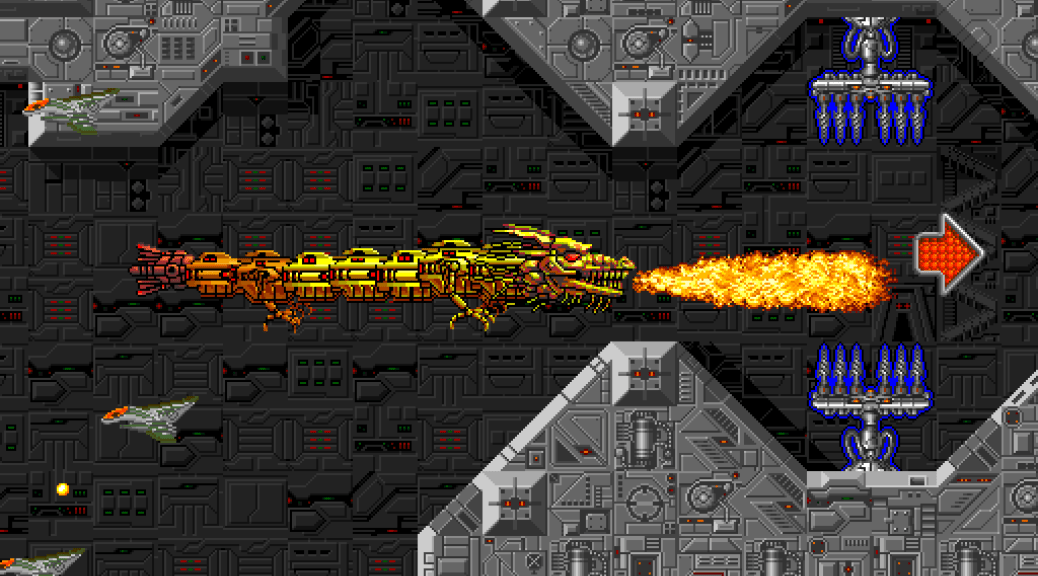
Syvalion, Arcade
Released into arcades by Taito in 1988, Syvalion is a strange-but-interesting scrolling shooter in which you control a golden metal dragon (called “Mechadragon“) that must fight its way to the end of a series of mazes within a time limit. The dragon can breathe fire to destroy enemies and must pick up power-ups, or move quickly without firing, to keep its flame breath bar filled. At the end of each stage is a boss battle which you need to win to progress.
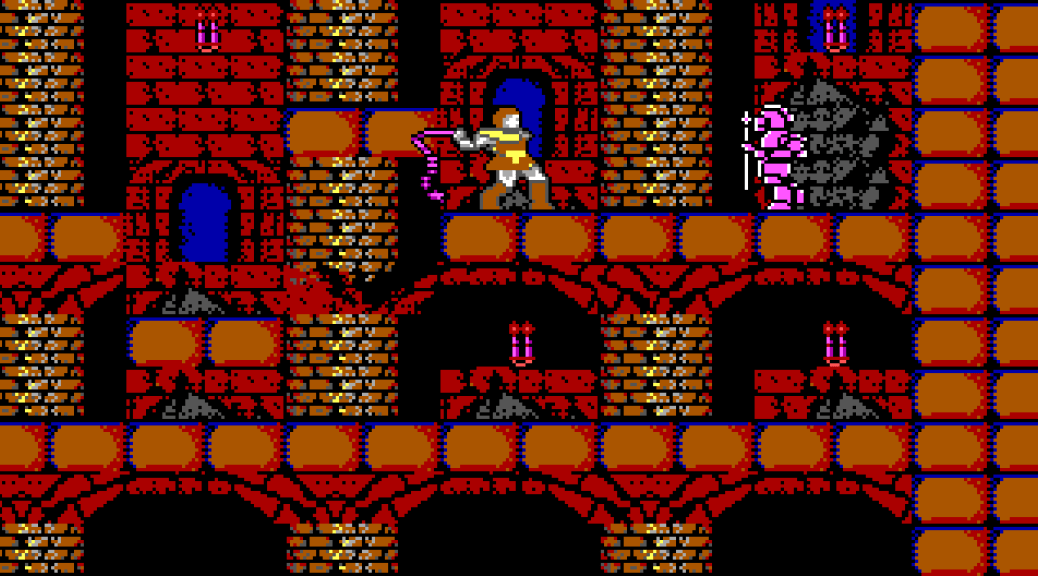
Castlevania, PC
The PC MS-DOS version of Konami‘s Castlevania was developed by Unlimited Software, Inc. (the same company that did the C64 conversion), and first published in North America in 1990. As far as I know it didn’t get a release in Europe or Japan.
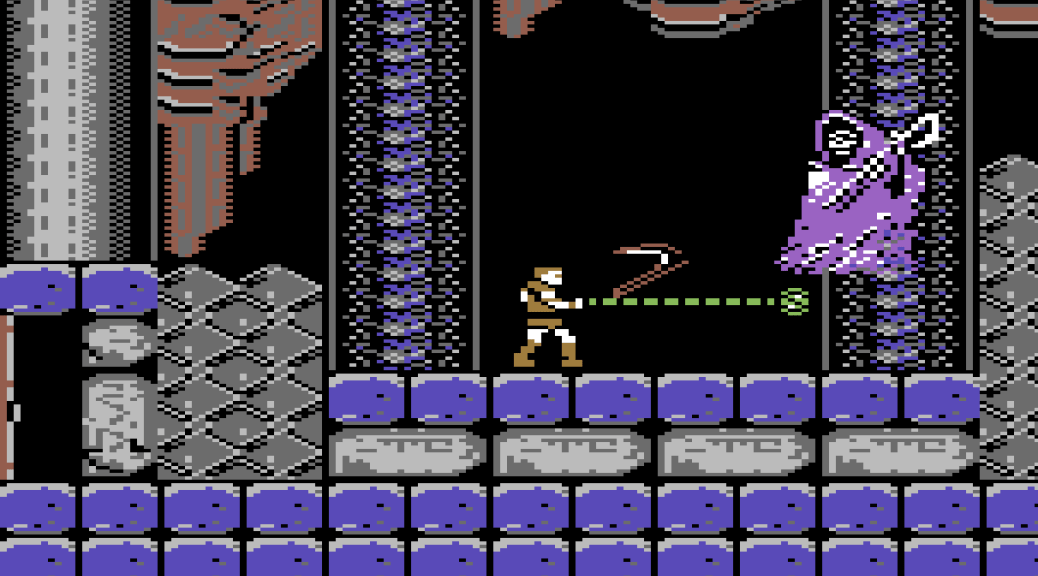
Castlevania, Commodore 64
The Commodore 64 version of Castlevania was converted by Unlimited Software, Inc. and published by Konami in 1990, and it’s not a bad port overall. It’s arguably better than the dodgy Amiga version.

Castlevania, Amiga
The Amiga version of Konami‘s classic Castlevania was ported by Novotrade and first released in 1990. I was surprised and excited that the first Castlevania had actually been released for the Amiga, but after playing it I kinda wish they hadn’t bothered, because it’s bloody awful.

Castlevania III: Dracula’s Curse, NES/Famicom
The third game in the Castlevania series, Castlevania III: Dracula’s Curse, was first released for the Nintendo Famicom in 1989 in Japan (under the title of “Akumajō Densetsu“). A North American NES release followed in 1990, and a European release in 1992.
Continue reading Castlevania III: Dracula’s Curse, NES/Famicom

Castlevania II: Simon’s Quest, NES/Famicom
The second game in the Castlevania series, Castlevania II: Simon’s Quest, was originally released in Japan (as “Dracula II – Noroi no Fuuin“) for the Famicom Disk System in 1987, and in North America for the NES in 1988. Europe had to wait until 1990 for a release of the game.
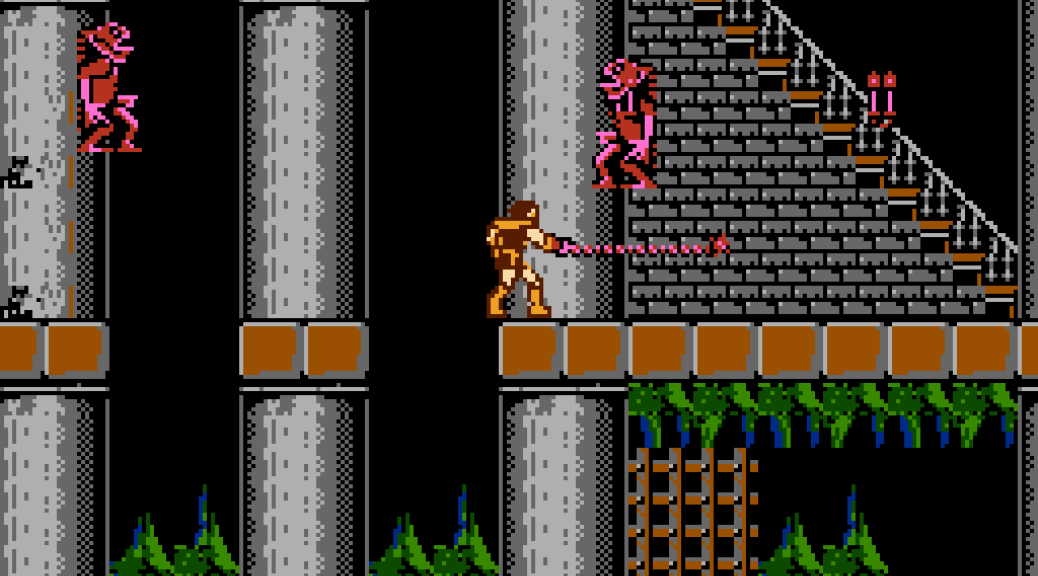
Castlevania, NES/Famicom
The first Castlevania game was initially released in Japan, by Konami, under the title of “Akumajō Dracula” in 1986. Versions for the MSX2 and Famicom Disk System were developed simultaneously, with the Famicom version coming out on 26th September, and the MSX version a month later, on 30th October. That same game was later released in Europe on 30th October 1987 – translated into English – under the title of “Vampire Killer“.
When it came time to convert the game to the Nintendo Entertainment System for a North American release it was decided to re-title the game as “Castlevania“*. This turned out to be a significant decision as it became a big hit and grew to become a popular and well-known series of video games. The name “Castlevania” entered into the lexicon of classic, instantly-recognisable game titles, later becoming a portmanteau of “Metroid” and “Castlevania” (“Metroidvania“) to describe an entire sub-genre of action/platform games that all share similar gameplay features.
*= Although it’s not clear who actually came up with the name “Castlevania” it has been reported that the change was due to Konami of America senior vice president Emil Heidkamp‘s discomfort with the religious connotations of the title “Akumajō Dracula“, which he believed translated as “Dracula Satanic Castle” (although some argue that it translates as “Demon Castle Dracula“).

Out of Gas, Game Boy
Out of Gas is a top-down action/puzzle game developed by Realtime Associates and published exclusively for the Game Boy, in North America only, by FCI (Fujisankei Communications International) in 1992. And it is generally derided by those who’ve played it.

Shadow of the Beast, Amstrad CPC
The Amstrad CPC version of Shadow of the Beast was developed and published by Gremlin Graphics in 1990 and is similar to the ZX Spectrum version (which was also created by Gremlin), but with more on-screen colours. It requires 128K of RAM to run, so is for Amstrad 6128 machines and compatibles only, and is spread over two floppy disks.

