Boxxle II came out for the Nintendo Game Boy in 1991.
It’s a straightforward continuation of the Sokoban theme, with more levels to push boxes around in.
Boxxle II came out for the Nintendo Game Boy in 1991.
It’s a straightforward continuation of the Sokoban theme, with more levels to push boxes around in.
Boxxle is the Game Boy conversion of the classic box-shifting game, Sokoban. It was released in Japan in 1989 and in Europe and North America in 1990.
Mutant Monty looks a first glace like a Manic Miner clone, but it’s actually more of a maze game than a platform game. The main sprite certainly looks like Miner Willy though…
Pengo on the Megadrive is an excellent remake of the classic Sega arcade game, Pengo, and it was published on cartridge (unfortunately in Japan only) in 1995.
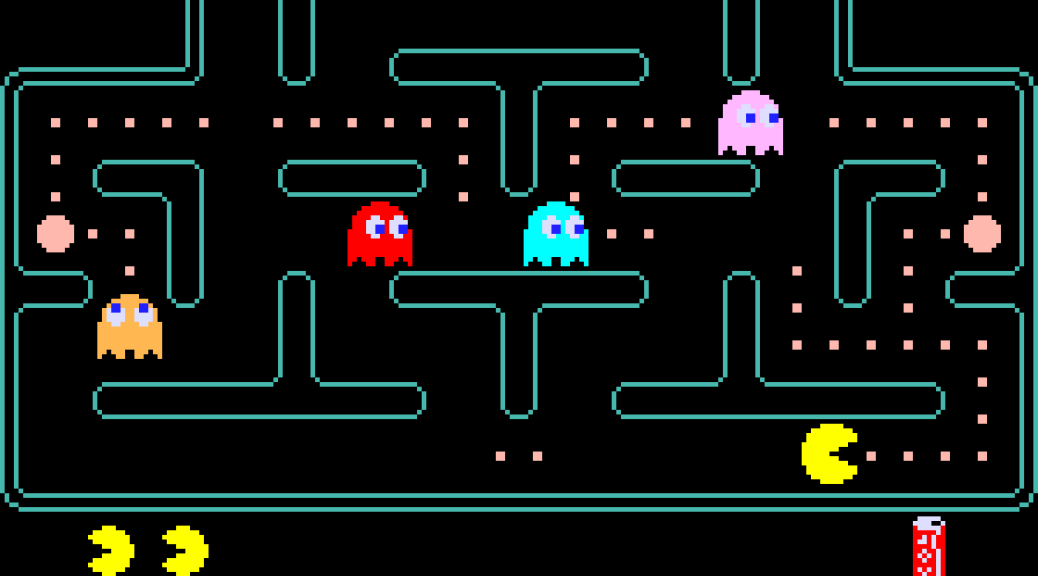
Manufactured by Bally Midway in 1983, Jr. Pac-Man is another sequel to the smash hit, dot-eating maze game, Pac-Man, created by Namco in 1980.
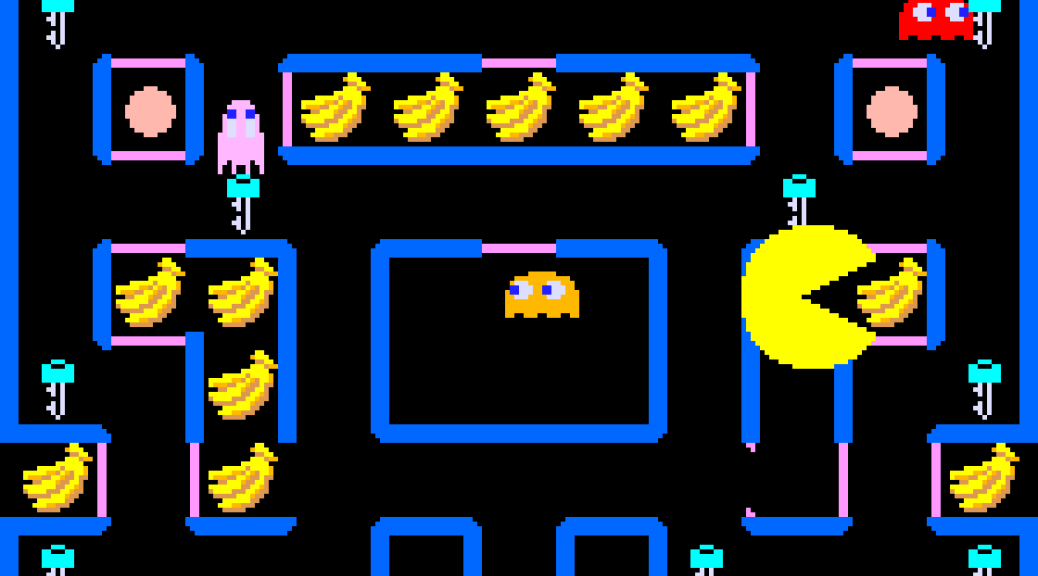
Unlike Ms. Pac-Man and Jr. Pac-Man, Super Pac-Man was developed by Namco themselves in 1982, so could be considered the first ‘official’ sequel to Pac-Man.
The fact is: it is arguably inferior to both the aforementioned Midway Pac-Man games, which is a little embarrassing. That said: it is still a decent game in its own right; maybe not quite as ‘pure’ or ‘hardcore’ as Ms. Pac-Man and Jr. Pac-Man, but good nonetheless.
Another American Bally Midway variation of Namco‘s Pac-Man, shipped out into arcades in 1982 to take advantage of the PM craze sweeping the globe.
The 1982 sequel to the smash hit Pac-Man originally started out as a third party modification kit for Pac-Man machines, developed by General Computer Corporation, and called ‘Crazy Otto‘.
After legal action from Atari, GCC was forced to present Crazy Otto to Midway, the North American distributor of Pac-Man, who bought the game and developed it into Ms. Pac-Man.
Further complicating the story, apparently Midway did this without Pac-Man‘s original owner Namco‘s consent, which caused some licensing issues later. The truth is by no means clear, but in the murky world of video game licensing it is sometimes the case that people sell and exploit rights to products they have no right to.
Published by Melbourne House in 1985, Gyroscope is an unashamed rip-off of Atari‘s classic arcade game Marble Madness.
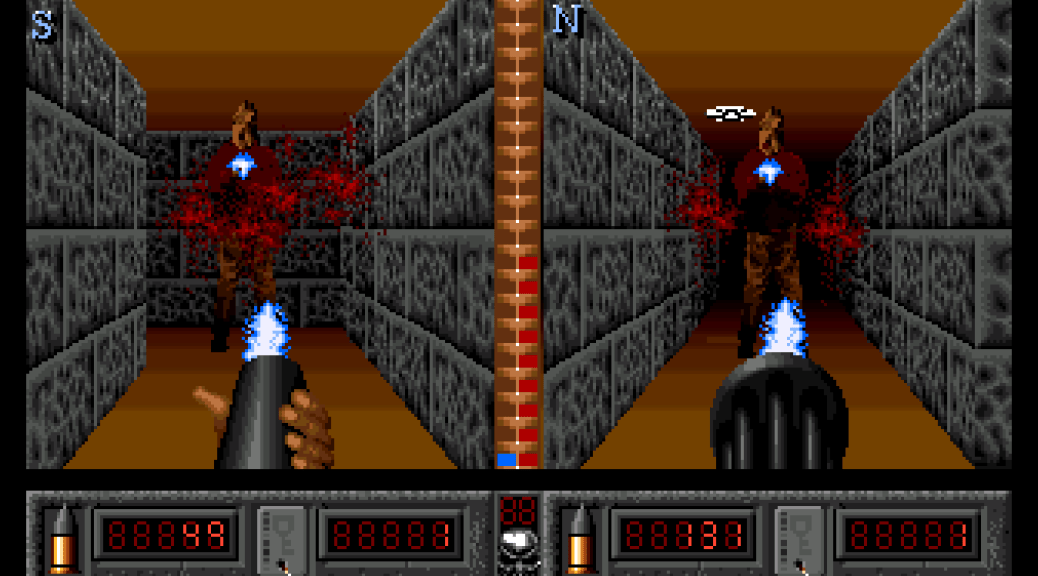
Death Mask was developed by Apache Software and published by Alternative Software in 1994. It was released on the Amiga and CD32 and is something of a Doom clone; although one that is split-screen multiplayer.