
This 1985 release from Spanish company Dinamic Software is an obscure ZX Spectrum platform game about Egyptian tomb-raiding.
Tag Archives: 8-bit

19 Part One: Boot Camp, Commodore 64
Based on the Paul Hardcastle pop hit of 1985, 19 (“nnnnn-Nineteen“), 19 Part One: Boot Camp is a multi-event action game that is supposed to portray the training phase of a Vietnam solder’s experiences.

Travel With Trashman, ZX Spectrum
The sequel to the classic Trashman is another excellent ‘leftfield’ Spectrum game from Malcolm Evans and New Generation Software.
In Travel With Trashman you’re again controlling Trashman – a bin man – and one who is on holiday and also who is incapable of walking away from litter he finds on the ground.

Hunter’s Moon, Commodore 64
Hunter’s Moon is a multi-directional scrolling shooter by Martin Walker, published by Thalamus for the Commodore 64 in 1987.

Dan Dare III: The Escape, ZX Spectrum
One of Dave Perry‘s early commercial games, the third Dan Dan Spectrum game was developed by Probe Software, instead of Gang of Five (who did the first two Dan Dare games), and published by Virgin Games in 1990.
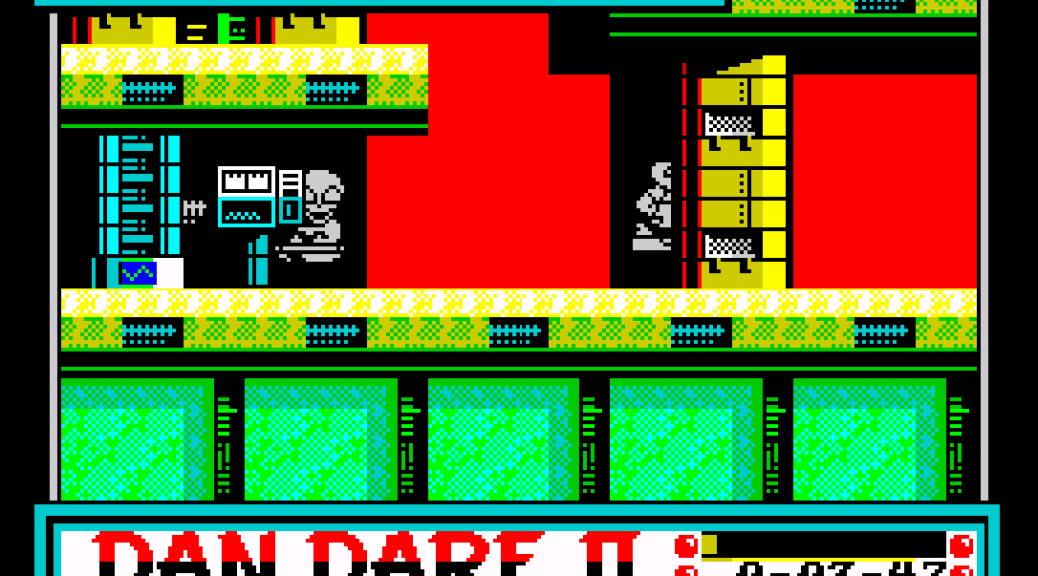
Dan Dare II: Mekon’s Revenge, ZX Spectrum
This 1988 sequel to Dan Dan: Pilot of the Future was again developed by Gang of Five and published by Virgin Games.

Dan Dare: Pilot of the Future, ZX Spectrum
Developed by Gang of Five in 1986, Dan Dare: Pilot of the Future is a simple run-and-gun platform shooter based on the famous character from Britain’s famous science fiction comic, Eagle.

Lunar Jetman, BBC Micro
The BBC Micro conversion of Ultimate‘s classic Lunar Jetman is a very good one, using a high res display mode for the graphics, which are mostly monochrome (just like the Spectrum original).

Inside Outing, ZX Spectrum
The ZX Spectrum conversion of Michael St. Aubyn‘s Inside Outing was programmed by Pamela Roberts with graphics by Mike Smith.
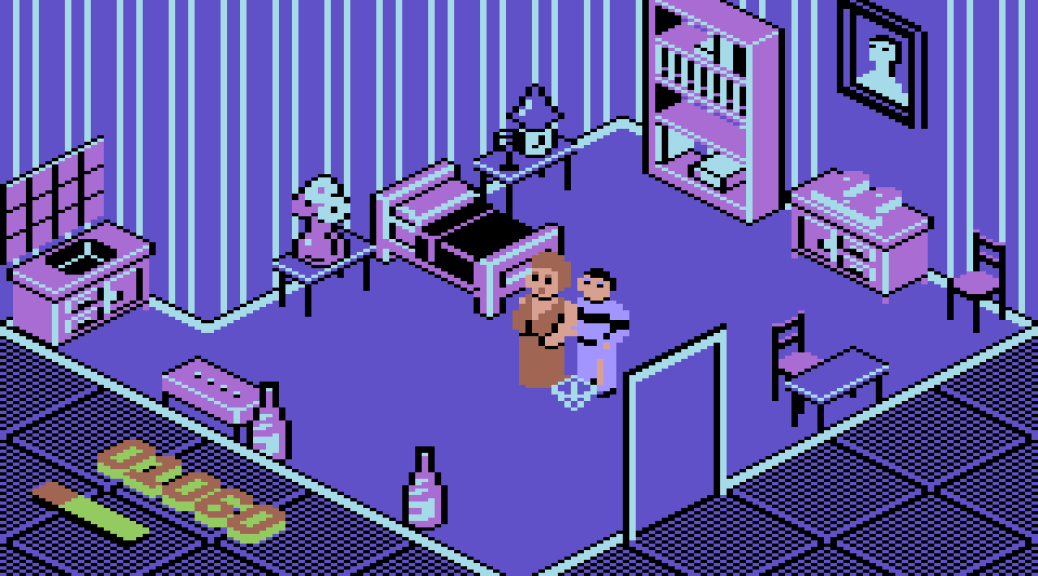
Inside Outing, Commodore 64
The Commodore 64 version of Inside Outing features graphics by the game’s original designer – Michael St. Aubyn – although the coding itself was done by Timedata/Pamela Roberts.

