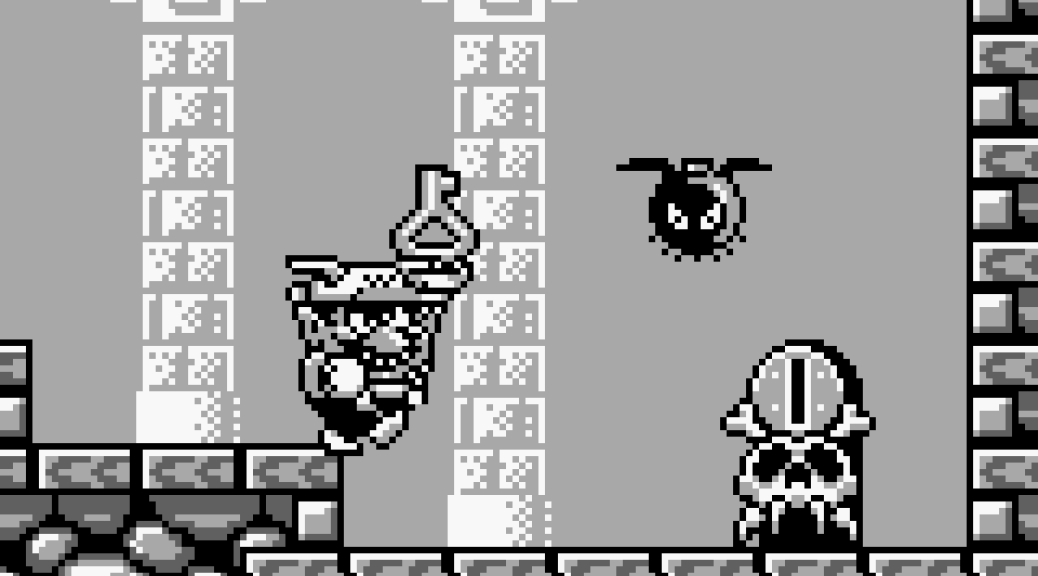
This third game in the Super Mario Land series was the first Nintendo game to give Wario his own title, and also feature him as a playable character. After this, the Wario games went on to become a successful series in their own right.
Category Archives: Company
Video game companies.

Final Fantasy Adventure, Game Boy
The first game in the Seiken Densetsu (aka “Mana“) series was released on the black and white, handheld Nintendo Game Boy in June 1991.
It’s a spin-off from the famous Final Fantasy series, also by Square. In Japan the original title was Seiken Densetsu: Final Fantasy Gaiden (translating as “Holy Sword Legend: Final Fantasy Side Story”). In the West it was released under the title Final Fantasy Adventure.

Golf, Game Boy
Simply called Golf, this 1989 Game Boy title is a conversion of Nintendo‘s classic 1984 Nintendo Entertainment System game and gives a fantastic round of putting and driving on Nintendo‘s humble little handheld.

The Legend of Zelda: Link’s Awakening, Game Boy
The Legend of Zelda: Link’s Awakening (1993) is like a mini version of the Super Nintendo classic A Link To The Past (1991) – both games share more than just the same DNA. At times Link’s Awakening feels like A Link To The Past without colour. Which is a huge compliment because A Link To The Past is one of the best games ever made. This, too, is among the best Game Boy games of all time.
Continue reading The Legend of Zelda: Link’s Awakening, Game Boy
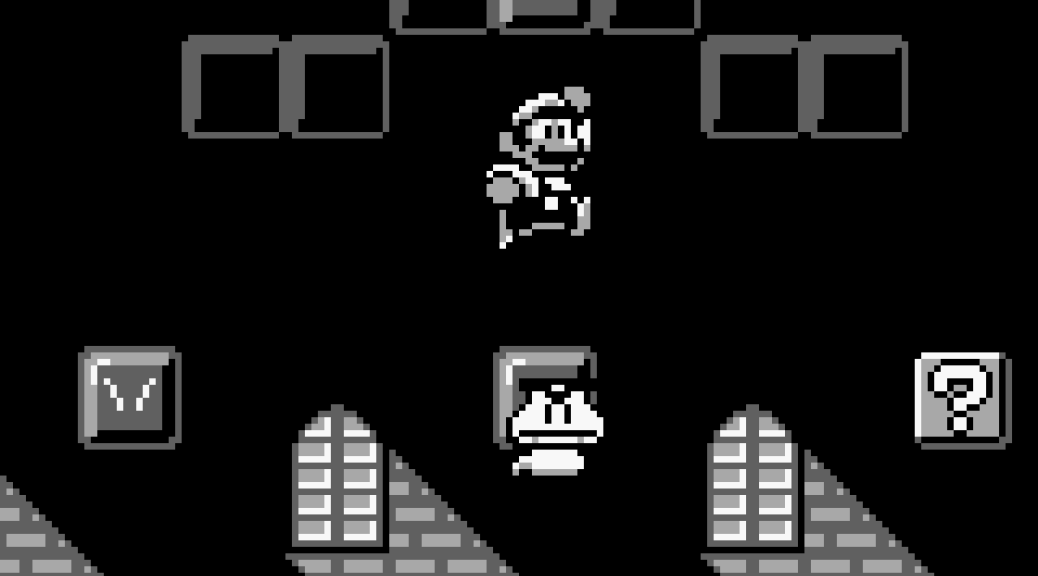
Super Mario Land 2: 6 Golden Coins, Game Boy
There have been quite a lot of excellent 2D Mario games over history, which makes the Game Boy Super Mario Land series easy to overlook. All three Super Mario Land games, however, are stunning and unique ‘best-in-class’ examples of what the Game Boy is actually capable of – ie. shifting lots of sprites around the screen, smooth scrolling, great sounds and perfectly responsive controls.
Continue reading Super Mario Land 2: 6 Golden Coins, Game Boy

Monster Max, Game Boy
Monster Max on the Game Boy is a direct descendant of the classic isometric platform game Head Over Heels, it having been created by Jon Ritman and Bernie Drummond – the same team who made Head Over Heels, and a string of other hits on the ZX Spectrum.
And Monster Max is a brilliant little game! The movement, jumping and inertia are slightly more refined than in some of their other games, which makes Monster Max a joy to play.

Nintendo Game Boy Week
I realised recently that I had completely neglected the Nintendo Game Boy on this blog, in spite of having owned one back in the day, and being a big fan.
Possibly because the black and white handheld’s graphics aren’t the best when it comes to dazzling grabs. The games are great though!
So – to rectify that – I’m going to dedicate a full week to the amazing Nintendo Game Boy and its games. Some of which are iconic.
A few famous franchises began on the Game Boy (the Mana series, for example), and – in spite of the Game Boy‘s limited graphical power – there’s a good reason why this early portable console sold more than 100 million units worldwide.
Here are links to what was published:
Monster Max,
Super Mario Land 2: 6 Golden Coins,
The Legend of Zelda: Link’s Awakening,
Golf,
Final Fantasy Adventure,
Wario Land: Super Mario Land 3,
Trip World,
Castelian,
Pinball: Revenge of the Gator,
Castlevania II: Belmont’s Revenge,
Final Fantasy Legend,
Final Fantasy Legend II,
Tetris,
Cave Noire
Enjoy!
The King of Grabs.
More: Game Boy on Wikipedia

Liquid Kids, Arcade
Liquid Kids is a bizarre-but-fun platform game by Taito, first released into video game arcades in 1990.

Metroid Prime, GameCube
The fifth game in Nintendo‘s famous “Metroid” series, and the first to use 3D graphics, Metroid Prime follows the well-worn gameplay path of the earlier Metroid games (that is: have all your equipment; lose all your equipment; have to find all your equipment again) and again sees you playing as Samus Aran, a female ex-soldier with a powered exoskeleton.

Android 2, ZX Spectrum
Android 2 is a great little maze shooter for the 48K Spectrum, designed and programmed by Salford University graduate Costa Panayi and published by Vortex Software in 1983.
 The King of Grabs