
Pyjamarama is the 1984 follow-up to Automania, and features the same lead character – Wally Week. Which makes it the second game in the Wally Week series.
Tag Archives: platform game

Rotox, Atari ST
Rotox was published by U.S. Gold in 1990. It is an obscure-but-interesting overhead robot shooter, with flat, polygonal platforms suspended over an infinite drop. Which you must of course avoid falling into.

Rolling Bird, PC
Rolling Bird is a modern tribute to the classic arcade game Rolling Thunder.
Graphically it looks a bit like an NES game, or an old arcade game. The colours are bold and the animation simple, but still excellent.
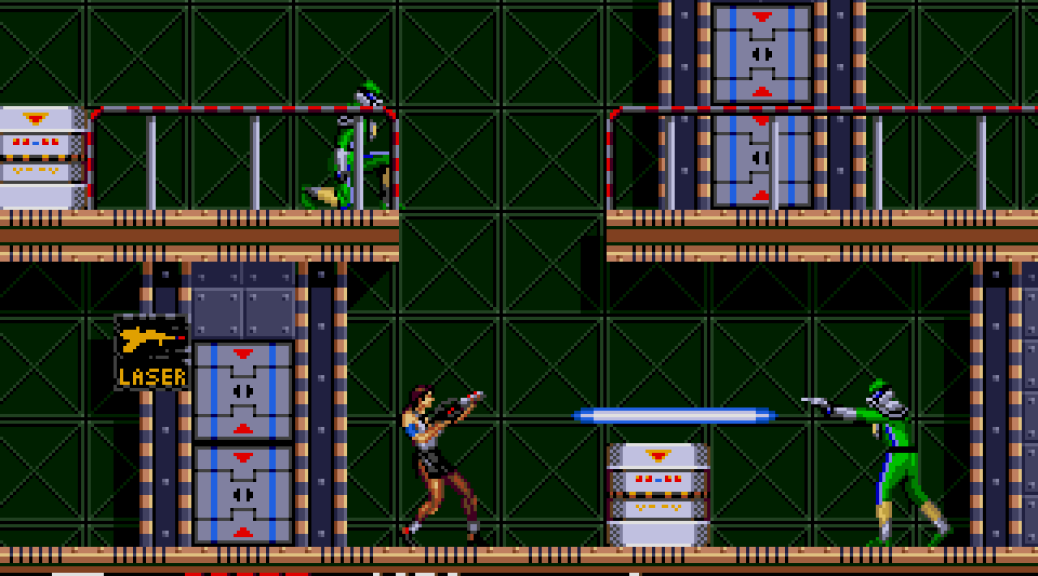
Rolling Thunder 3, Megadrive/Genesis
Rolling Thunder 3 is a Sega Megadrive/Genesis exclusive. It was developed by Now Production and published by Namco in 1993. It did not appear in arcades, like its predecessors did.

Rolling Thunder 2, Arcade
Rolling Thunder 2 continues on from the classic Rolling Thunder: it’s secret agent “Albatross” against the sinister agents of “Geldra”, except this time you can play the game as the rescued Leila (from the first game) from the outset. Or, you can play two-player cooperatively with a friend, which you definitely couldn’t do in the original.
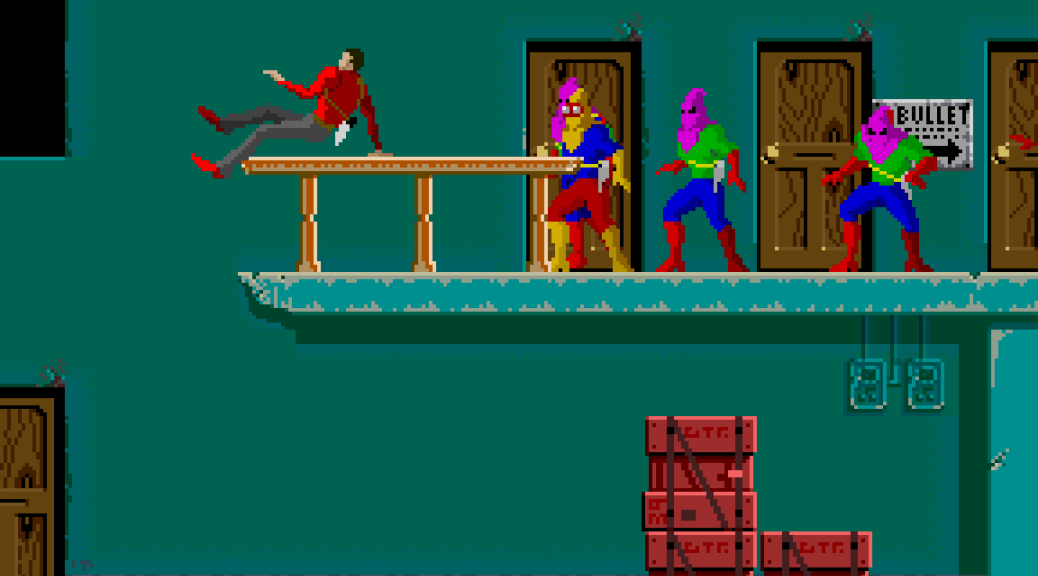
Rolling Thunder, Arcade
Rolling Thunder is a side-scrolling arcade action game, developed and manufactured by Namco in 1986.
You take control of Codename “Albatross” – a highly-agile secret agent and a member of the “Rolling Thunder” espionage unit. Your mission is to rescue your partner, Leila Blitz, from a secret society called “Geldra”, and who are holding her against her will somewhere in New York City.

Super Mario Bros. 3, NES
Of the three Super Mario Bros. games released for the Nintendo Entertainment System, this 1988 release must surely rate as the best.

Super Mario Bros. 2, NES
The North American release of Super Mario Bros. 2 was controversial because it was not the same Super Mario Bros. 2 that was released in Japan – it was a re-skinned game; made into a Mario game, because the Nintendo bigwigs thought the original was too difficult for western gamers.

Super Mario Bros. 2, Famicom Disk System
Super Mario Bros. 2 was initially released on the Famicom Disk System in Japan in 1986, but was not released in North America or Europe in its original form, as you might have expected. It was instead decided that the gameplay was “too difficult” for Western gamers (and also the video games market in North America was undergoing a crash at the time), so Nintendo decided not to release it in English language territories – at least until it was later re-branded as Super Mario Bros.: The Lost levels – and released a different Super Mario Bros.2 in North America instead.
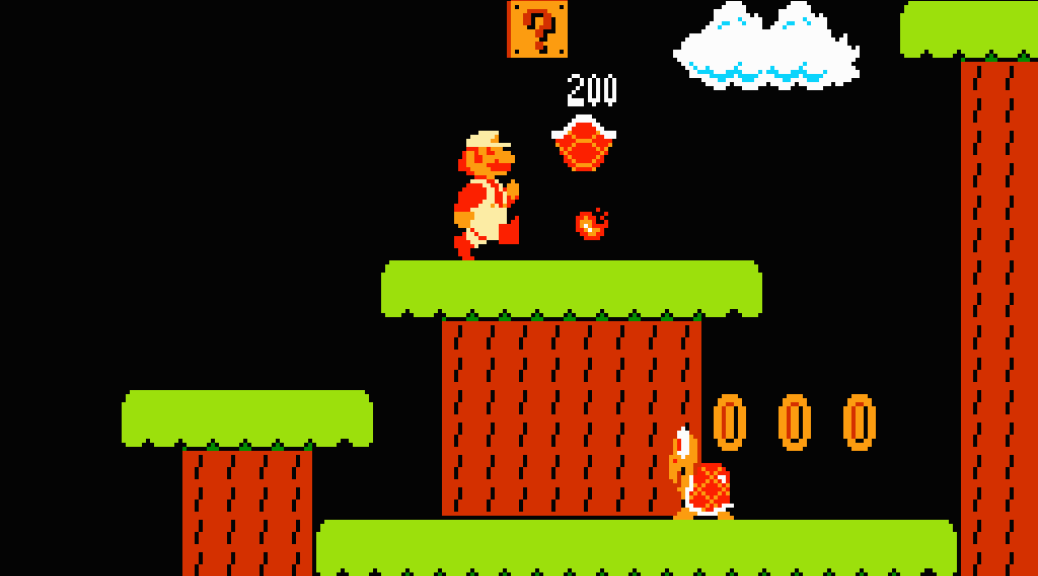
Super Mario Bros., NES
The successor to the 1983 arcade game Mario Bros., Super Mario Bros. was released in Japan and North America in 1985, although it wasn’t released in Europe until 1987.
It is considered by many gamers to be one of the greatest video games of all time, and I wouldn’t dispute that assessment.
 The King of Grabs