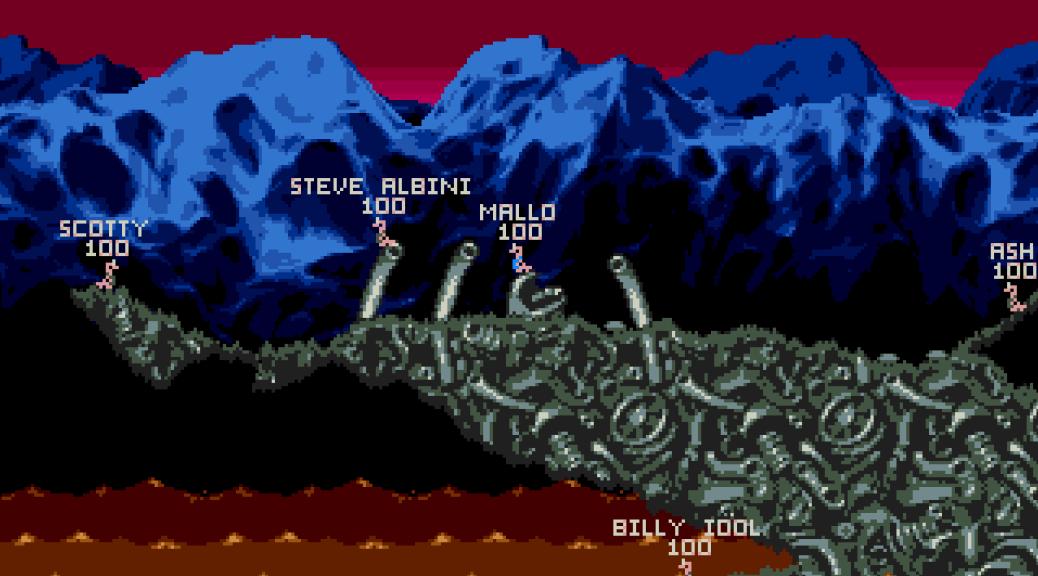
Worms: The Director’s Cut on the CD32 is a beautifully smooth and playable conversion of the Amiga original, with the same highly compelling and ultra-competitive ‘versus’ gameplay.
Tag Archives: jolly

Alfred Chicken, Amiga CD32
Cute, colourful, and a lot of fun, Alfred Chicken is a scrolling platform game developed by Twilight and published by Mindscape in 1993.
The game starts out easy, but by the third level you’ll be tested by more challenging puzzles and trickery. Alfred Chicken is not quite a kid’s game, even if it looks like one.

Auf Wiedersehen Monty, Commodore 16/Plus4
Although Auf Wiedersehen Monty is seen as a weak link in the classic Monty Mole series by some people, I’ve always very much liked it.
I liked the ideas; I liked Monty‘s new jump animation; I liked the variety.

Pikmin, GameCube
Pikmin was released for the Nintendo GameCube in 2001 and was an instant hit with gamers.
Designed and produced by Shigeru Miyamoto, the first game in the Pikmin series introduces Captain Oilmar, an alien who crash lands on a mysterious planet and where he befriends small creatures called Pikmin who help him rebuild his ship.

Track & Field, Game Boy
Konami‘s 1992 conversion of the smash arcade hit Track & Field features more events than the original. In fact, it’s something of a mashup of Track & Field and its famous follow-up Hyper Sports.

Mole Mania, Game Boy
This 1996 release on the Nintendo Game Boy is one of Shigeru Miyamoto‘s least known works, although it really is a hidden gem on the system and is well worth finding and playing now if you’ve never seen it.

Christmas NiGHTS into Dreams, Sega Saturn
Some consider this 1996 ‘freebie’ from Sega to be the best Christmas-themed game of all time. And maybe it is, because – let’s face it – there isn’t much competition.
Christmas NiGHTS into Dreams is an adaptation of the classic Sega Saturn game NiGHTS into Dreams (also released in 1996), which was developed by the famous Sonic Team.
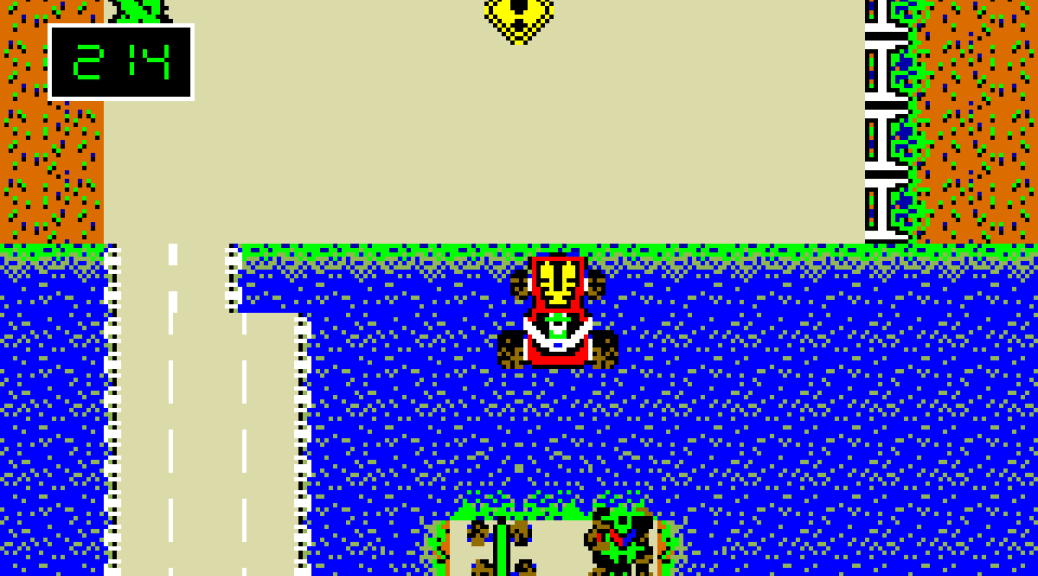
Bump ‘n’ Jump, Arcade
Data East‘s 1982 arcade release, Bump ‘n’ Jump (aka Burnin’ Rubber in its native Japan), is a jolly, vertically-scrolling driving game with a car that can jump up into the air for a few seconds to avoid gaps in the road.
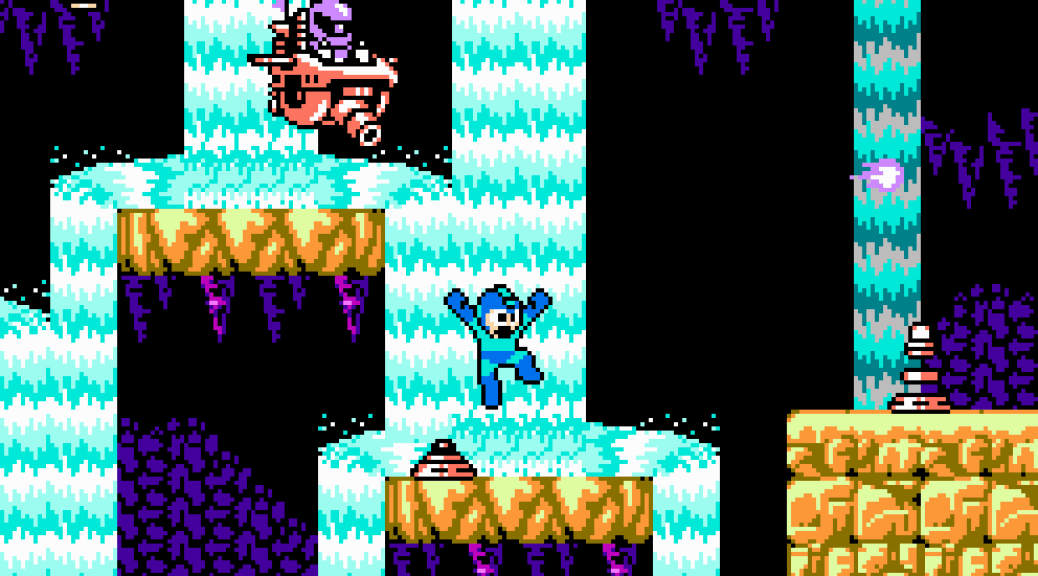
Mega Man 5, NES
1992‘s Mega Man 5 on the Famicom/NES starts with a jaunty tune and a comic book style intro, and then after that it’s back to more of the same platform shooting.
This time Mega Man is up against Stone Man, Gravity Man, Crystal Man, Charge Man, Napalm Man, Wave Man, Star Man, and Gyro Man.

Mega Man 4, NES
Mega Man 4 was published by Capcom for the Nintendo Famicom in 1991.
Other than a new intro sequence (still not making much sense having been badly translated into English), a new set of bad guys, and some newly-designed levels, there’s not a great deal different in this game to what has preceded it.
 The King of Grabs