
Postal is an infamous, tongue-in-cheek, highly controversial shooter that satirises the process of “going postal” – a phenomenon whereby an individual ‘breaks’ and goes on a killing spree (called thus because “going postal” was once, in America, often associated with postal workers). It was developed by Running With Scissors and first published by Ripcord Games in 1997. The game – like every entry in the Postal series – is mindless, in poor taste, and designed to cause outrage, because outrageous things draw attention to themselves. In Postal‘s case it drew the attention of politicians who tried to ban it.
Tag Archives: controversial

Stormlord, ZX Spectrum
Stormlord is a scrolling run-and-gun platform action game designed and written by Raffaele Cecco and Nick Jones, with graphics by Hugh Binns, and was published for the ZX Spectrum by Hewson Consultants in 1989. In it you play the titular Stormlord, a Norse-style warrior who is fighting to rescue fairies from the evil Black Queen.

Carmageddon: Max Damage, PC
Carmageddon: Max Damage is an updated version of Carmageddon: Reincarnation*, which was originally funded by a Kickstarter campaign and released in 2015. Max Damage was developed by (mostly) the same team who made the original Carmageddon and was first released in 2016, and is basically the same game as Carmageddon: Reincarnation but with better graphics and a few small changes to the game structure. The levels are mostly the same, although there are some new additions and tweaks here and there.
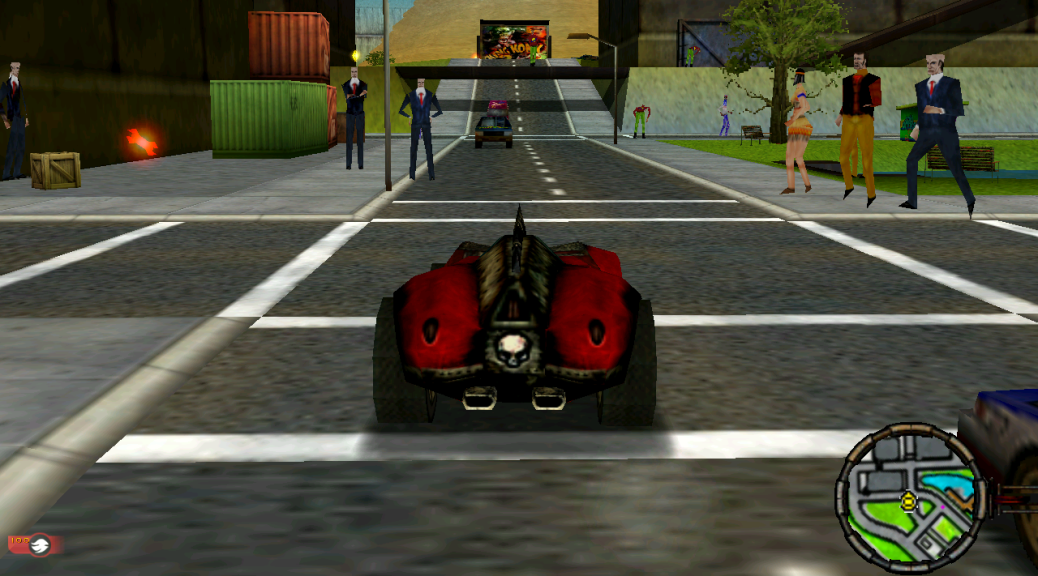
Carmageddon TDR 2000, PC
Also known as “Carmageddon: Total Destruction Racing 2000” or “Carmageddon 3: TDR 2000” in North America, Carmageddon TDR 2000 was not developed by the same team who made the first two Carmageddon games, but an Australian developer called Torus Games. As you might have worked out from the game’s title, it was originally released in the year 2000.

Carmageddon II: Carpocalypse Now, PC
Carmageddon II: Carpocalypse Now is the 1998 sequel to the excellent Carmageddon. Although it was developed by the same team who made the first game (Stainless Software), and although it’s still fun to play to a certain degree, in my opinion it’s not a patch on the original.
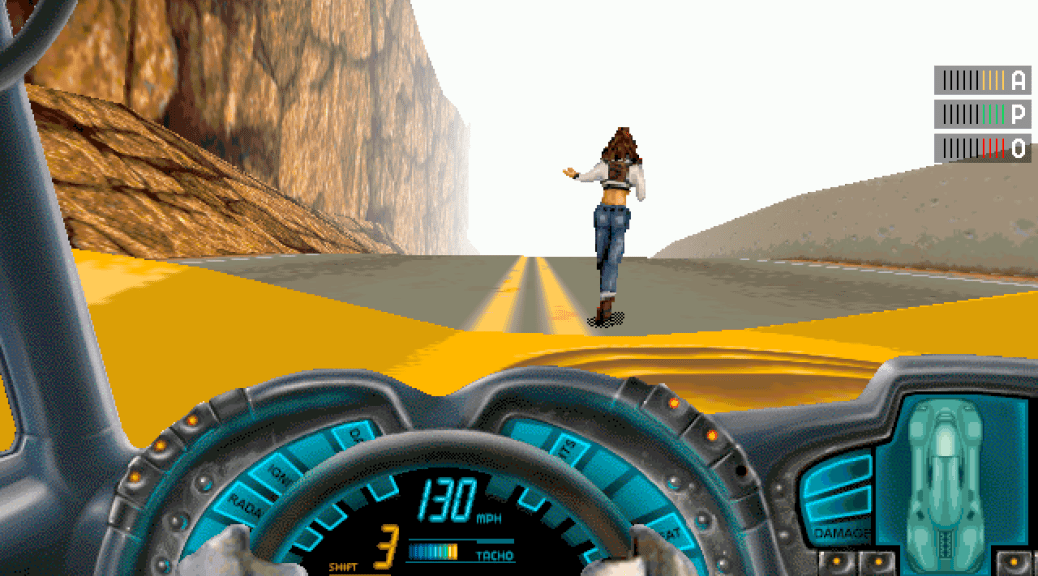
Carmageddon, PC
Carmageddon is a notorious vehicular racing/combat game developed by Stainless Software and published by Sales Curve Interactive for MS-DOS PCs in 1997.
It was originally meant to be a game based on the Mad Max series of films. When that didn’t happen the developers then bought the license to the infamous Roger Corman/Paul Bartel film Death Race 2000, but they later decided to drop it and create their own IP, eventually coming up with the title “Carmageddon“.

Grand Theft Auto III, PlayStation 2
DMA Design‘s Grand Theft Auto III was where the GTA series really took off. It was released in October 2001 via Rockstar Games and took the series in a whole new direction, with a third-person street view perspective, rather than the overhead view of the previous two games.

Grand Theft Auto 2, PlayStation
The sequel to the notorious crime simulator, Grand Theft Auto, was developed by DMA Design and published by Rockstar Games in 1999. Grand Theft Auto 2 is more of the same overhead, scrolling car-stealing action, although this time it is a set in a futuristic metropolis known as “Anywhere City“, where three feuding gangs are competing to become the dominant crime syndicate in the city.

Grand Theft Auto, PlayStation
First released in 1997 for MS-DOS PCs, the first Grand Theft Auto laid the framework for the series as it’s become today, which is: one of the best-selling and most popular video game franchises of all-time. Not to mention one of the most controversial.
Grand Theft Auto was developed by Scottish company DMA Design and published by BMG Interactive in Europe and Take-Two Interactive in North America.

Splatterhouse, Arcade
Splatterhouse is an infamous side-scrolling horror-themed action game that was released into arcades by Namco in 1988. It is known for its grotesque opponents and for its satirisation of well-known horror films of the 1980s.
 The King of Grabs