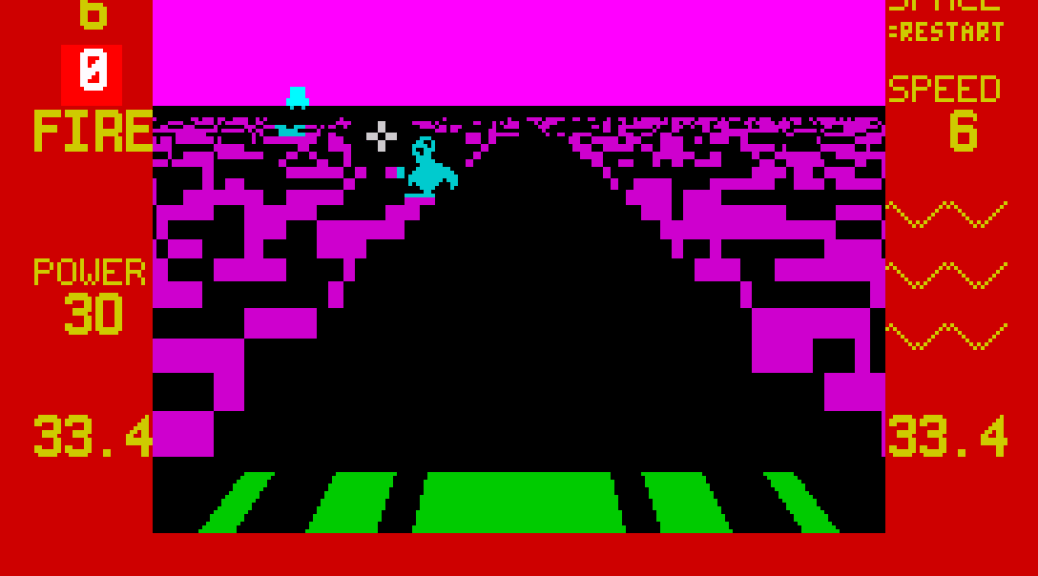
Braxx Bluff was released by Micromega for the ZX Spectrum in 1984. It was written by Tony Poulter.
It’s a weird game – of space exploration – well, the exploration of a planet and its surface.
ZX Spectrum games.
Braxx Bluff was released by Micromega for the ZX Spectrum in 1984. It was written by Tony Poulter.
It’s a weird game – of space exploration – well, the exploration of a planet and its surface.
Bobby Bearing is an interesting isometric action game on the ZX Spectrum, published by The Edge in 1986.
You play as Bobby – a ball bearing – and must roll around the large, colourful maze, looking for and rescuing his four lost brothers and one cousin.
Booty was a very early budget release from Firebird Software (the video game division of British Telecom) and was important in a number of ways.
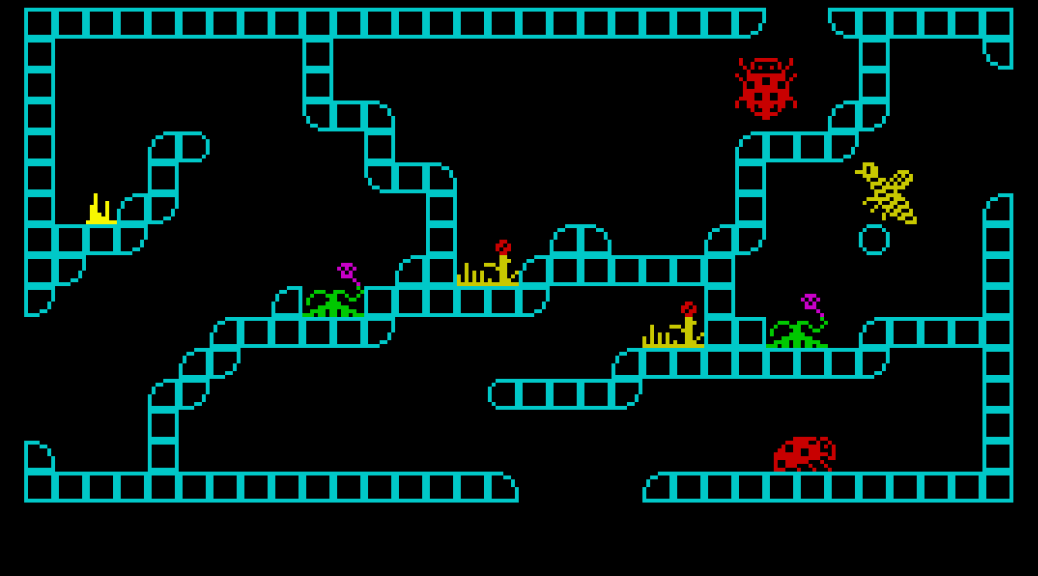
This 1983 sequel to Bug-Byte‘s The Birds and the Bees is a simplistic maze game, but with excellent controls as you control a bee (with plenty of inertia), on the lookout for a kidnapped friend (kidnapped by ants, no less).
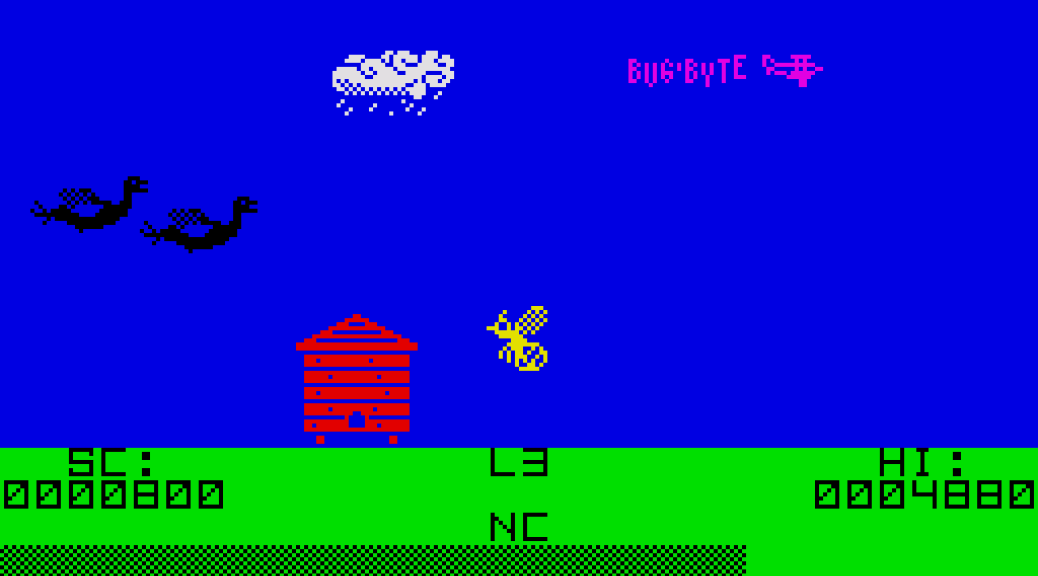
The Birds and the Bees is a simple, side-scrolling collect ’em up, with you playing a bee, out collecting pollen from nearby flowers. It was released by Bug-Byte Software on the ZX Spectrum in 1983.
Mike Richardson‘s Combat Lynx is a very effective helicopter combat sim, first released for the Sinclair ZX Spectrum by Durell Software in 1984.
A conversion of the obscure Jetsoft arcade game, Cavelon is a simple but challenging maze game where you play a knight trying to collect the pieces of a door to create the exit to the next level.
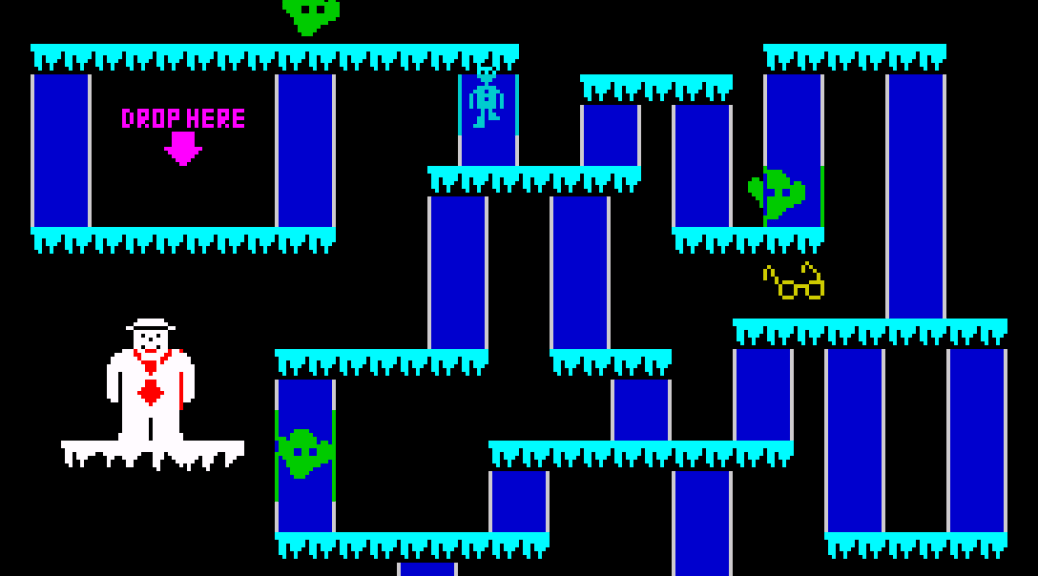
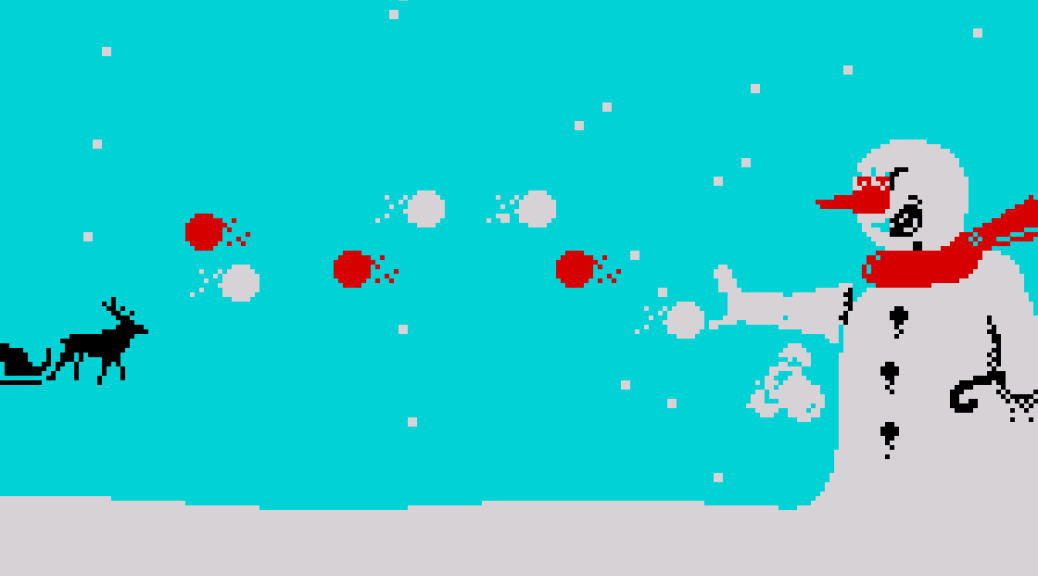
The Snowman by Quicksilva is based on the Raymond Briggs novel of the same name, but bears about as much relation to it as a penguin does to an albatross…
Santa’s Christmas Capers is a Christmas-themed game, published on the ZX Spectrum by Zeppelin Games in 1990.
Steve Turner‘s 1984 release Avalon is a groundbreaking adventure game with pseudo 3D graphics, released only for the ZX Spectrum.




 The King of Grabs