
A relatively obscure Taito arcade game from 1989*, Fighting Hawk is a vertically-scrolling bullet hell shooter where you fly an A-10 ‘Tankbuster’ up the screen, fighting its way through waves of enemies and bosses.
Category Archives: Taito

Bubble Memories, Arcade
Bubble Memories: The Story of Bubble Bobble III was released into arcades by Taito in 1996, and – as the subtitle makes clear – this is a canonical Bubble Bobble sequel. It has been described as “Bubble Bobble on steroids”…

Puzznic, Arcade
Puzznic is a one or two-player, puzzle-based, tile-matching arcade game, released by Taito in 1989.
And, while it might not look like much, it is actually a very clever and compelling game.

Special Criminal Investigation, Commodore 64
Special Criminal Investigation is quite a ‘special’ game. It is part of the Chase HQ series and was released on cartridge only, for the Commodore 64 at least, by Ocean Software in the UK.
SCI was also released late in the Commodore 64‘s lifetime (in 1990 to be precise), so benefited from coders knowing advanced programming techniques that could push the beige bread bin further than it had ever been pushed before.
And the result is a fast-paced, visually-impressive, and highly playable racing game. Sorry, chasing game… A conversion of the Taito arcade game, sometimes known as simply S.C.I. or Chase HQ 2: Special Criminal Investigation.
Continue reading Special Criminal Investigation, Commodore 64
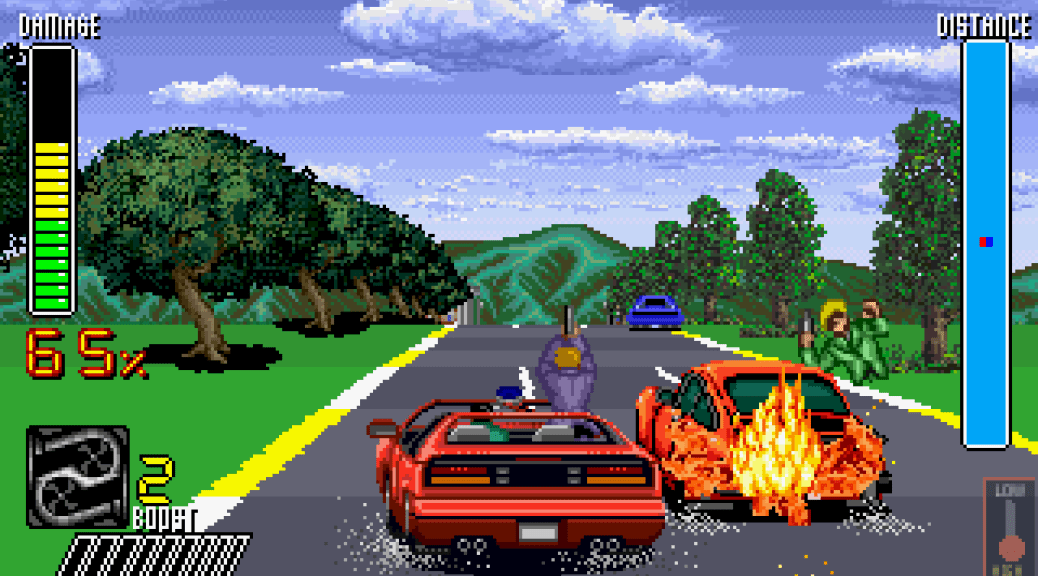
Special Criminal Investigation, Arcade
Sometimes known simply as S.C.I. or Chase HQ 2: Special Criminal Investigation, this high octane driving sequel to Chase HQ is another fast-paced driving game with you playing a cop hot on the heels of some nasty criminals.
It was developed and manufactured by Taito and released into arcades in 1989, and – for my money – is one of the most exciting and heart-pumping 2D chase games ever made.
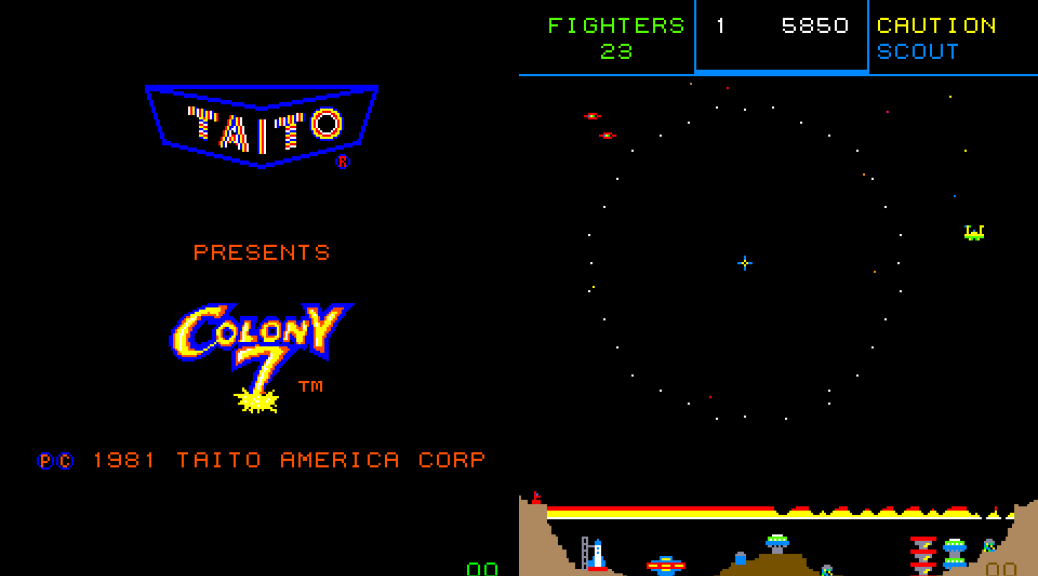
Colony 7, Arcade
Taito‘s American division developed this vertical screen base defence game in 1981. Colony 7 owes quite a bit to Missile Command, if the truth be known, and was also probably the very first video game to feature “rip-off” micro-transactions too…
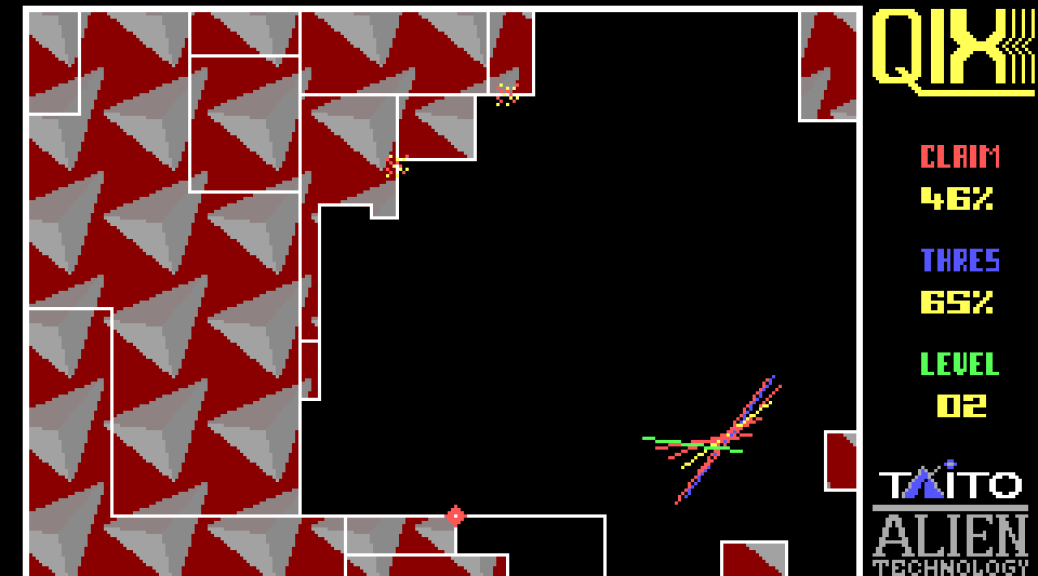
Qix, PC
The 1989 PC MS-DOS conversion of Taito‘s classic arcade game Qix was programmed by the Alien Technology Group and is excruciatingly difficult. At least: that’s what I found.

Arkanoid: Revenge of Doh, Arcade
Arkanoid: Revenge of Doh (aka Arkanoid 2) is the sequel to Taito‘s hit game Arkanoid and was released into arcades in 1987.
It takes the ‘bat and ball’ genre (aka the ‘Breakout‘ genre) to previously unheard of levels of both playability and difficulty, and it also managed to influence a lot of other games in the process.
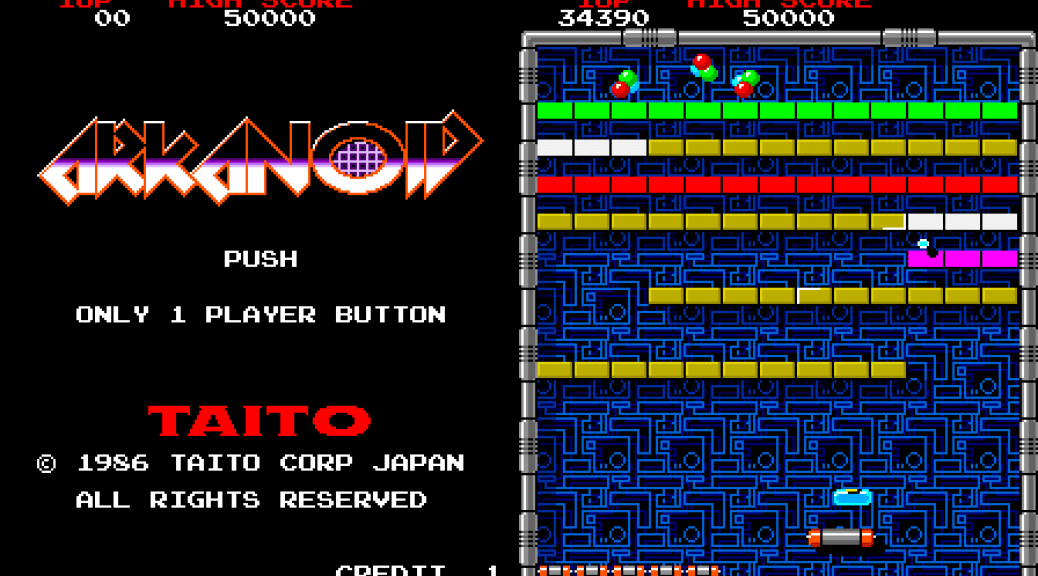
Arkanoid, Arcade
Taito‘s Arkanoid was released into arcades in 1986 and did for bat and ball games (often referred to as Breakout clones) what Mario did for platform games. That is: revitalise them with new ideas and features.

Lufia and the Fortress of Doom, Super Nintendo
This is the first game in the Lufia series – developed by Neverland and published by Taito in 1993 for the Super Nintendo.
Lufia and the Fortress of Doom is a cute and colourful Japanese Role-Playing game with Zelda-style presentation and turn-based combat.
Continue reading Lufia and the Fortress of Doom, Super Nintendo

