
Way back to 1984 and tennis on the ZX Spectrum.
Match Point, by Psion, was about as good as computer tennis got in the early Eighties.
Way back to 1984 and tennis on the ZX Spectrum.
Match Point, by Psion, was about as good as computer tennis got in the early Eighties.
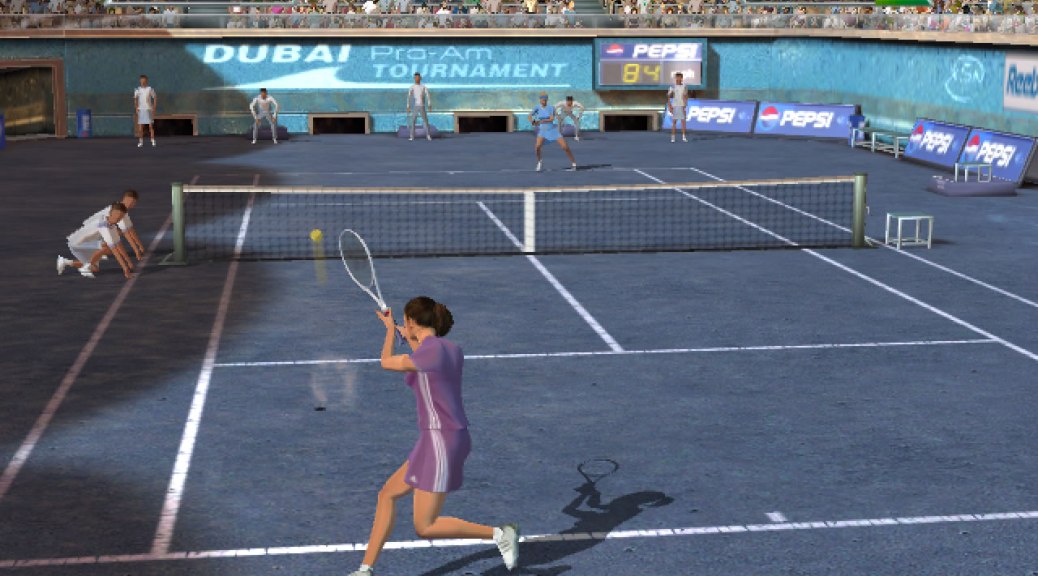
PAM Development‘s 2003 release, Top Spin, was the moment when tennis games came of age and went full 3D.
From Match Point on the ZX Spectrum, via Super Tennis on the Super Nintendo, to this… Arguably the pinnacle of all modern tennis games.
Mario games may be looked down upon by some gamers as “for kids”, but this game proves otherwise.
Super Mario World (1990) may look and sound like a kid’s game on the surface, but – underneath the hood – the gameplay is for pros…
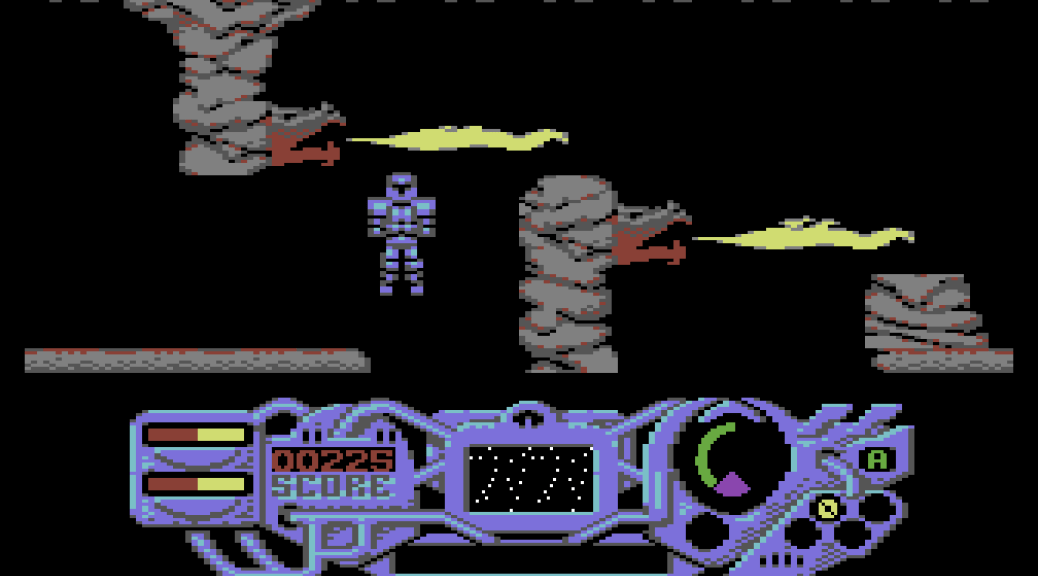
Released by Palace Software in 1986, The Sacred Armour of Antiriad (known as “Rad Warrior” in North America), is an action platform game featuring a half naked hero, called Tal, who must find a set of armour (called “Antiriad”), wear it, and go off on an adventure looking for trouble.
Continue reading The Sacred Armour of Antiriad, Commodore 64
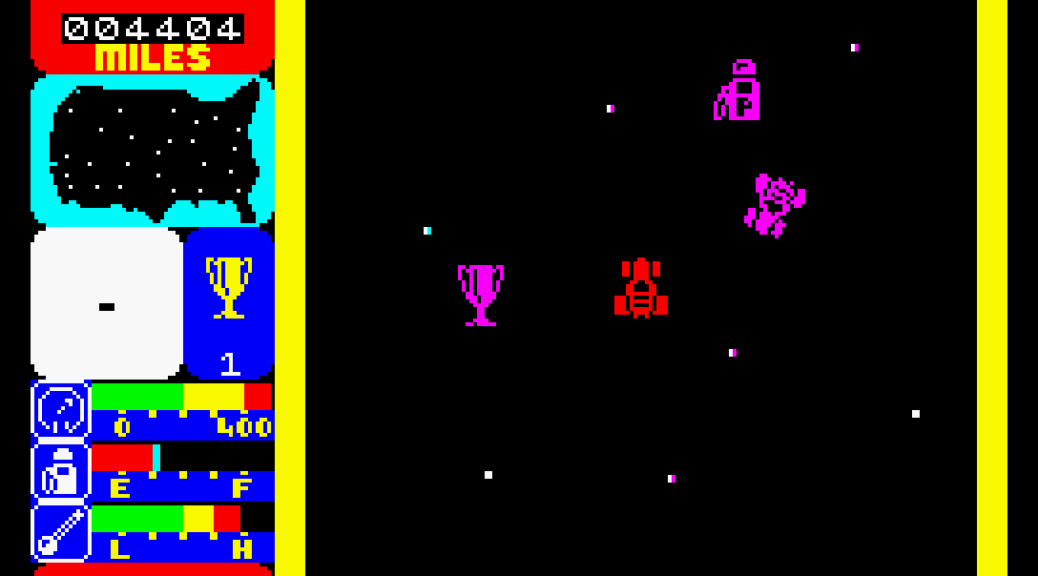
Set in a post-apocalypse USA (in the year 3472, no less), Tranz Am is an overhead racing game where the aim is to collect eight cups (The Great Cups of Ultimate), which have been randomly dispersed around the continent.
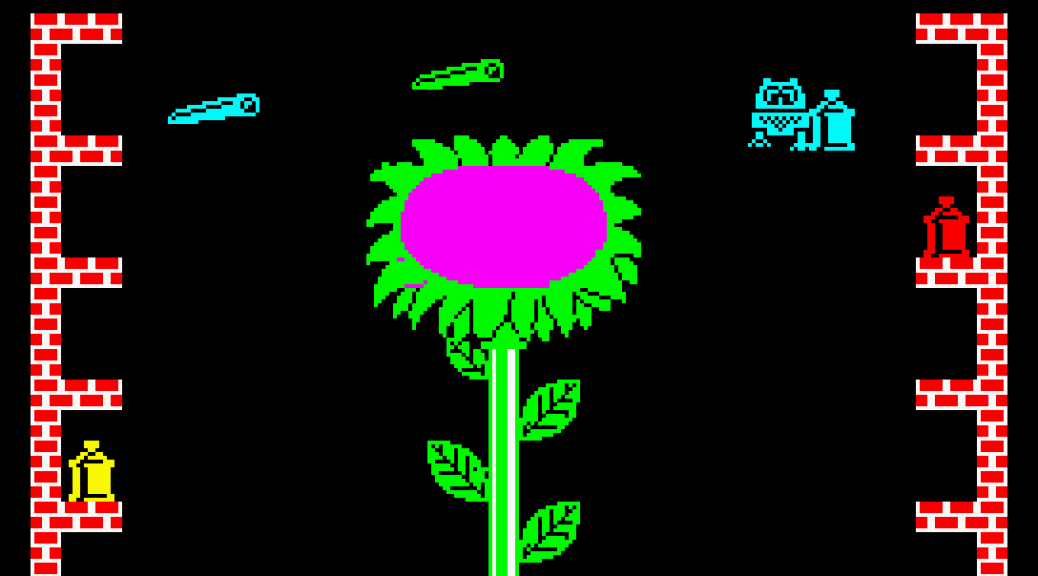
Featuring a cute robot (called Robbie) whose job it is to keep the insects away from the plants.
Another of Ultimate‘s early ZX Spectrum classics, Cookie – from 1983 – is a simple arcade-style action game where you are a little chef sprite shooting bags of flour at ingredients to knock them into a mixing bowl.
Geoff Crammond‘s The Sentinel (aka The Sentry in North America) is a strange chess-like game where you have to sneak up on an overseeing watcher, who is perched high on a platform, overlooking the play area, and absorb him before he does the same to you.
A 1983 Spanish cult hit from Paco & Paco (aka Indescomp), Bugaboo is a simple platform game were you have to jump from ledge to ledge, to reach the hole at the top of the cave, and freedom.
The Atari ST version of Spindizzy is arguably the best one around.
Spindizzy Worlds, which appeared on Atari ST, Amiga and Super Nintendo in 1990 – is a more compartmentalised reworking of the original Spindizzy, with branching levels and puzzles and gem-collecting in a challenging isometric world. Well, various worlds. All themed in a particular graphical style, and each with its own set of individual problems.



 The King of Grabs