
Revenge of the Mutant Camels is the 1984 sequel to Attack of the Mutant Camels and this time you play as a camel who must fight his way through 42 different attack waves. You can choose sequential or random attack waves, but the aim is the same: you must survive through all 42 waves to beat the game.
Tag Archives: sequel
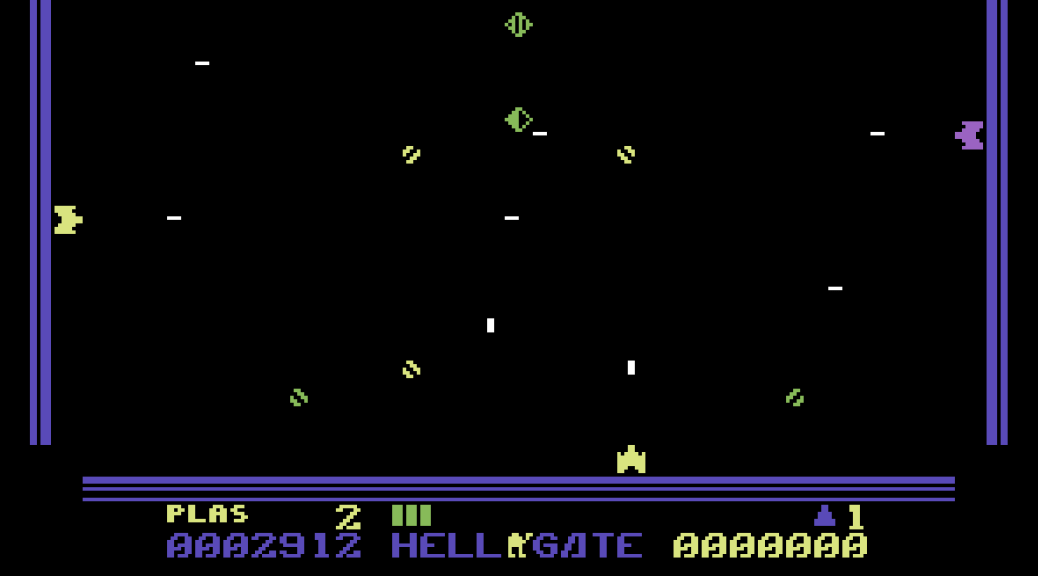
Hellgate, Commodore 64
I would say that Hellgate is one of my least favourite Jeff Minter/Llamasoft games. While it is competently-programmed and nicely-presented, Hellgate is also a very difficult game to play effectively as a single-player.

Matrix: Gridrunner 2, Atari 8-bit
Jeff Minter‘s Matrix: Gridrunner 2 was unfortunately re-titled and marketed as “Attack of the Mutant Camels” for the Atari 8-bit North American market, which causes considerable confusion about this game even now. I’m sticking with the original titles, to avoid confusion, for the HESWare re-titled versions of Matrix.

Matrix: Gridrunner 2, ZX Spectrum
Published by Salamander Software in 1984 the Spectrum conversion of Jeff Minter‘s Matrix: Gridrunner 2 is a decent enough game, with non-flickery graphics and responsive controls. The conversion was coded by Shaukat Ali Tenquist, who kindly commented below to let us know.

Matrix: Gridrunner 2, Commodore 64
The sequel to Gridrunner, Matrix: Gridrunner 2, is a more refined, varied and engaging incarnation of Gridrunner than was seen previously. It was written by Jeff Minter and first published by Llamasoft in 1983.

Hellgate, VIC-20
Another classic single-screen shoot ’em up from Jeff Minter – that is the sequel to his earlier game, Laser Zone. Hellgate was published by Llamasoft in 1983 for the VIC-20 and further refines Minter‘s ideas for X and Y shooters.

Matrix: Gridrunner 2, VIC-20
Matrix: Gridrunner 2 was confusingly re-titled as “Attack of the Mutant Camels” on the VIC-20 in North America. The suits in charge of this re-naming fiasco insisted that the title from one of Llamasoft‘s older games be used, instead of “Matrix“.
Well: f*ck them, I’m calling it “Matrix: Gridrunner 2” in light of a lack of some common sense here…
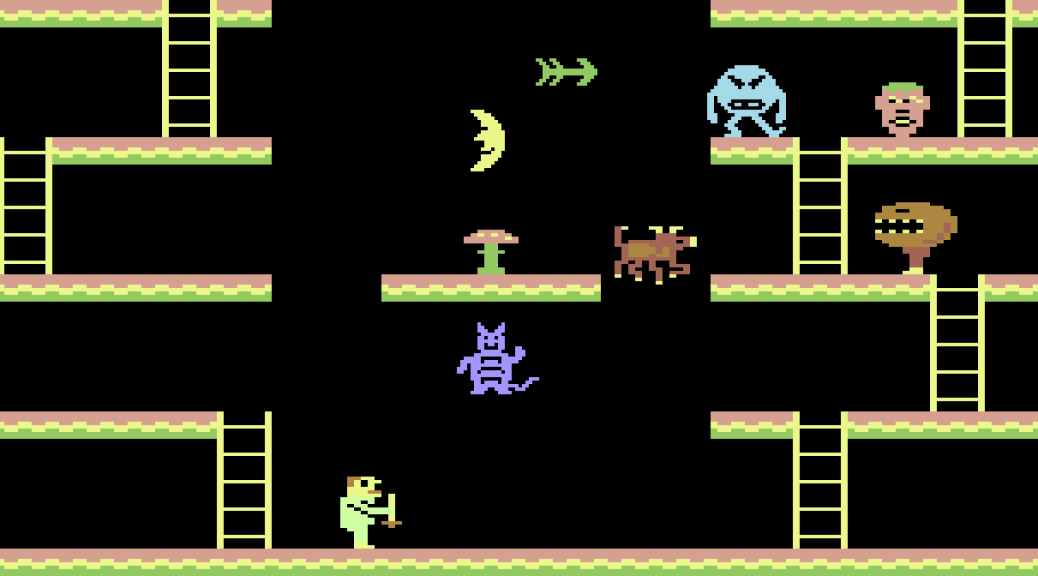
Wallie Goes to Rhymeland, Commodore 64
Wallie Goes To Rhymeland is the third and final game in the “Wallie” series, designed and programmed by Andrew Challis, with graphics by his sister, Claire. The game was first published by Interceptor Software in 1984 for the Commodore 64 and it is mostly forgotten now. Which is a pity because the game has some charm; it was made by a brother and sister team, and it also brought joy to the lives of everyday gamers back in the mid-Eighties.

Trollie Wallie, Commodore 64
Released by Interceptor Software in 1984, Trollie Wallie is a scrolling platform game featuring a weird mouth on legs, called “Wallie“. It’s actually the sequel to Wheelin’ Wallie which came out through Interceptor earlier that same year.

Shaman King: Master of Spirits 2, Game Boy Advance
Shaman King: Master of Spirits 2 is the 2005 sequel to the accomplished Shaman King: Master of Spirits and was again developed and published by Konami, only for the Game Boy Advance.
Continue reading Shaman King: Master of Spirits 2, Game Boy Advance

