
The Commodore 64 version of Ultima VI: The False Prophet was programmed by Axel Brown of Imagitec Design and published by Origin Systems in 1991 and is the only 8-bit port of the game available. It is a somewhat stunted version of Ultima VI, with a number of changes made to make it fit onto three double-side floppy disks (six sides in total).
Tag Archives: potions

Ultima VI: The False Prophet, PC
Ultima VI: The False Prophet is the sixth game in the Ultima series and the third and final game in the “Age of Enlightenment” trilogy. It was first released by Origin Systems in 1990 and the PC MS-DOS version was the original target platform. There is no Apple II version of this game. It is also the most complex game in the series so far.

Shining Soul II, Game Boy Advance
The sequel to Shining Soul – Shining Soul II – was once again developed by Nextech and Grasshopper Manufacture and was first released for the Game Boy Advance in 2003. It’s another real time RPG, only this time it’s more detailed and challenging than the previous game.

Shining Soul, Game Boy Advance
Shining Soul is an isometric RPG with real time combat, developed by Nextech and Grasshopper Manufacture and published by Sega in Japan and Europe and Atlus in North America. It was first released for the Game Boy Advance in 2002.

Rogue, Atari 8-bit
I was hoping that the Atari 8-bit version of Rogue might be better than the other 8-bit versions (or at least a balance between the awful C64 version and the half-decent Amstrad version), but I was hoping for too much – especially as it’s another Mastertronic “special” (ie. a good example of a publisher not giving a sh*t about what they released).
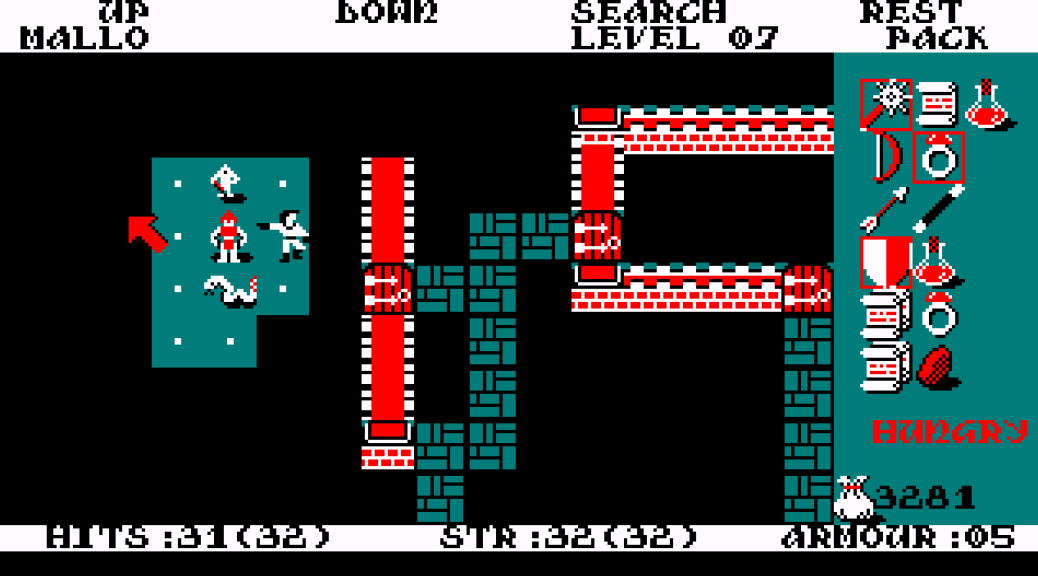
Rogue, Amstrad CPC
The Amstrad CPC version of Rogue is arguably the best of the 8-bit conversions from Mastertronic, although it’s not without its problems. It was developed by Icon Design and first published in 1988.

Rogue, ZX Spectrum
Rogue on the ZX Spectrum was developed by Icon Design and published by Mastertronic Added Diminsion in 1988. And it’s a pretty poor conversion of the classic dungeon-crawler.

Rogue, Commodore 64
The Commodore 64 conversion of Rogue was developed by Icon Design and published by Mastertronic in 1988, and it is a bugged, incomplete, and un-finishable version of the game that demonstrates the utter contempt for which Mastertronic held for both the game, and for gamers who paid money for it.

Rogue, Atari ST
The Atari ST version of the classic dungeon-crawler, Rogue, is arguably the best conversion of the game out there. It was developed by A.I. Design and published by Epyx in 1986 and combines the best bits from the original with new graphics and a few new features of its own.
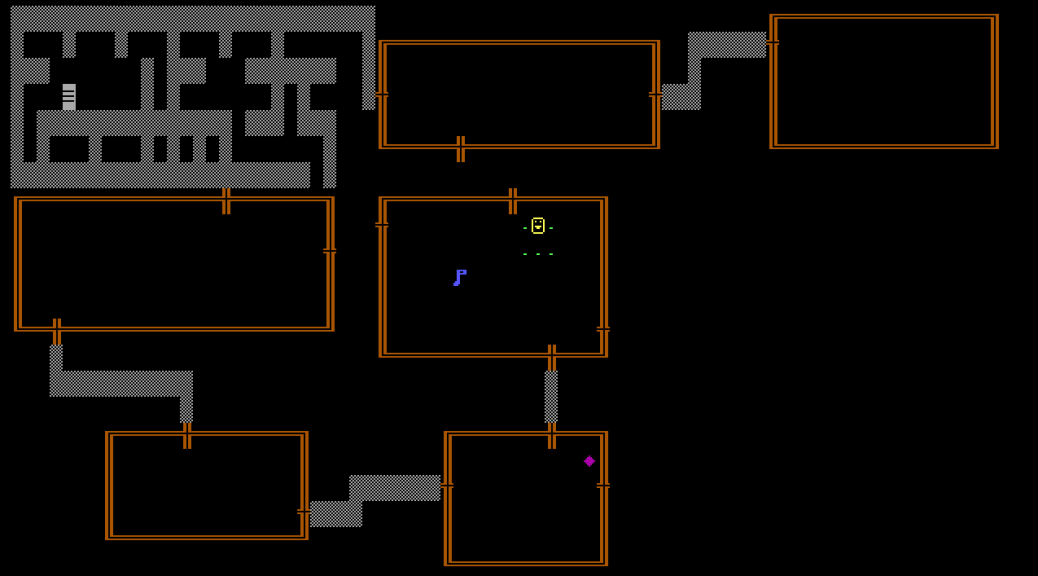
Rogue, PC
Rogue is an influential dungeon-crawling Role-Playing Game originally created by Michael Toy and Glenn Wichman (with later contributions by Ken Arnold) for Unix-based mainframes in 1980.
The original version of Rogue used the ASCII character set (text symbols) to create the world, and that is what you can see here in this first commercial version of game, published by Epyx in 1985.
 The King of Grabs