
Juno First is a kind of overhead shoot ’em up, but with a three-quarters perspective into the screen.
Tag Archives: space

R-Type III: The Third Lightning, Super Nintendo
This 1994 Super Nintendo exclusive (at the time) is half sequel, half remake of Irem‘s classic arcade shooter, R-Type.
Continue reading R-Type III: The Third Lightning, Super Nintendo

Uridium, Atari ST
Andrew Braybrook‘s classic C64 shooter, Uridium, was given a 16-bit release courtesy of Joe Hellesen and Mindscape in 1986.

Mercenary, Atari ST
A fine 16-bit conversion of the classic Mercenary by Paul Woakes, written by Woakes himself it seems. And why wouldn’t it be? It’s a great game and deserves doing right, so who better to code it than the original creator?
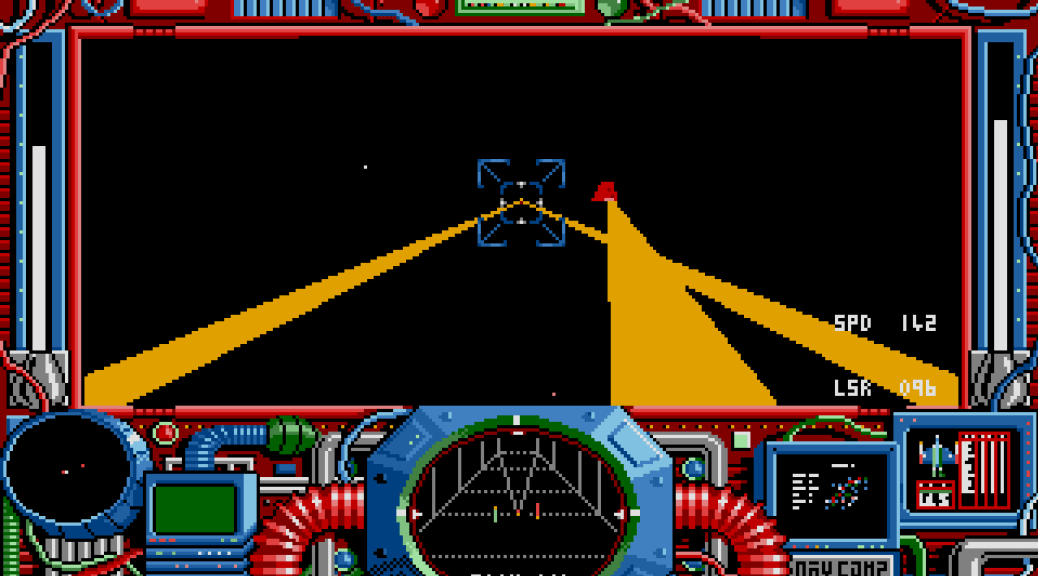
Federation of Free Traders, Atari ST
A space exploration and trading game from 1989 that was meant to rival Elite. And it almost did. Except for a fundamental problem… The problem was: travelling around; jumping from planet to planet was… To put it mildly: sticky.
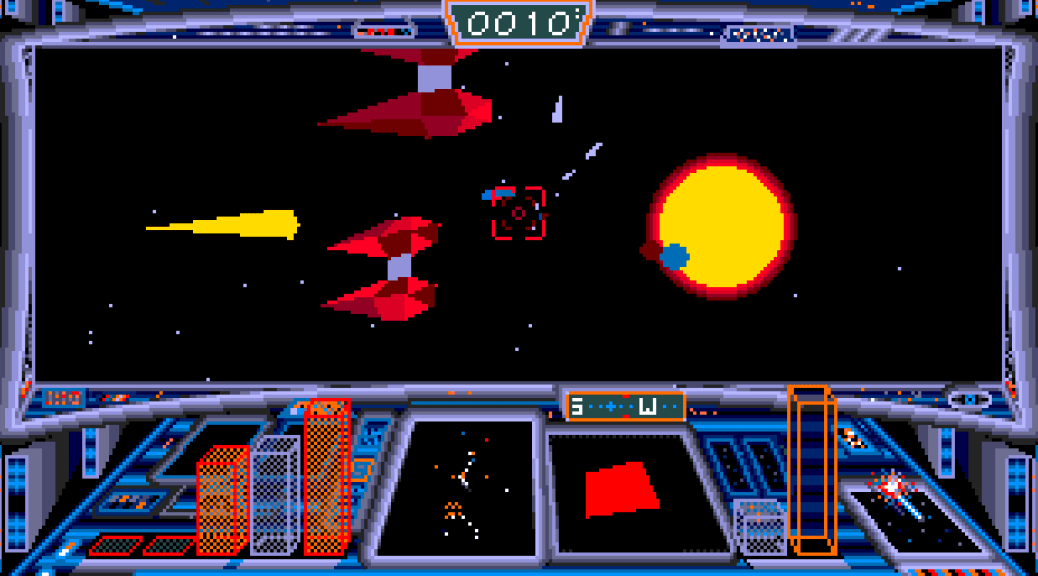
Starglider 2, Atari ST
Starglider 2 was met with pretty much universal acclaim when it was first released in 1988. And – as a 3D shooter – it broke new ground in a number of different areas.
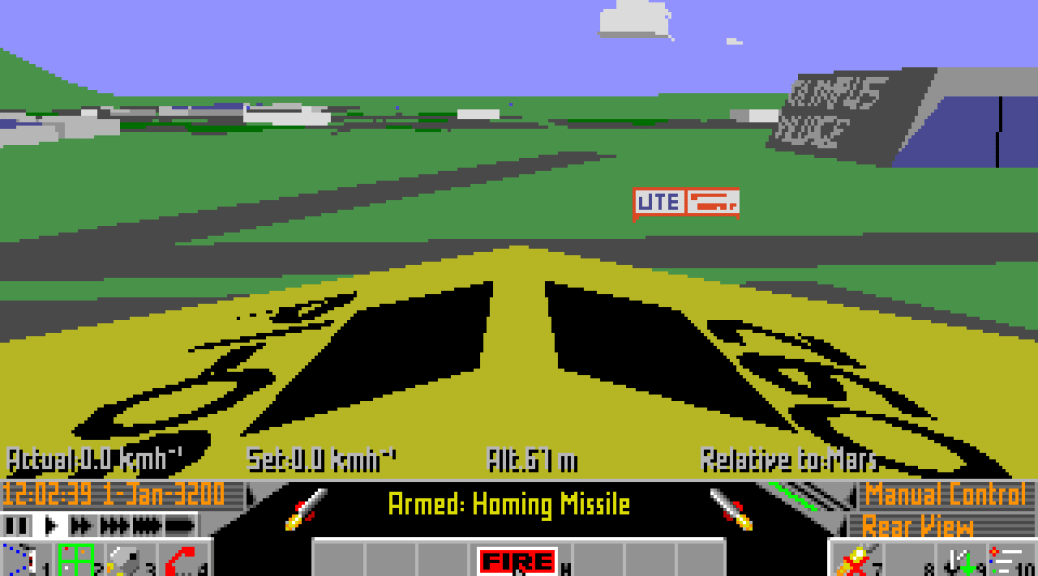
Frontier: Elite II, Atari ST
While all the other space exploration and combat games on 16-bit home computers flail around in their own mucky diapers, Frontier: Elite II makes a mockery of everything else in its class by not only being a staggering piece of programming, but also a damn fine, playable game too.
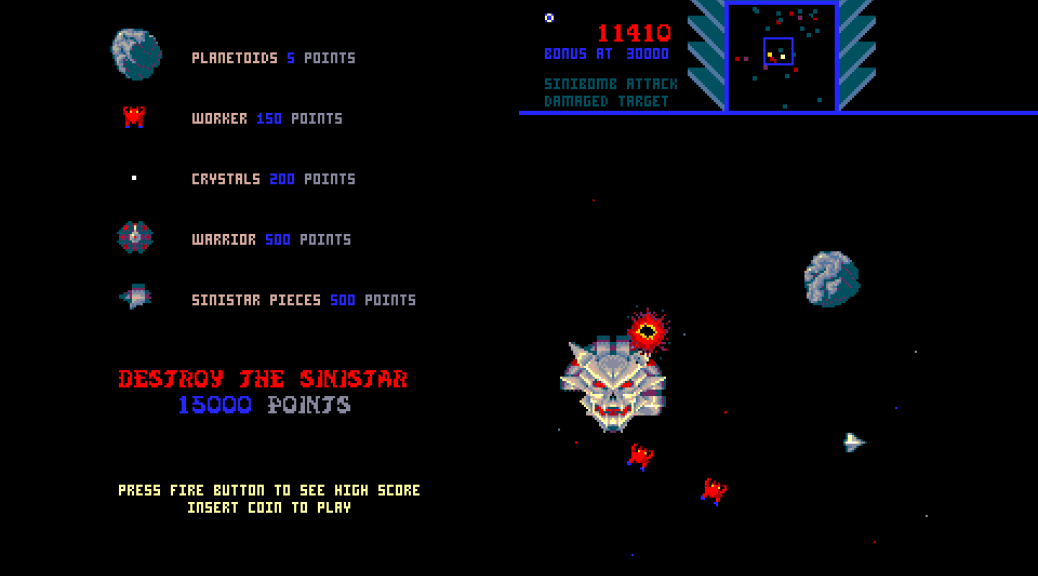
Sinistar, Arcade
People forget how early Sinistar was – 1983. Which was a hell of a year for old arcade shooters!
Of the first colour arcade shooters, the class of 1983 were definitely second or third generation – in terms of ideas, patterns, movement, challenge, and sophistication. Graphically they were becoming a great improvement over early shoot ’em ups.
Sinistar is a good example of this. The graphics are much more detailed and colourful than the old arcade shooters of 1980/81.

Zaxxon, Arcade
Sega‘s Zaxxon is an early arcade shooter that broke the mould. It was first released in 1982.
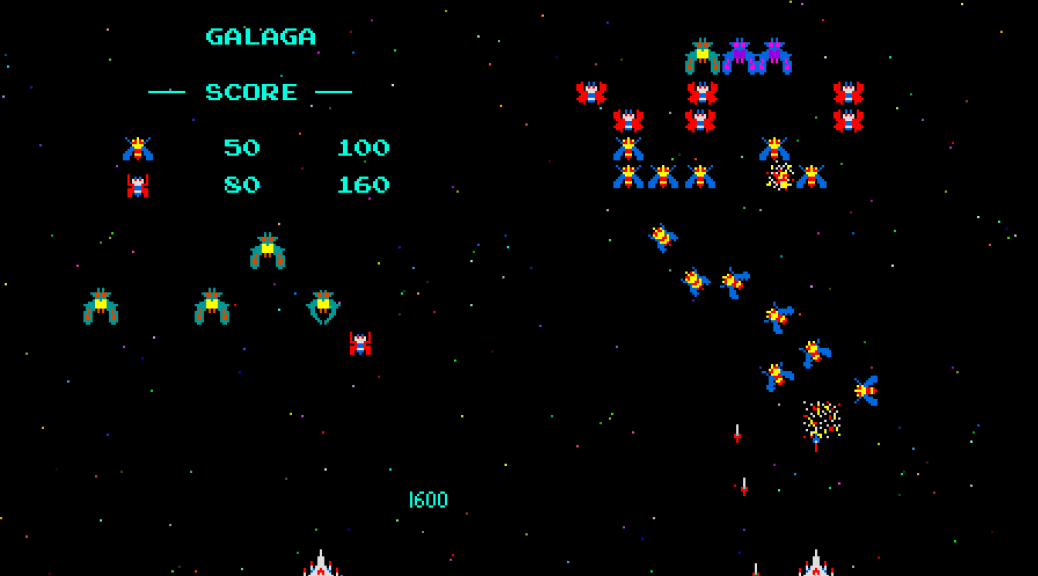
Galaga, Arcade
Namco‘s Galaga – the sequel to Galaxian – came out in 1981 and was an immediate hit with gamers.
Gone were the days of Space Invaders and rigid attack patterns – the baddies in Galaga danced around the screen; made circles, and flew around in distinct and fluid attack patterns. It was new and it was revolutionary!
 The King of Grabs