
Published by Incentive Software in 1991, Total Eclipse 2: The Sphinx Jinx is a direct follow-up to the 1988 Freescape classic, Total Eclipse.
Continue reading Total Eclipse 2: The Sphinx Jinx, ZX Spectrum
Published by Incentive Software in 1991, Total Eclipse 2: The Sphinx Jinx is a direct follow-up to the 1988 Freescape classic, Total Eclipse.
Continue reading Total Eclipse 2: The Sphinx Jinx, ZX Spectrum
The ZX Spectrum version of Total Eclipse was the first version of the game released.
Using the legendary Freescape Engine, Total Eclipse is an Egyptian-themed exploration/puzzle game set in a primitive 3D world. Primitive because it was one of the first ever games to allow games-players to explore a 3D world in this way, and it worked quite well, in spite of the low frame rate and slowdown.
Starion is a classic space combat game, written by David Webb and published by Melbourne House in 1985.
Developed by Clockwork Games and published by Psygnosis in 1995, 3D Lemmings is an alternative take on the Lemmings gameplay formula – this time, as the title suggests, in a 3D environment. And it doesn’t work too badly…
Also known as “Star Fighter” in some quarters, Star Fighter 3000 is a game from Fednet Software, published by Krisalis in 1994.
It’s a third-person shooter with relatively primitive 3D graphics, in a similar kind of style to Nintendo‘s Star Fox.
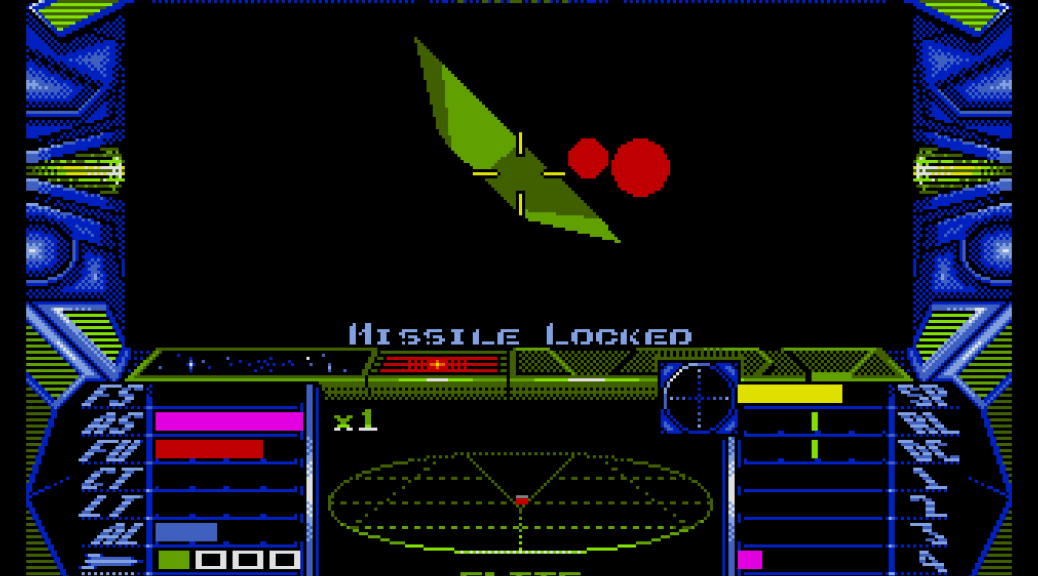
The Acorn Archimedes conversion of Bell and Braben‘s classic Elite was written by Warren Burch and Clive Gringras and published by Hybrid Technology in 1991.
It is considered by many to be the definitive version of Elite available, although that is both a matter of taste, and also a matter of actually getting the game to run in a RISC OS environment.
Developed by Imagineer, the Nintendo Entertainment System version of Elite is pretty good – considering that the NES isn’t particularly suited to generating wireframe 3D graphics. Yes, the wireframe 3D is slow (like in all the 8-bit versions of Elite), but not to the point where it makes the game unplayable.
Developed by Mr. Micro and published by Firebird in 1988 the Atari ST version of Elite is pretty much identical to the Amiga version – in terms of graphics and gameplay.
The 16-bit versions of Bell and Braben‘s classic space trading game, Elite, are a nice step up from their 8-bit counterparts.
The Amiga and Atari ST versions are faster and more colourful versions of Elite. Both were developed by Mr. Micro and published by Firebird in 1988.
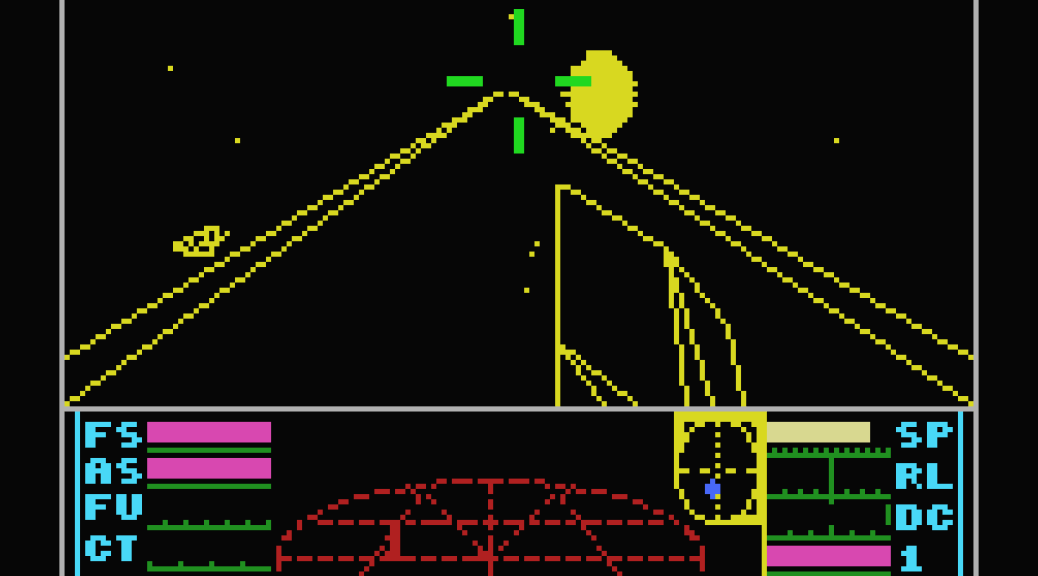
The MSX version of the classic space trading game, Elite, was programmed by Mr. Micro and published by Firebird in 1987.



 The King of Grabs