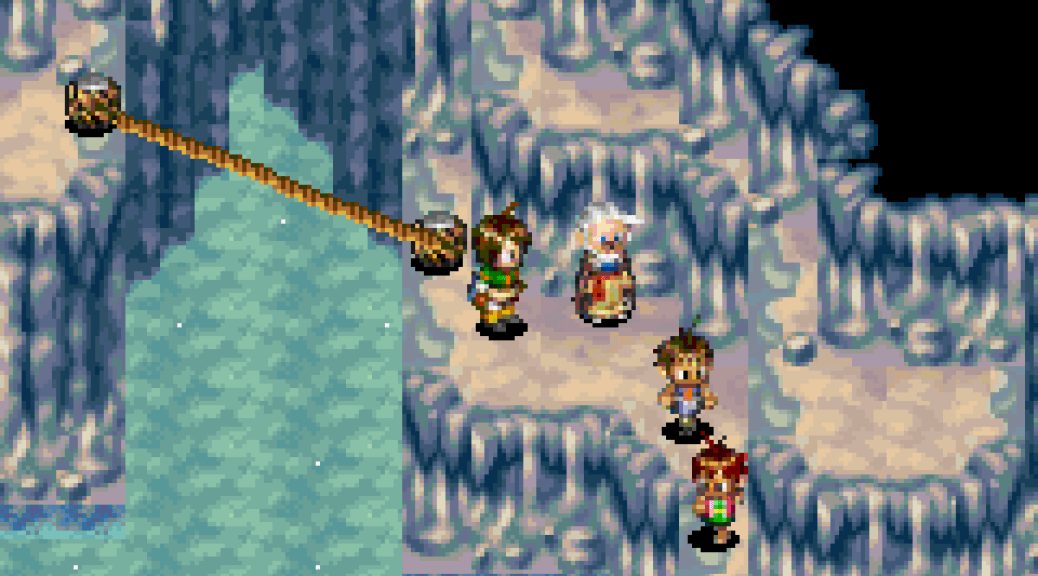
The second game in the Golden Sun series is pretty much identical to the first, which is fine because the first Golden Sun game was so good. Again: this sequel was developed by Camelot and published by Nintendo in 2002 (2003 in Europe).
Tag Archives: Monsters

Golden Sun, Game Boy Advance
Golden Sun is a brilliant and richly-detailed handheld Role-Playing Game developed by famous Japanese studio Camelot Software Planning.
It was first published by Nintendo for the Game Boy Advance in 2001 and has since gone on to become something of a legend among JRPGs fans.

Druid, Commodore 64
Druid is a neat overhead magic action game developed by Electralyte Software for Firebird Software and published in 1986.

Ganbare Goemon, MSX
Ganbare Goemon is the MSX predecessor to the amazing Super Nintendo game Legend of the Mystical Ninja, created by Konami.

Godzilla: Battle Legends, PC Engine
Hudson Soft developed Godzilla: Battle Legends on the PC Engine, for Japanese movie studio Toho in 1993. It is an energetic 2D beat ’em up with characters featured from the infamous series of monster films.

Dragon’s Lair, Arcade
Dragon’s Lair is one of those old arcade games that has developed a legendary status, even though there isn’t actually much of a game there. And what there is is incredibly difficult.

Redguard, PC
The Elder Scrolls Adventures: Redguard is a third-person action/adventure set in the world of Bethesda‘s famous The Elder Scrolls series. It was initially released in 1998 for the PC, running under MS-DOS.
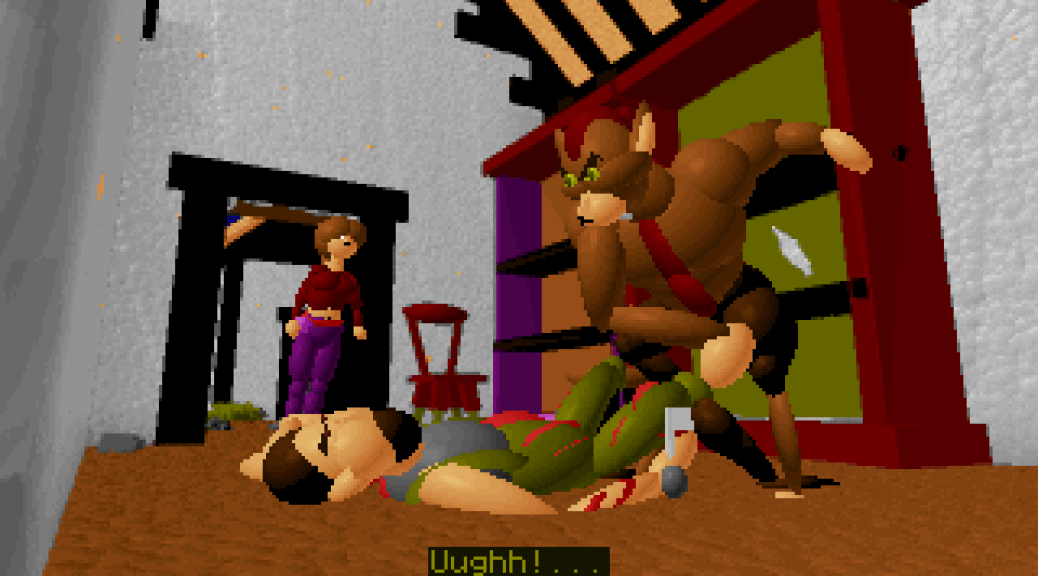
Ecstatica, PC [Part 2]
Here’s a second, completely different set of grabs of Andrew Spencer‘s classic Ecstatica. The game is so good that it deserves more attention…
Ecstatica, PC
Andrew Spencer Studios‘ 1994 release, Ecstatica, is a masterpiece of survival horror.
Ecstatica is as unforgiving as it is surprising. Turning the wrong corner will often result in death – at least until you can gain a foothold in the game.

Through The Trap Door, ZX Spectrum
The 1987 sequel to The Trap Door doesn’t have its own Wikipedia page and isn’t mentioned on the Wikipedia page of its predecessor.
 The King of Grabs