
Hexen II is the direct sequel to Hexen and uses a modified version of the Quake engine to create the game world. It was developed by Raven Software, published by id Software and distributed by Activision on PC CD-ROM in 1997.
Tag Archives: Monsters

Hexen: Beyond Heretic, PC
Hexen is the 1995 MS-DOS-based sequel to Heretic and is another fantasy-themed first-person shooter utilising the Doom engine. Or at least: a modified version of the Doom engine. It was again developed by Raven Software and published by id Software, and John Romero once again acted as producer of the game.
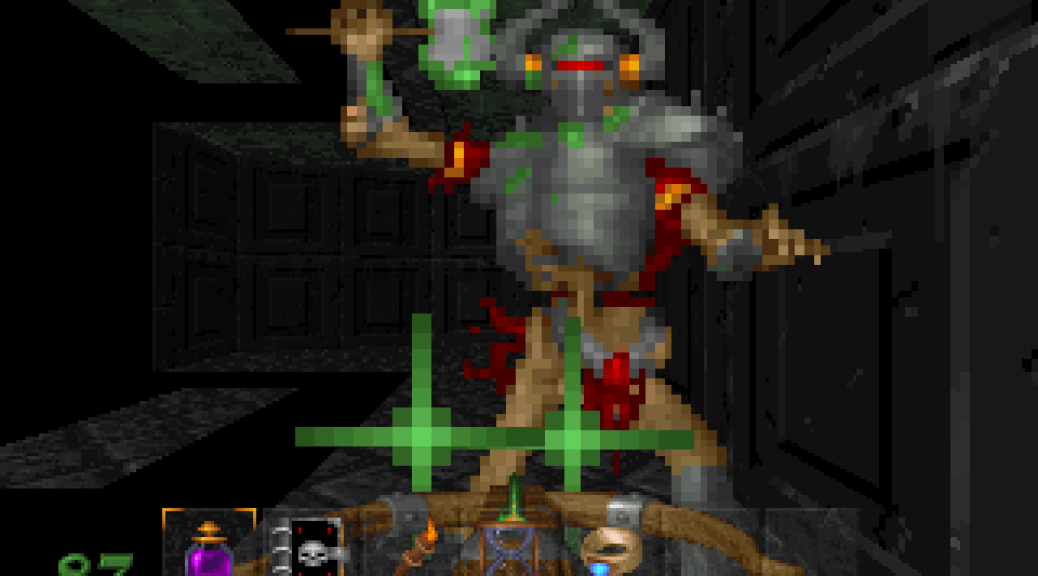
Heretic, PC
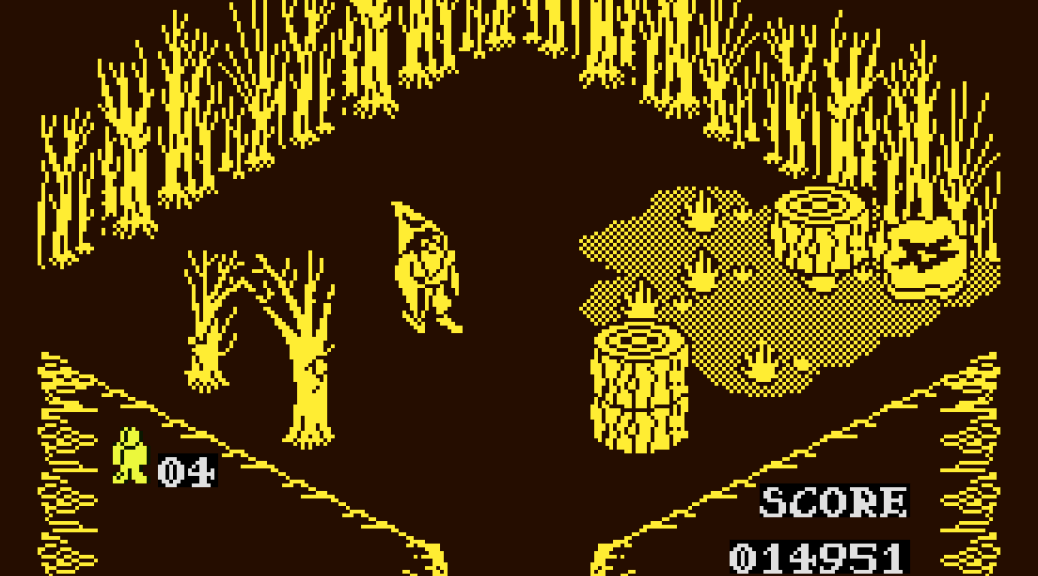
Pentagram, Atari 8-Bit
Created by Jose Pereira, Miker, and Mariuszw in 2016, this Atari -8-bit homebrew conversion of Ultimate‘s Pentagram is not a bad effort overall. It seems to run slightly faster than the ZX Spectrum original, although it’s probably fair to say that it also inherits its shortcomings.

Knight Lore, Atari 8-Bit
This conversion of the classic Knight Lore was ported to the 8-bit Atari by Krzysztof Dudek, Mario Krix, and Michal Radecki in 2008. And it’s another somewhat disappointing conversion, to be honest.
What I find frustrating about these homebrew conversions is how the programmers sometimes decide to change things to the detriment to the game, and don’t seem to realise that their choices are bad…

The Dragon Quest series
The Dragon Quest series is a set of pioneering Role-Playing Games that was initially developed by Chunsoft and published by Enix in Japan. This series was somewhat responsible for setting the standard for Japanese Role-Playing Games for decades to come.

Dragon Warrior VII, PlayStation
Released in Japan in 2000 as Dragon Quest VII: Fragments of the Forgotten Past, this PlayStation exclusive JRPG was re-titled as Dragon Warrior VII for its North American English language release in 2001. It was developed by Heartbeat and was the last Dragon Quest game to be published by Enix, before merging with Squaresoft in 2003 to form Square Enix.

Dragon Warrior IV, NES
Dragon Warrior IV is the localised American version of Dragon Quest IV: Chapters of the Chosen. It’s an RPG, developed by Chunsoft and initially published by Enix in 1990 in Japan (and 1992 in North America).

Dragon Warrior III, NES
Dragon Quest III: The Seeds of Salvation was developed by Chunsoft and published by Enix in Japan in 1988. It was translated into English and released as Dragon Warrior III in North America in 1992, some four years later.

Dragon Warrior II, NES
Dragon Quest II: Luminaries of the Legendary Line was developed by Chunsoft and published by Enix in Japan in 1987. The localised English version of this game was released as Dragon Warrior II in North America in 1990.

