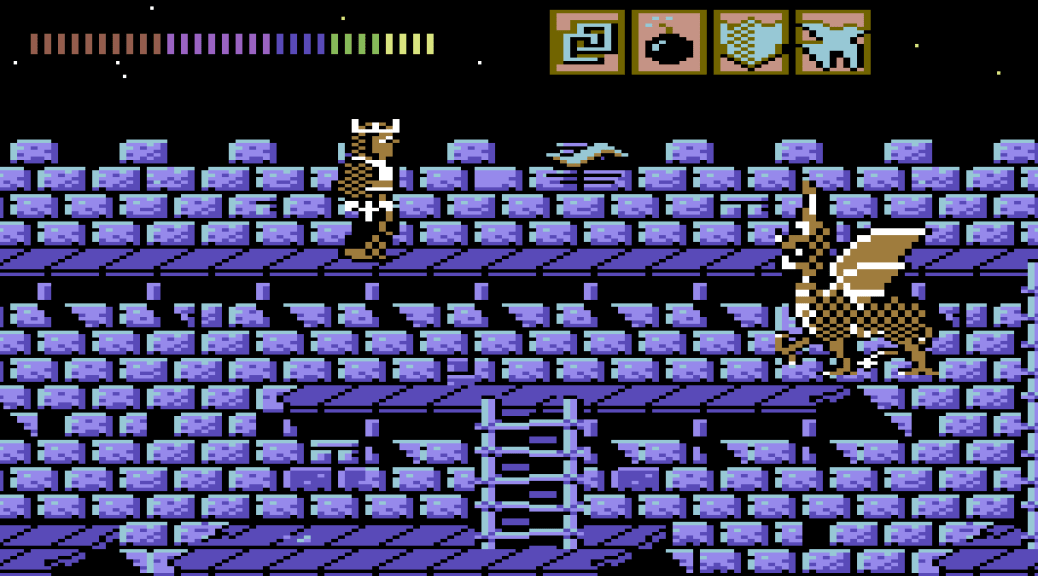
Designed and programmed by John Ferrari, with music by Barry Leitch, Super Dragon Slayer is a platform shooter first published for the Commodore 64 by Codemasters in 1988. In many ways this game reminds me of the early days of C64 software, with unforgiving gameplay and instant death if you put a foot wrong. That said, this is still a pretty good game. Just a very difficult one.
Tag Archives: Monsters

The Eidolon, Atari 8-Bit
Using an enhanced version of the fractal engine created for Rescue On Fractalus, The Eidolon is a first-person action game – developed by Lucasfilm Games and published by Epyx in North America in 1985 and Activision in Europe in 1986 – that divided critics when it was first released. While Zzap!64 magazine gave it 97% and a gold medal; raved about the game, and said that it was “not to be missed“, the reviewers of Computer Gaming World disliked it, describing it as “one of the worst games of 1986“… There’s no accounting for taste…

Kiki Kaikai, Arcade
Kiki Kaikai (the literal translation being “Strange and Mysterious World“) is a shoot ’em up developed and distributed into Japanese arcades by Taito in 1986. Set in Feudal Japan, the player assumes the role of a Shinto shrine maiden, called Sayo-chan, who must use her ‘O-Fuda’ scrolls and ‘Gohei’ wand to defeat renegade spirits and monsters from Japanese mythology. Sayo’s ultimate aim is to free The Gods of Fortune who have been imprisoned by evil spirits.
Tiger Road, Arcade
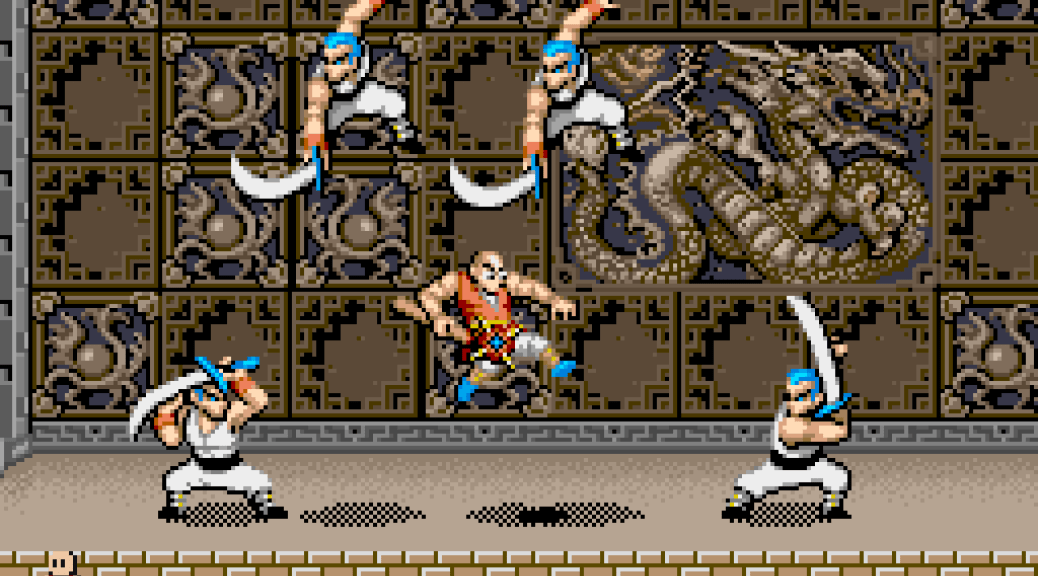
Tiger Road is a single-player hack-and-slash platform/action game, released into arcades by Capcom in 1987. It pre-dates Sega‘s Golden Axe by two years, but is very similar in terms of gameplay.
Castlevania, PC
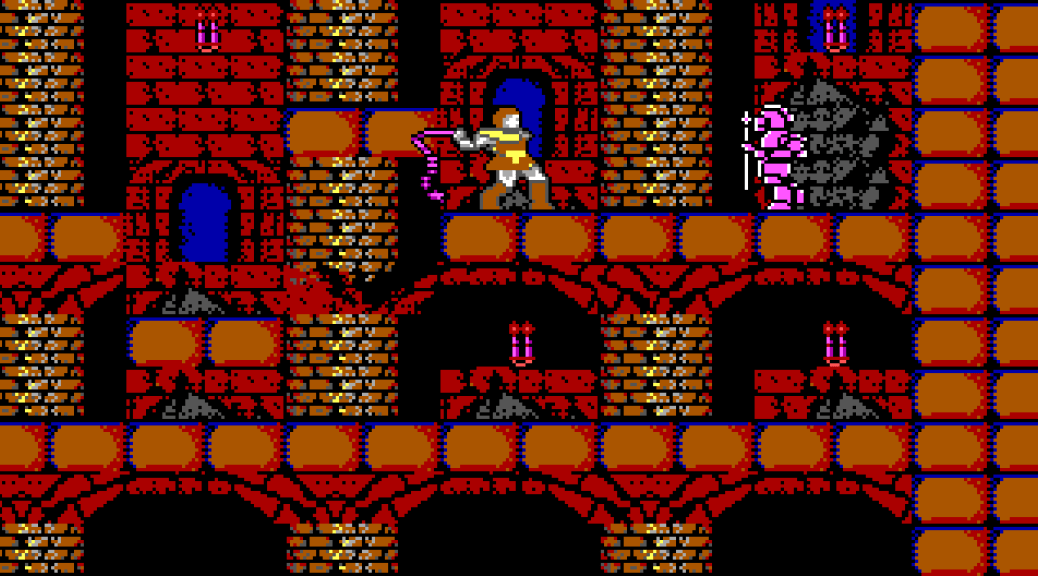
The PC MS-DOS version of Konami‘s Castlevania was developed by Unlimited Software, Inc. (the same company that did the C64 conversion), and first published in North America in 1990. As far as I know it didn’t get a release in Europe or Japan.
Castlevania, Commodore 64
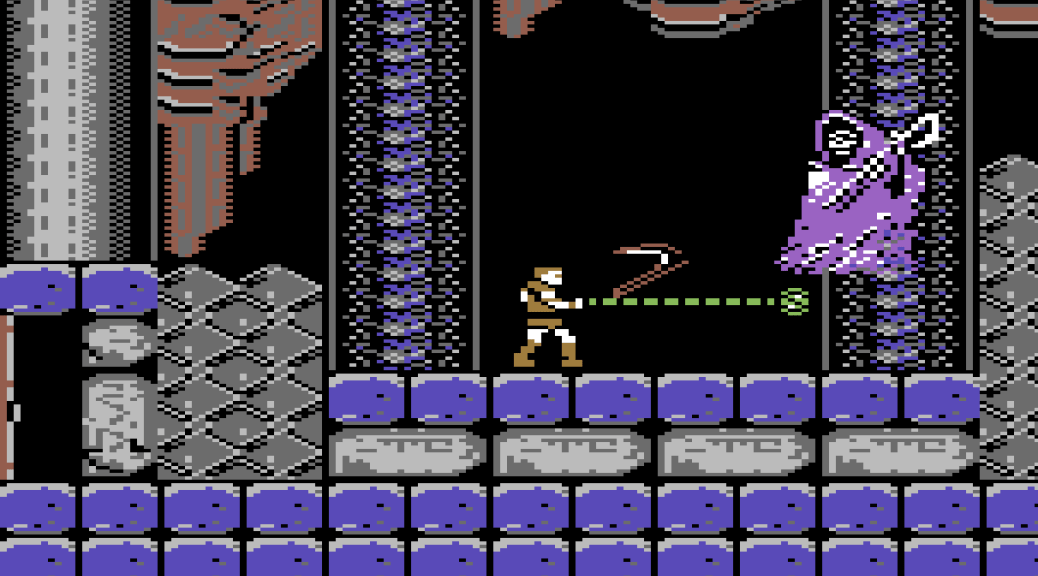
The Commodore 64 version of Castlevania was converted by Unlimited Software, Inc. and published by Konami in 1990, and it’s not a bad port overall. It’s arguably better than the dodgy Amiga version.

Castlevania, Amiga
The Amiga version of Konami‘s classic Castlevania was ported by Novotrade and first released in 1990. I was surprised and excited that the first Castlevania had actually been released for the Amiga, but after playing it I kinda wish they hadn’t bothered, because it’s bloody awful.

Castlevania III: Dracula’s Curse, NES/Famicom
The third game in the Castlevania series, Castlevania III: Dracula’s Curse, was first released for the Nintendo Famicom in 1989 in Japan (under the title of “Akumajō Densetsu“). A North American NES release followed in 1990, and a European release in 1992.
Continue reading Castlevania III: Dracula’s Curse, NES/Famicom

Castlevania II: Simon’s Quest, NES/Famicom
The second game in the Castlevania series, Castlevania II: Simon’s Quest, was originally released in Japan (as “Dracula II – Noroi no Fuuin“) for the Famicom Disk System in 1987, and in North America for the NES in 1988. Europe had to wait until 1990 for a release of the game.
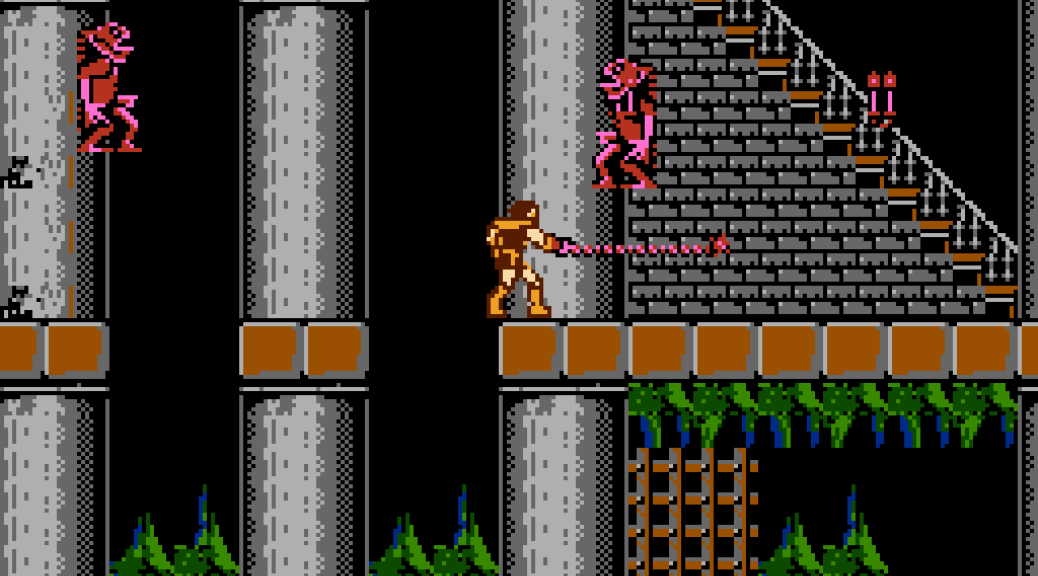
Castlevania, NES/Famicom
The first Castlevania game was initially released in Japan, by Konami, under the title of “Akumajō Dracula” in 1986. Versions for the MSX2 and Famicom Disk System were developed simultaneously, with the Famicom version coming out on 26th September, and the MSX version a month later, on 30th October. That same game was later released in Europe on 30th October 1987 – translated into English – under the title of “Vampire Killer“.
When it came time to convert the game to the Nintendo Entertainment System for a North American release it was decided to re-title the game as “Castlevania“*. This turned out to be a significant decision as it became a big hit and grew to become a popular and well-known series of video games. The name “Castlevania” entered into the lexicon of classic, instantly-recognisable game titles, later becoming a portmanteau of “Metroid” and “Castlevania” (“Metroidvania“) to describe an entire sub-genre of action/platform games that all share similar gameplay features.
*= Although it’s not clear who actually came up with the name “Castlevania” it has been reported that the change was due to Konami of America senior vice president Emil Heidkamp‘s discomfort with the religious connotations of the title “Akumajō Dracula“, which he believed translated as “Dracula Satanic Castle” (although some argue that it translates as “Demon Castle Dracula“).
 The King of Grabs