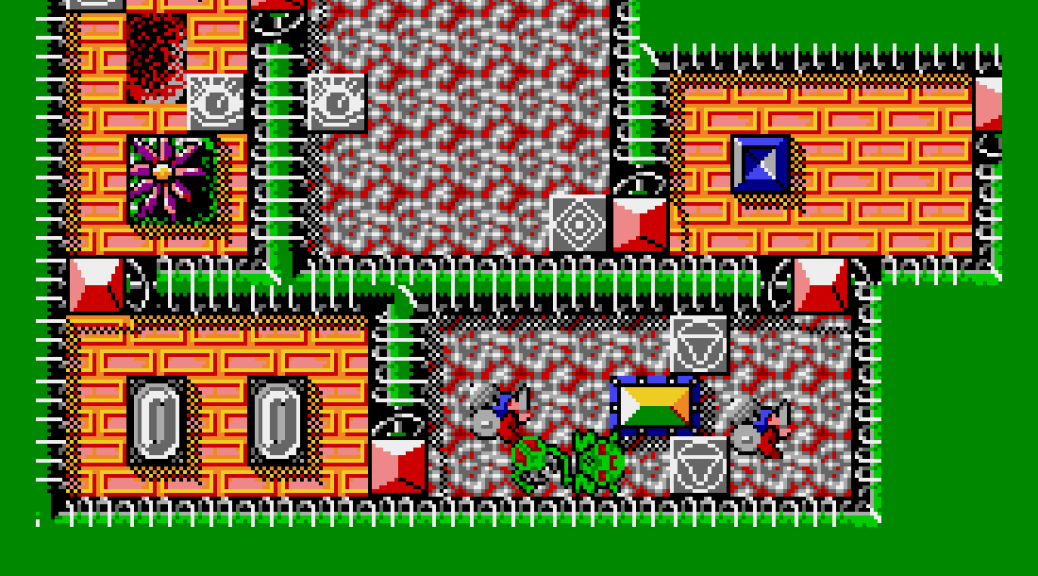
The Atari ST and Amiga versions of Head Over Heels are pretty much indistinguishable, other than slight colour palette differences.
Both – I would say – are among the greatest video games of all time.
The Atari ST and Amiga versions of Head Over Heels are pretty much indistinguishable, other than slight colour palette differences.
Both – I would say – are among the greatest video games of all time.
The Atari 8-bit home computer version is definitely the blandest-looking version of Head Over Heels, with the least amount of colour.
The MSX got a pretty much perfect conversion of Head Over Heels, although I’m not sure who the person was who converted it.
The best-looking of all the 8-bit versions of Head Over Heels, in my humble opinion.
Although the Commodore 64 was not thought to be particularly well-suited to these types of isometric platform games, Head Over Heels bucks the trend by being arguably just as good – if not better – than the Spectrum original.
Thanks to the sterling efforts of programmer Colin Porch.
Ranarama, by Steve Turner of Graftgold, originated on the ZX Spectrum in 1987, and was later converted to the Atari ST, Amiga and Amstrad CPC.
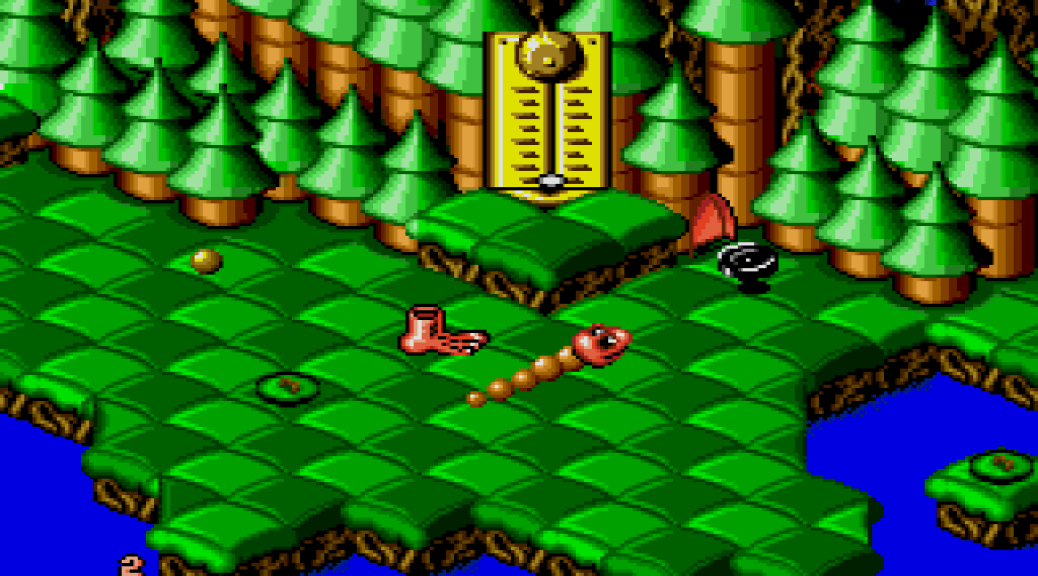
Rare‘s classic isometric action game, Snake Rattle ‘n’ Roll, was first released for the Nintendo Entertainment System in 1990. This Sega Megadrive/Genesis port came later, in 1993.
Over-the-top, first-person, survival horror blasting action, for one or two players!
House of the Dead III first came out in arcades in 2002, followed by XBox and other home versions, in 2003.
Ports of Sega‘s own classic arcade games were often fab on the Megadrive/Genesis, and Flicky is one of the best.
Time Bandit was first released in 1983 for the TRS-80, but is far better known for its 16-bit versions on the Atari ST and Amiga. These were released later, in 1985, and featured vastly improved graphics.