
The second episodic chapter in the Half-Life 2 series is arguably the best of the adventures of Gordon Freeman, and maybe even one of the best games of all-time. Half-Life 2: Episode Two was first released by Valve in 2007.

Half-Life 2: Episode One, PC
The first sequel to the classic Half-Life 2 takes the form of an episodic chapter in the adventures of Gordon Freeman. It carries on directly from the end of Half-Life 2, with Gordon and Alyx actually going back into the crumbling Citadel to try to stop the reactor from exploding. Half-Life 2: Episode One was first released in 2006.

Half-Life, PlayStation 2
This conversion of the classic PC game, Half-Life, to the PlayStation 2 was handled by Gearbox Software and it features the main single-player game, Half-Life: Decay (a cooperative multiplayer version of the main game), and a head-to-head deathmatch component that uses split screen. It was first published by Sierra On-line in 2001.

Half-Life, PC
Half-Life is a classic first-person shooter (FPS) that is regarded as one of the best video games ever made. It was Valve‘s first game and was first published in 1998 by Sierra On-line. Half-Life came out at a time when the market was becoming saturated by FPSes, and it completely changed the way video games were made by developers – and were perceived by the general public.

Rogue Trooper Redux, PC
Rebellion‘s Rogue Trooper was originally released in 2006 for Windows, PlayStation 2 and XBox, and it was remastered in HD by Tick Tock Games and re-released in 2017. It is the remastered “Redux” version that we’re looking at here.
For those who don’t know: Rogue Trooper is based on the character made famous in the British comic, 2000AD. Famous enough for him to have appeared in a ZX Spectrum game in 1986, and an Amiga/Atari ST game in 1991. And also slated to appear in a forthcoming film by Duncan Jones, who directed Moon (2009), and Warcraft: The Beginning (2016), among others. So Rogue Trooper does have some pedigree.

Judge Dredd: Dredd vs. Death, GameCube
The Nintendo GameCube version of Dredd vs. Death was published by Evolved Games in North America and Sierra in Europe in 2003. It was developed by Rebellion, the owner of the 2000AD brand.
Judge Dredd: Dredd vs. Death is a first-person shooter that at least tries to make good use of the Judge Dredd license, and to a large extent it succeeds quite well.
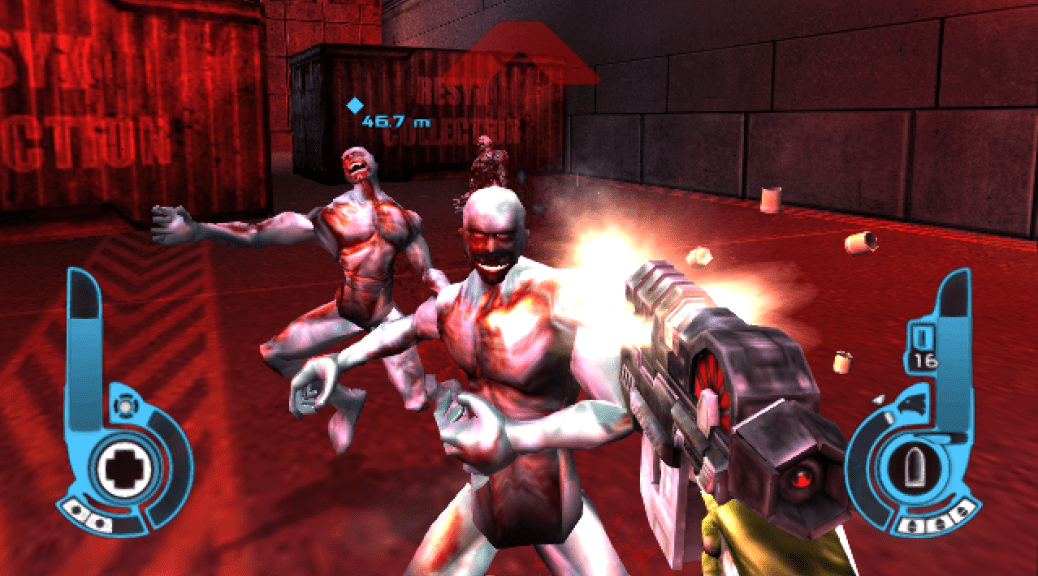
Judge Dredd: Dredd vs. Death, PlayStation 2
Released in 2003 for PC, PlayStation 2, GameCube and XBox, Judge Dredd: Dredd vs. Death is a first-person shoot ’em up developed by Rebellion and based on the infamous 2000AD comic character of Judge Dredd. And – so far (at the time of writing) – it is really the only Judge Dredd game that does the source material any real justice (pun intended). The game is almost twenty years old now, but it’s still worth playing nowadays.
Continue reading Judge Dredd: Dredd vs. Death, PlayStation 2
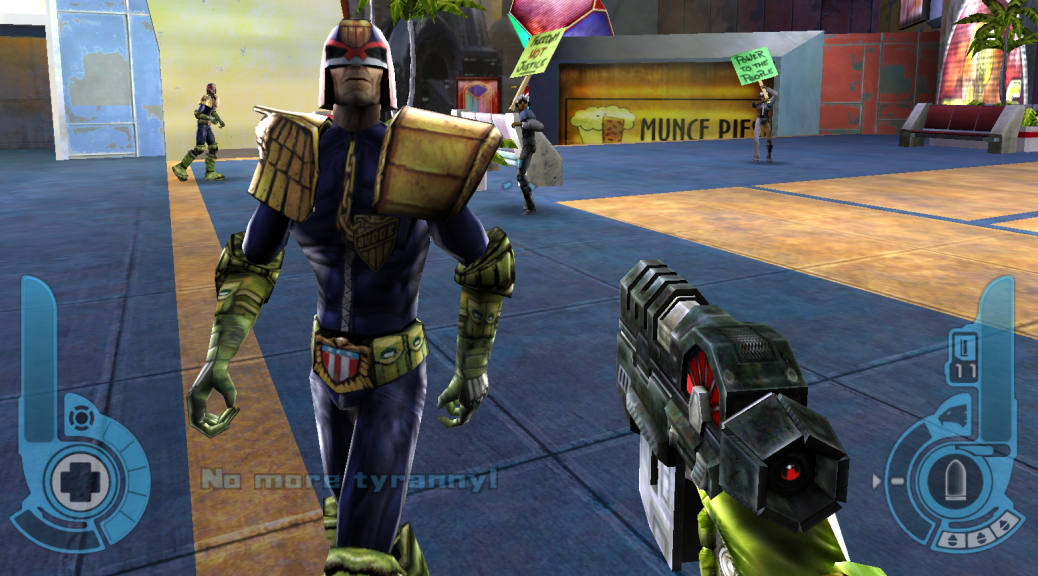
Judge Dredd: Dredd vs. Death, PC
First released in 2003 by Sierra, Judge Dredd: Dredd vs. Death is a first-person shooter developed by Rebellion that is based on the famous British comic character who rose to prominence in 2000AD comic during the ’70s and ’80s. In fact: Dredd vs. Death is arguably the only decent Judge Dredd game that’s been made, to date.

Judge Dredd Pinball, PC
Judge Dredd Pinball is one of those single-screen pinball games that is a fairly accurate recreation of a real pinball table, but is oh so boring to play as an actual video game. It came out for DOS-based PCs in 1998 (apparently also for Windows-based PCs later that same year), and was developed and published by Pin-Ball Games Ltd.
Judge Dredd, PlayStation
Developed by Gremlin Interactive and published by Activision in North America and Gremlin in Europe in 1997, Judge Dredd on the PlayStation is an on-rails lightgun shooter in a similar vein to something like Virtua Cop, only much, much worse.

