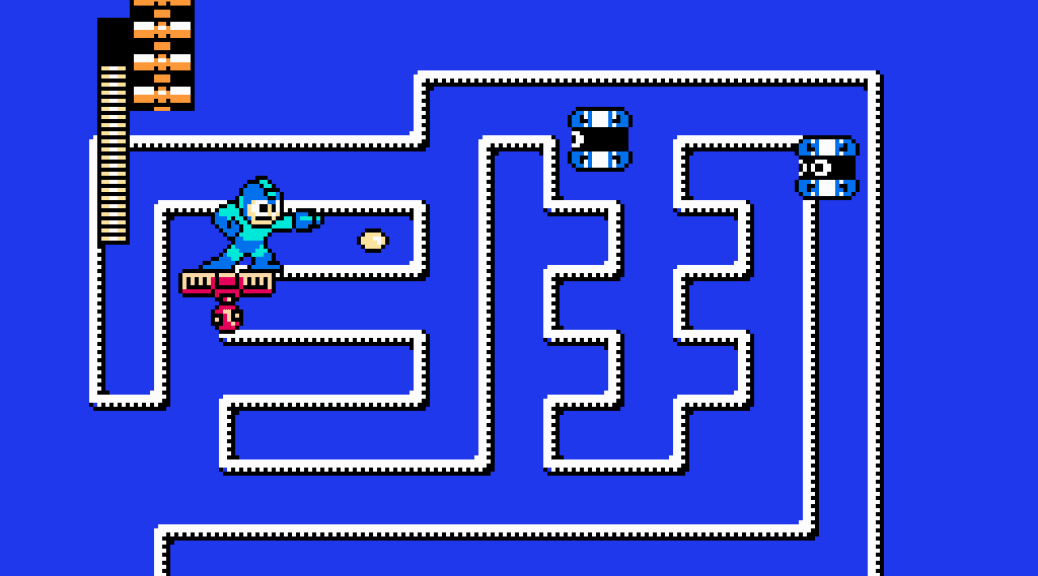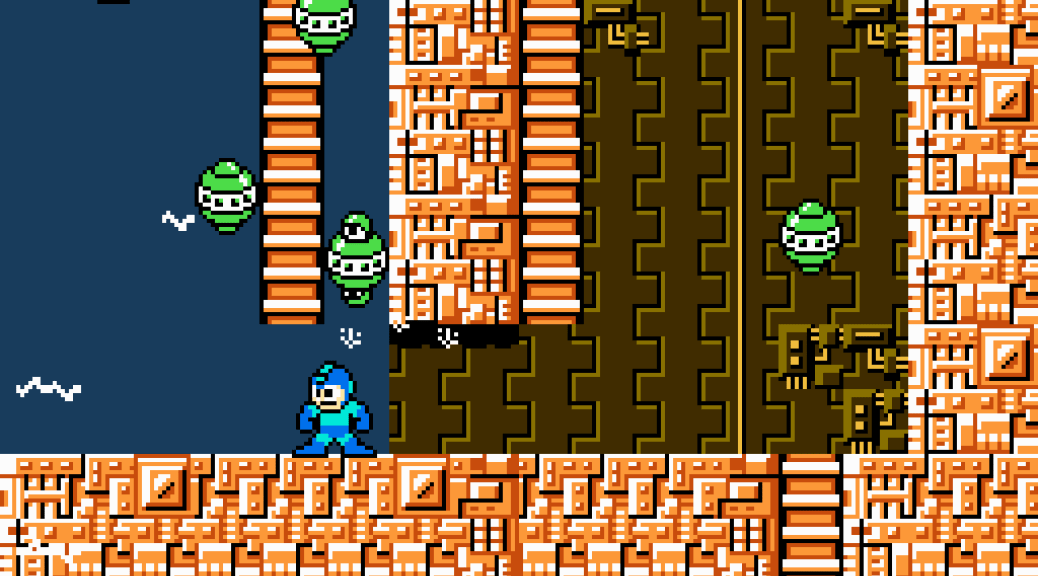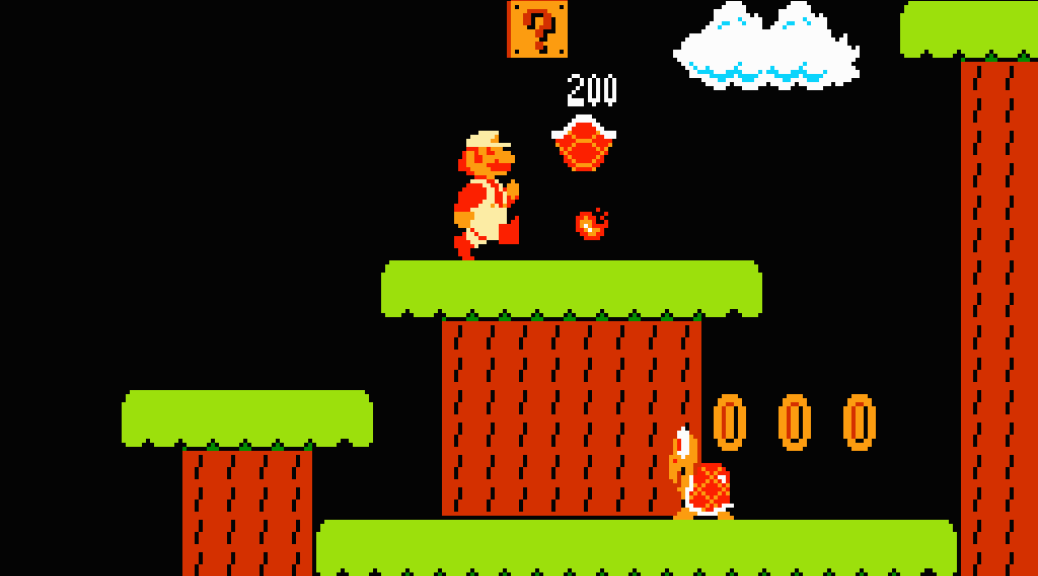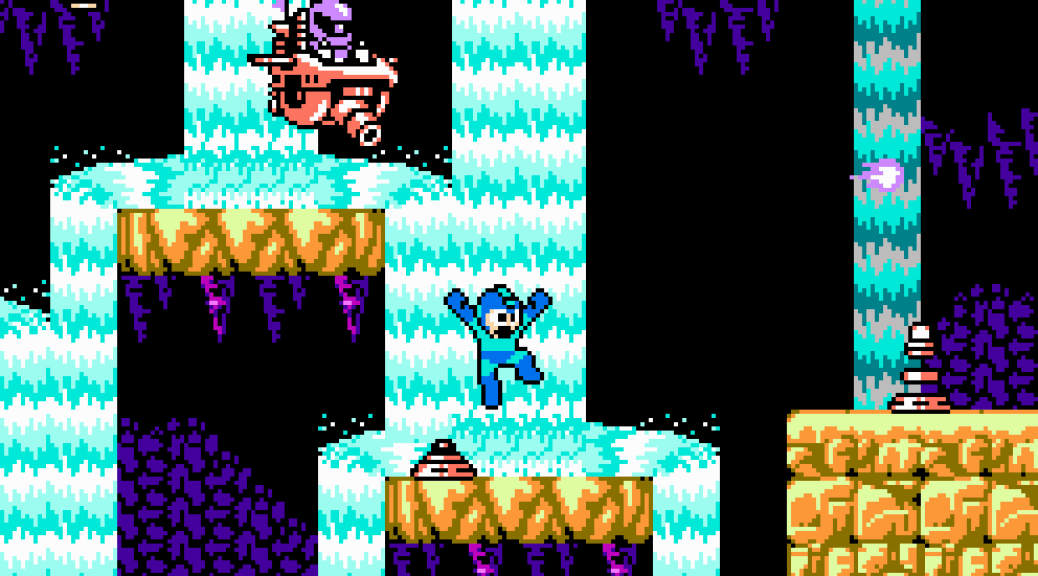
There are over 130 Mega Man titles, and many are essentially the same formula. That is: choose a level based on one of a number of boss enemies (usually themed, with a unique name); run and jump your way through a tortuous series of platforms and ladders to reach said boss; then whup its ass in a boss fight.
Tag Archives: NES/Famicom
Mega Man 2, NES
The 1988 sequel to Mega Man, Mega Man 2 is more of the same rock-hard platforming and shooting action on the Nintendo Entertainment System (aka the Famicom).
Your six major protagonists this time are: Bubble Man, Air Man, Quick Man, Heat Man, Wood Man, Metal Man, Flash Man, and Crash Man. And – as usual – each has their own themed level which you can choose from in the opening menu.
Mega Man, NES
Known as “Rock Man” in its native Japan, Mega Man is a Nintendo Famicom game developed and published by Capcom in 1987. It is the beginning of the long-running Mega Man series.
What the first Mega Man did was establish a style of its own – for both gameplay and graphics.
Final Fantasy III, Famicom
The third Final Fantasy game was released for the Nintendo Famicom in Japan in 1990. It wasn’t officially translated into English until many years after its initial release, so a variety of fan translations exist online, and their quality varies wildly. The TransTeam translation I found to be pretty good although the font and text alignment isn’t perfect.
Super Mario Bros. 3, NES
Of the three Super Mario Bros. games released for the Nintendo Entertainment System, this 1988 release must surely rate as the best.
Super Mario Bros. 2, NES
The North American release of Super Mario Bros. 2 was controversial because it was not the same Super Mario Bros. 2 that was released in Japan – it was a re-skinned game; made into a Mario game, because the Nintendo bigwigs thought the original was too difficult for western gamers.
Super Mario Bros. 2, Famicom Disk System
Super Mario Bros. 2 was initially released on the Famicom Disk System in Japan in 1986, but was not released in North America or Europe in its original form, as you might have expected. It was instead decided that the gameplay was “too difficult” for Western gamers (and also the video games market in North America was undergoing a crash at the time), so Nintendo decided not to release it in English language territories – at least until it was later re-branded as Super Mario Bros.: The Lost levels – and released a different Super Mario Bros.2 in North America instead.
Super Mario Bros., NES
The successor to the 1983 arcade game Mario Bros., Super Mario Bros. was released in Japan and North America in 1985, although it wasn’t released in Europe until 1987.
It is considered by many gamers to be one of the greatest video games of all time, and I wouldn’t dispute that assessment.
Spy Hunter, NES
The 1987 Nintendo Entertainment System conversion of Spy Hunter was handled by Sunsoft and is an excellent addition to the Spy Hunter family.
In some respects this is better than the arcade original, because it’s not quite so mind-bendingly difficult…
BurgerTime, Famicom Disk System
This 1985 Famicom Disk System conversion of BurgerTime is just as good as the arcade original – excepting for the slightly less colourful graphics.