
Konami themselves converted Super Cobra to the MSX, which is surprising because it’s missing the infamous ‘colour cycling’ of the arcade original (and all the other conversions). MSX Super Cobra stays distinctly green. And I have to wonder if that is an oversight, or a bug.
Tag Archives: bombing

Super Cobra, Intellivision
The Intellivision console has a very good conversion of Konami‘s arcade hit Super Cobra, courtesy of Parker Brothers.
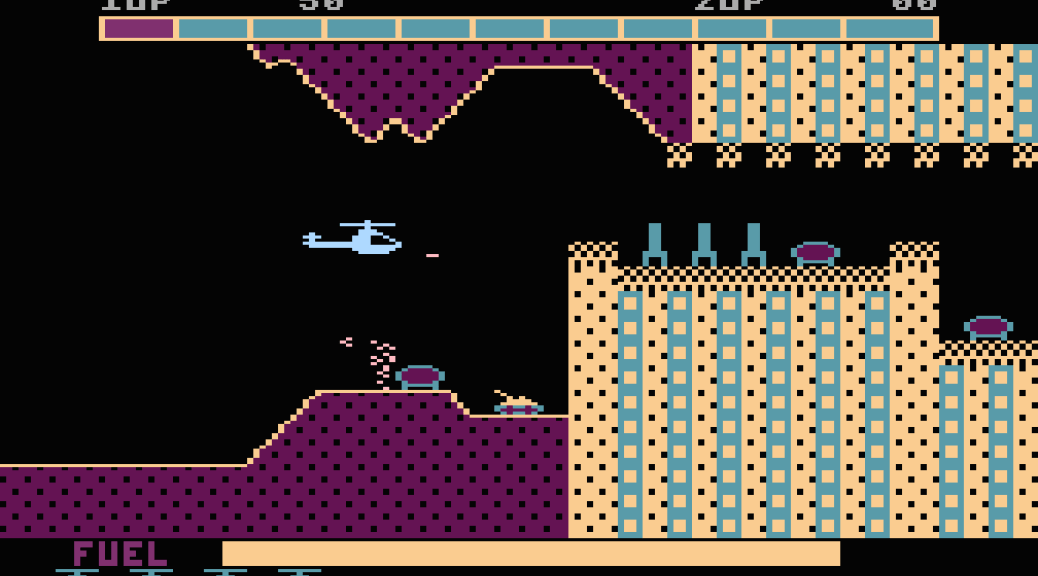
Super Cobra, Atari 8-bit
Park Brothers developed this conversion of Konami‘s classic arcade game, Super Cobra, and released it on Atari 8-bit home computers in 1983.

Super Cobra, Arcade
Konami‘s Super Cobra was released into video game arcades in 1981. It not only uses the same hardware as Konami‘s hit game Scramble, but it also borrows many of its gameplay features.

B-17 Bomber, Intellivision
B-17 Bomber is a very early – but really rather excellent – WWII bomber simulation, released for the Intellivision in 1982.

Wings, Amiga
One of Cinemaware‘s last games, Wings was released in 1990 to critical acclaim.
It’s a First World War-based scenario, with you piloting a biplane over German lines, dogfighting enemy fighters and bombing positions on the ground.

The King of Chicago, Amiga
The King of Chicago is a strategic gangster simulator, released by Cinemaware in 1987. And – while “gangster simulator” might sound bad – the game is full of dark humour and is something of a satire, so is not to be taken too seriously on that front.

Bomberman ’94, PC Engine
Bomberman ’94 says “copyright 1993” on the title screen, and it came out in December 1993 in Japan, so just made it out before the turn of the year. And it’s a classic in the Bomberman series.
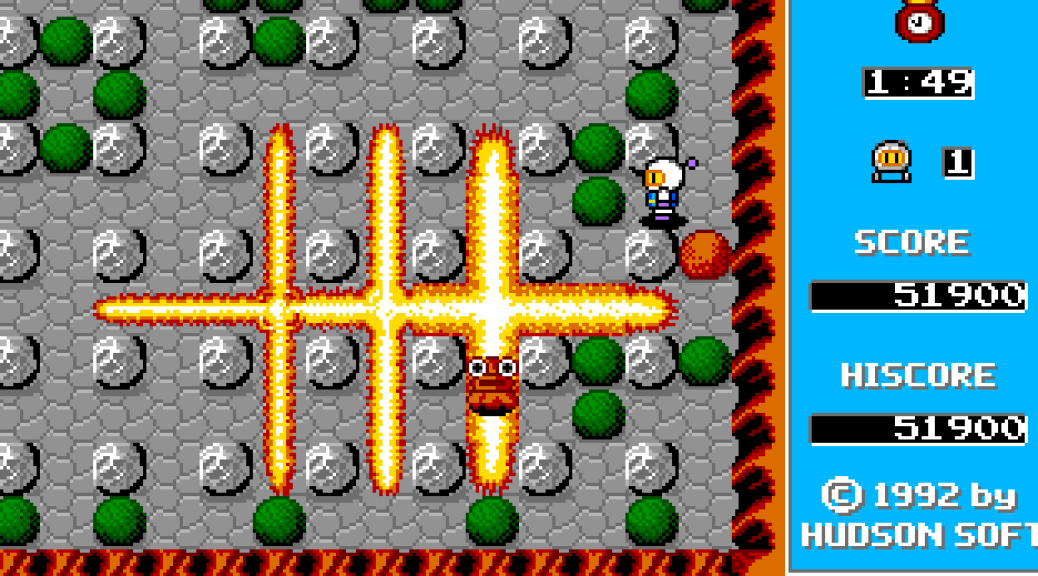
Dyna Blaster, Atari ST
This game is really a re-titled Bomberman – Hudson Soft‘s famous maze game – on the Atari ST. The game was re-named to avoid any association with the IRA bombing campaign in the UK, which was happening at the time.
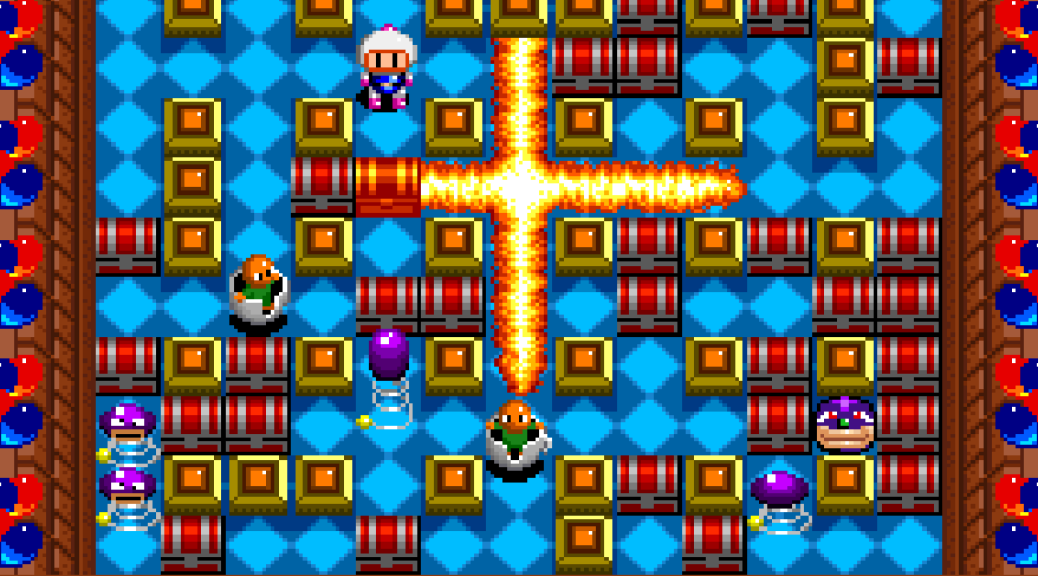
Super Bomberman, Super Nintendo
Hudson Soft‘s classic Super Bomberman was originally released for the Super Nintendo in 1993.
As an example of a frantic maze/puzzle game: there is absolutely nothing better in its class – other than its four sequels! 🙂

