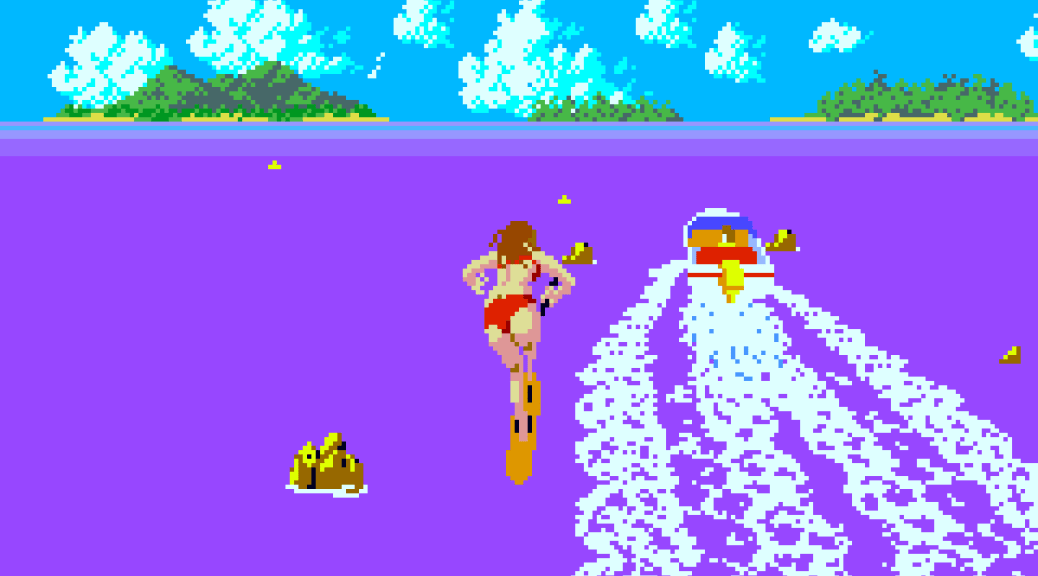
Tropical Angel is an obscure 1983 arcade game, developed and distributed by Irem. In it you play a female water skier who must score points – and stay on her skis – on a series of increasingly more challenging water courses.
Category Archives: Systems
Video gaming systems.

Castlevania Legends, Game Boy
Castlevania Legends is the third Castlevania game for the original Game Boy, first released by Konami in 1997. The story follows Sonia Belmont, a vampire hunter battling the first incarnation of Count Dracula.

Castlevania: The Adventure, Game Boy Color
This colour remake of Castlevania: The Adventure was released in European territories only in the year 2000, as part of the Konami GB Collection Volume 1.

Castlevania: The Adventure, Game Boy
Castlevania: The Adventure was the first game in the Castlevania series to be released for the original Game Boy. It was published by Konami in 1989.

The Irritating Maze, Neo Geo
Developed by Saurus and first distributed into arcades on the Neo Geo MVS system by SNK in 1997, The Irritating Maze might seem like an innocently humorous title for a video game, but it is in fact one of the mostly aptly-named video games of all-time…
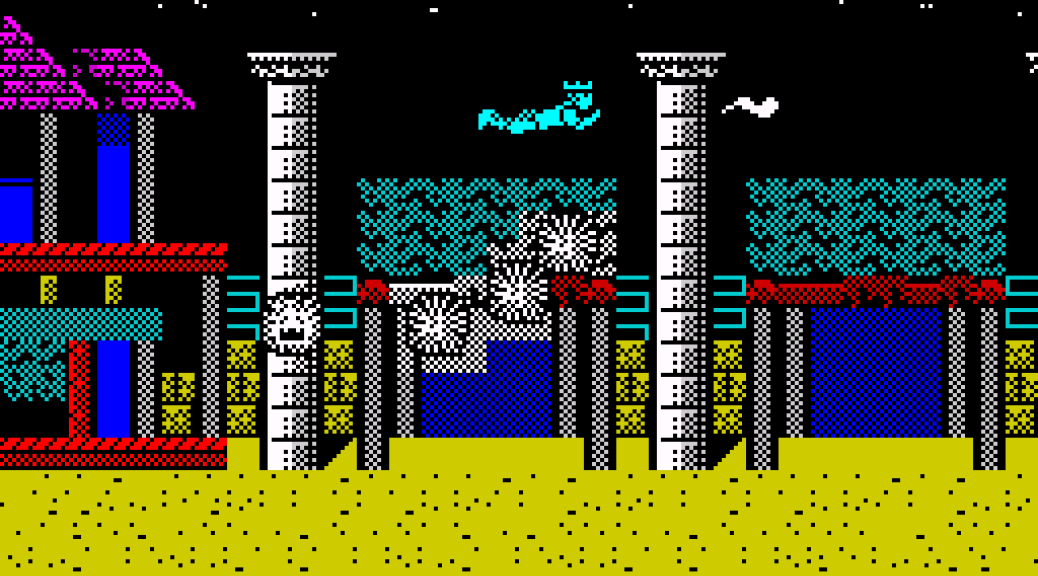
Super Dragon Slayer, ZX Spectrum
Converted by John F. Cain, from an original Commodore 64 game by John Ferrari, Super Dragon Slayer is a platform shooter featuring an agile magician who must jump, climb and shoot his way – left to right – through four large, scrolling levels. It was first published for the ZX Spectrum by Codemasters in 1989.
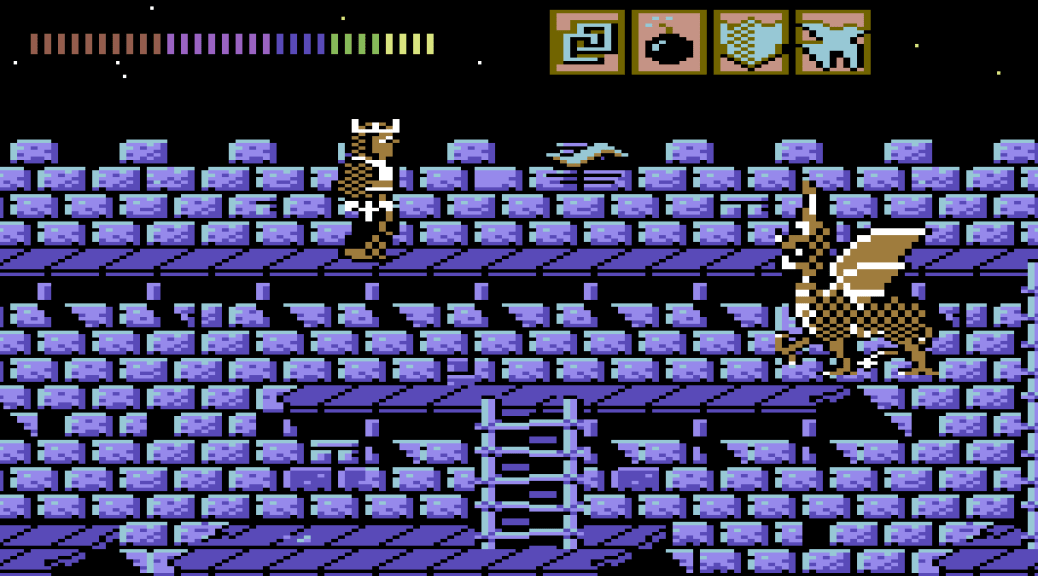
Super Dragon Slayer, Commodore 64
Designed and programmed by John Ferrari, with music by Barry Leitch, Super Dragon Slayer is a platform shooter first published for the Commodore 64 by Codemasters in 1988. In many ways this game reminds me of the early days of C64 software, with unforgiving gameplay and instant death if you put a foot wrong. That said, this is still a pretty good game. Just a very difficult one.

Pu-Li-Ru-La, Arcade
I don’t really know if Taito‘s 1991 arcade game, Pu-Li-Ru-La, is obscure, or if it’s a ‘cult game’, or if it’s based on an existing anime or not, because I’d never even heard of it until recently. It’s a cartoony, one or simultaneous two-player beat ’em up featuring a boy and a girl who are given magical sticks to fight enemies in order to restore the flow of time in a place called “Radishland“…

The Eidolon, Atari 8-Bit
Using an enhanced version of the fractal engine created for Rescue On Fractalus, The Eidolon is a first-person action game – developed by Lucasfilm Games and published by Epyx in North America in 1985 and Activision in Europe in 1986 – that divided critics when it was first released. While Zzap!64 magazine gave it 97% and a gold medal; raved about the game, and said that it was “not to be missed“, the reviewers of Computer Gaming World disliked it, describing it as “one of the worst games of 1986“… There’s no accounting for taste…

Marble Madness II, Arcade
***CANNED GAME***
Marble Madness II is the unreleased sequel to the classic Marble Madness. It was developed in 1991 by Atari Games and underwent market testing in a variety of locations, but these were deemed a failure so the game was cancelled and never released.
 The King of Grabs