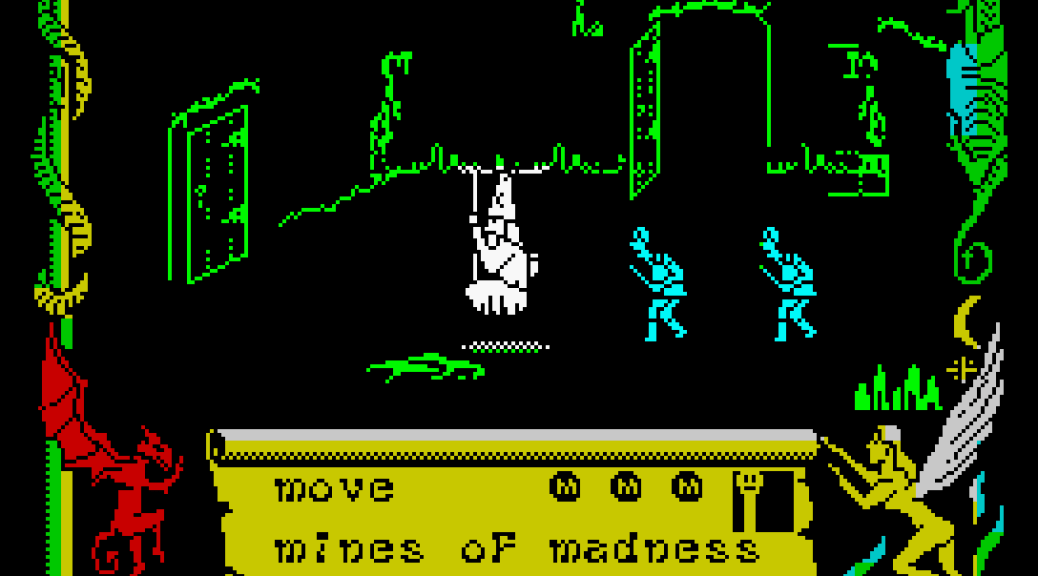
Steve Turner‘s 1984 release Avalon is a groundbreaking adventure game with pseudo 3D graphics, released only for the ZX Spectrum.
Tag Archives: ZX Spectrum

Super Robin Hood, ZX Spectrum
Written by The Oliver Twins in 1985, and published by Codemasters, Super Robin Hood is a smart little platform game that came out on the Amstrad CPC originally, then on the ZX Spectrum a short time afterwards.

Chaos: The Battle of Wizards, ZX Spectrum
One of Julian Gollop‘s earlier games, and one that was based on a card system he created as a boy.
Chaos: The Battle of Wizards is a turn-based tactical combat game for up to eight players.
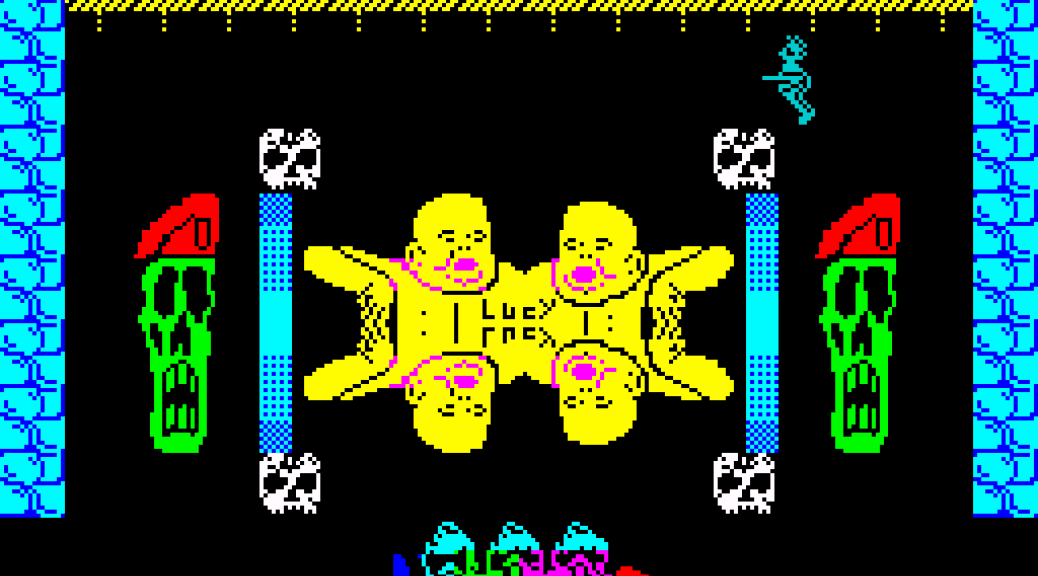
Soft & Cuddly, ZX Spectrum
A follow-up (of sorts) to the horror-themed Go To Hell, Soft & Cuddly is a satirical horror platform game, designed and programmed by John George Jones and published by The Power House in 1987.

Go To Hell, ZX Spectrum
Go To Hell is a horror-themed maze game, designed by John George Jones and published by Triple Six Software on the ZX Spectrum in 1985.

Gregory Loses His Clock, ZX Spectrum
Playing Gregory Loses His Clock was a real treat for me, because I had never seen it before now. I love finding (and of course grabbing) good old games that have previously passed me by. Considering that Gregory Loses His Clock was released quite late in the life of the ZX Spectrum (1989), it’s no surprise that I missed it. Most people (myself included) had moved onto 16-bit computers by then.

Flunky, ZX Spectrum
This 1987 release from Piranha Games is the fifth of the ‘big sprite’ games from renowned ZX Spectrum programmer Don Priestley.

Through The Trap Door, ZX Spectrum
The 1987 sequel to The Trap Door doesn’t have its own Wikipedia page and isn’t mentioned on the Wikipedia page of its predecessor.

The Trap Door, ZX Spectrum
An adaptation of the British children’s television show of the same name, The Trap Door, which was made by Don Priestley for DK’Tronics in 1986.
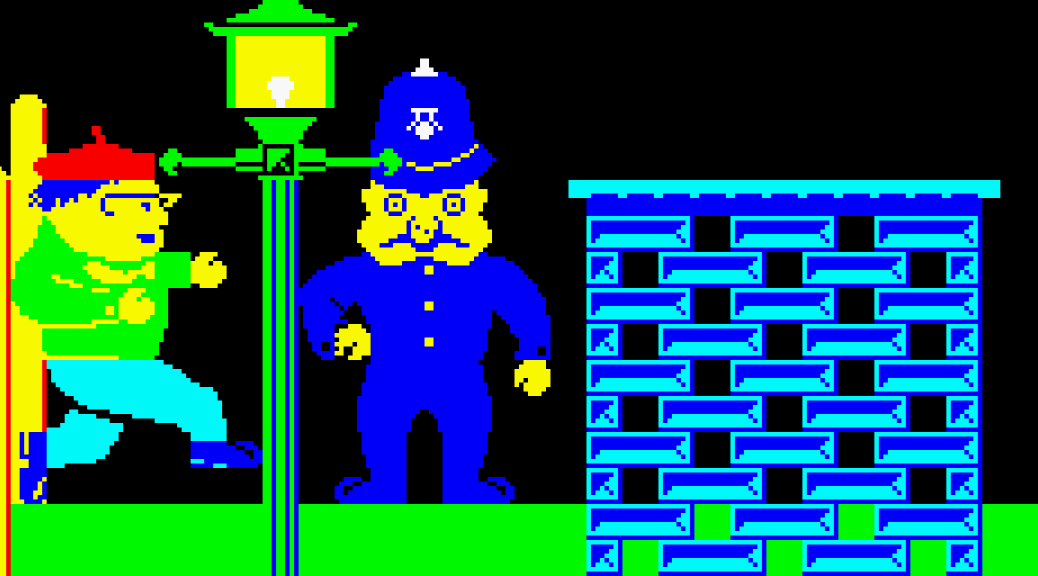
Benny Hill’s Madcap Chase, ZX Spectrum
Benny Hill’s Madcap Chase is loosely based on the infamous Thames TV show, Benny Hill, made in the 1980s and featuring Mr. Hill, and his various cohorts, running around doing funny (or rude) things in the name of comedy.

