
This exclusive Game Boy Advance remake of Street Fighter II Turbo was first released by Capcom in 2001, and it is arguably the best fighting game on the system.
Continue reading Super Street Fighter II Turbo Revival, Game Boy Advance
This exclusive Game Boy Advance remake of Street Fighter II Turbo was first released by Capcom in 2001, and it is arguably the best fighting game on the system.
Continue reading Super Street Fighter II Turbo Revival, Game Boy Advance
Shinobi III: Return of the Ninja Master is the second sequel in the Shinobi series, released by Sega – exclusively for the Megadrive/Genesis – in 1993. Shinobi III sees Sega slightly changing the focus of this famous platform/action game, with less emphasis on difficulty and more on the speed at which you play the game and the timings of your attacks. Which will be welcomed by some players.
Continue reading Shinobi III: Return of the Ninja Master, Megadrive/Genesis
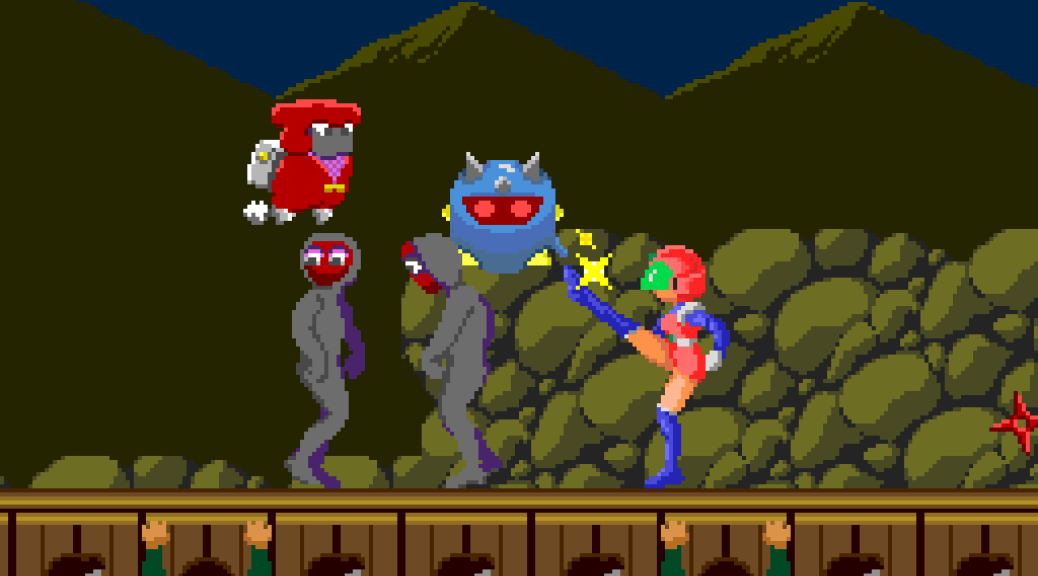
Developed by Namco and published – in Japan only – by NEC Avenue in 1989, Wonder Momo is a conversion of a weird Japanese arcade game featuring a female lead character who must fight off attackers during a theatre stage play. And, if that sounds bizarre, then – well – that’s because it is! Unlike the arcade original, the PC Engine version of Wonder Momo has been fan-translated into English and Spanish, so is more accessible to Western audiences.
I first encountered Namco‘s Wonder Momo on the PC Engine, because it had received a fan translation, and I was curious to see what the game was about. I then discovered that it was a conversion of a 1987 arcade game, featuring a young girl called Momo, who can turn into a ‘superhero’ by building up her “Wonder Meter“.
This bizarre arcade game was only ever released in Japan, but has subsequently built up a cult following around the world, and has also inspired manga/anime, and resulted in a sequel that was released in 2014.
In Data East‘s 1986 Wild West-themed scrolling action game – Express Raider (aka “Western Express” in Japan) – you’re not trying to be the good guy; you’re actually the bad guy, trying to hold up a series of trains and steal as much gold and money as possible.
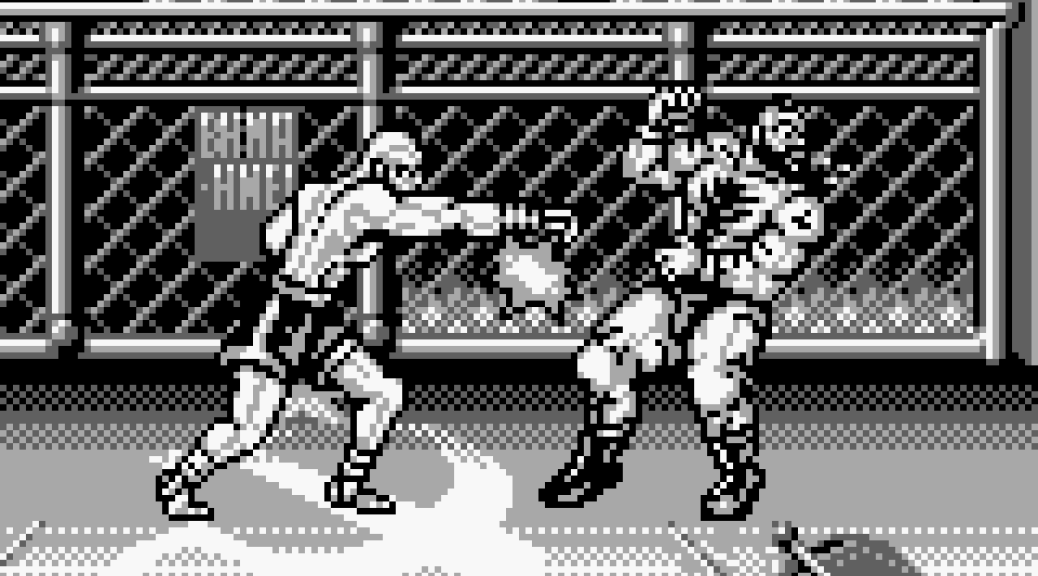
When the 1995 Game Boy Street Fighter II cartridge is plugged into a Super Game Boy, a number of enhancements are featured.
Developed by a company called “Sun L” (who are uncredited in the game itself), and published by Capcom in Japan, and Nintendo in the West, Street Fighter II on the Game Boy is a cut-down, monochrome version of the famous Street Fighter II arcade game. It was initially released in 1995.
The FM Towns version of the controversial Namco arcade game, Splatterhouse, was developed and published by Ving – in Japan only – in 1992. It doesn’t suffer from any of the censorship, that some versions of the game do, and is a completely uncut and almost perfect port of the arcade original.
Battletoads is a humorous side-scrolling beat ’em up, developed by Rare Coin Games and distributed into arcades by Electronic Arts in 1994. It satirises the Teenage Mutant Ninja Turtles characters, turning them into muscular toads, called Zitz, Rash and Pimple.
Battletoads is a scrolling action game, developed by Rare and published by Tradewest in 1991. It satirises (and takes advantage of the popularity of) the Teenage Mutant Ninja Turtles, and features a group of cartoon toads, called Zitz, Rash and Pimple.
Two of the toads – Zitz and Rash – are on a mission to rescue their third member, Pimple, and Princess Angelica, both of whom have been kidnapped by the evil Dark Queen and taken to her planet. The toads fly to the planet in their spaceship and lower themselves down to the surface using their ‘Turbo Ropes’. From there they begin the fight to free their friends.





 The King of Grabs