Tag Archives: futuristic

Cosmo Police Galivan II: Arrow of Justice, Super Nintendo

Developed by Cream (aka “Creative Amusement“) and published exclusively for the Super Nintendo by Nihon Bussan Co., Ltd. (aka “Nichibutsu“) in 1993, Cosmo Police Galivan II: Arrow of Justice is the sequel to the arcade game Cosmo Police Galivan, and it is definitely one of the worst SNES games I’ve ever set my eyes upon.

Continue reading Cosmo Police Galivan II: Arrow of Justice, Super Nintendo
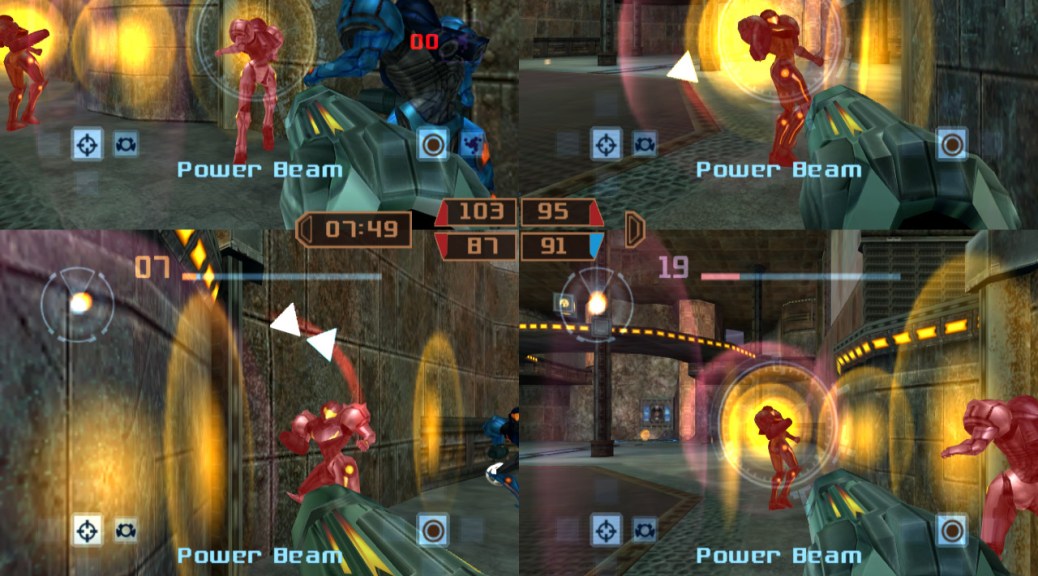
Metroid Prime 2: Echoes (Multiplayer), GameCube

This is a separate set of Metroid Prime 2: Echoes grabs (to the set showing the single-player campaign that I posted earlier); these are of the multiplayer side of the game, which is not shown very often.

Continue reading Metroid Prime 2: Echoes (Multiplayer), GameCube

Metroid Prime 2: Echoes, GameCube

Developed by Retro Studios in collaboration with Nintendo, Metroid Prime 2: Echoes is the sequel to the classic Metroid Prime. It was first released in 2004 – to rave reviews – and it remains one of the best games ever made for the Nintendo GameCube.

Continue reading Metroid Prime 2: Echoes, GameCube

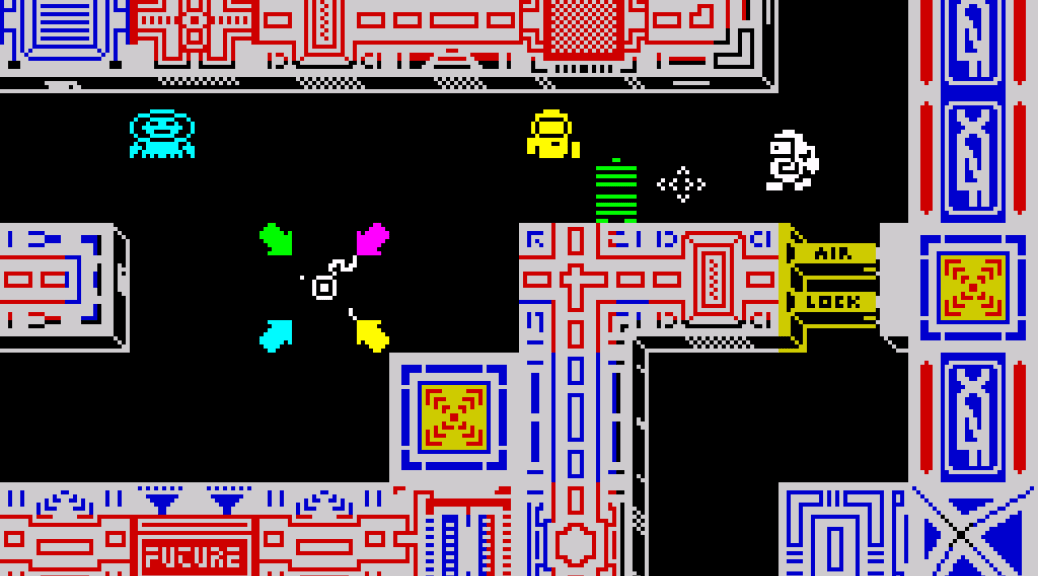
Project Future, ZX Spectrum

Programmed by Dominic Wood, with graphics by Julian Wood, Project Future is a colourful action/maze game that was published for the ZX Spectrum and Amstrad CPC by Micromania in 1985.

Continue reading Project Future, ZX Spectrum

Shinobi III: Return of the Ninja Master, Megadrive/Genesis

Shinobi III: Return of the Ninja Master is the second sequel in the Shinobi series, released by Sega – exclusively for the Megadrive/Genesis – in 1993. Shinobi III sees Sega slightly changing the focus of this famous platform/action game, with less emphasis on difficulty and more on the speed at which you play the game and the timings of your attacks. Which will be welcomed by some players.

Continue reading Shinobi III: Return of the Ninja Master, Megadrive/Genesis

Bionic Commando (US version), Commodore 64

This is the US-developed port of Capcom‘s Bionic Commando. It was created by Pacific Dataworks International and published by Capcom in 1988. If you want to see the (IMHO vastly superior) British version of the game: click here.

Continue reading Bionic Commando (US version), Commodore 64

Bionic Commando, Commodore 64

There are two versions of Bionic Commando for the Commodore 64 – a British version, developed by Software Creations and published by GO!, and a US version, developed by Pacific Dataworks International and published by Capcom. Both were released in 1988.

The game shown here is the British version, which – in my humble opinion – is by far the better of the two releases.

Continue reading Bionic Commando, Commodore 64

Dark Arena, Game Boy Advance

Developed by Graphic State and published by Majesco/THQ in 2002, Dark Arena is a first-person shooter set in a futuristic environment where you are the only survivor of a team sent in to neutralise a bunch of Genetically-Engineered Organisms (GEOs) inside a top secret training facility.

Continue reading Dark Arena, Game Boy Advance

Back Track, Game Boy Advance

When I first played Back Track, my instincts screamed at me that this was a terrible game. The graphics are messy; the enemies look awful; the explosions have a really bad horizontal raster-style visual effect; health packs are called “Band-Aids“; the weapons are unimpressive; the draw distance is masked with a solid black shadow, which is disconcerting; the environments appear flat, empty and uninteresting, and the premise of the game – to rescue kidnapped humans from inside tubes – doesn’t seem very exciting. BUT… I persisted with it and found Back Track to actually be quite absorbing and challenging, when I eventually got into it.

Continue reading Back Track, Game Boy Advance

Return of the Jedi, ZX Spectrum

Developed by Consult Computer Systems and published by Domark in 1989, the ZX Spectrum port of Atari‘s Return of the Jedi is an okay attempt to bring the fair-to-middling arcade game to Sinclair‘s diminutive home computer.

Continue reading Return of the Jedi, ZX Spectrum