
Need For Speed: Most Wanted is the third Need For Speed game released for the GameCube. It was developed in collaboration between EA Black Box and EA Canada, and was first published by EA Games in 2005.
Tag Archives: 3D graphics
Three-dimensional graphics, usually constructed of polygons. Not two-dimensional.

Need For Speed: Underground 2, GameCube
The sequel to Need For Speed: Underground, and the second Need For Speed game (of four) released for the GameCube, Need For Speed: Underground 2 is a bit of a curveball in the series and is significantly different to the first game. It was developed by “EA Black Box” and first published by EA Games in 2004.

Need For Speed: Underground, GameCube
Developed by “EA Black Box” and released by EA Games in 2003, Need For Speed: Underground is a street-racing game in high-powered modern cars. It uses fairly spectacular 3D graphics and environments; has a nice control/feel to the cars, and is full of OTT flashy car racing FMV (which some might find unnecessary; I was kinda leaning in that direction).

Godzilla: Destroy All Monsters Melee, GameCube
Godzilla: Destroy All Monsters Melee on the GameCube was developed by Pipeworks Software and published by Infogrames, under their Atari label, in 2002. The GameCube and Xbox were the only consoles to get this game, although the handheld Game Boy Advance got a version too.
Continue reading Godzilla: Destroy All Monsters Melee, GameCube
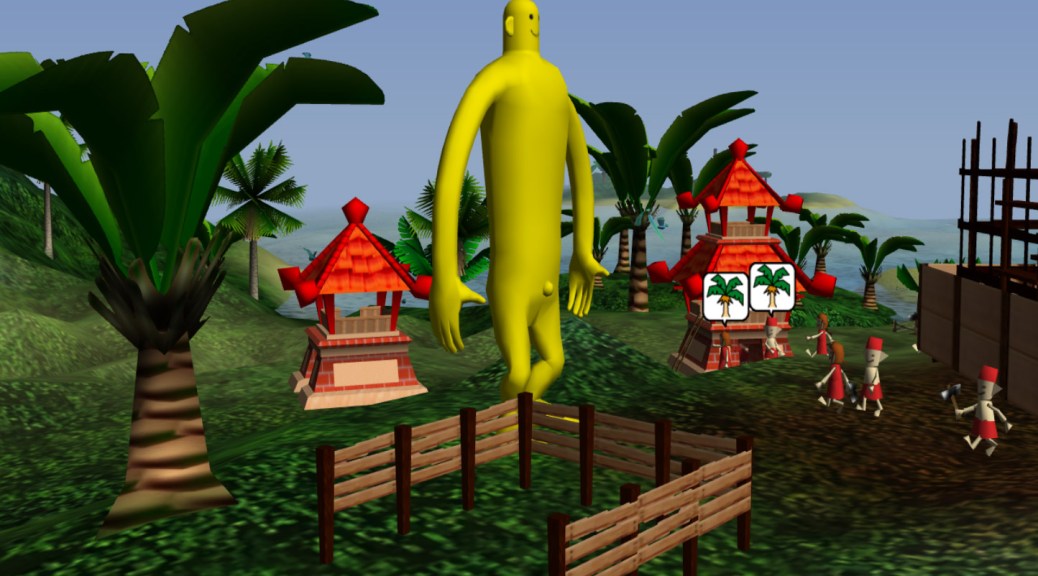
Doshin the Giant, GameCube
Doshin the Giant is one of those games where you ask yourself: “What am I playing? Am I a God? Or am I a turd? And is there any reason why I can’t be both of those things at the same time?! And is that my belly button or my cock? I hope it’s the former…”
It’s also a game where you can lose yourself in the tropical paradise that is the island you live on, because the sound effects, lighting and music are soothing and dreamlike…
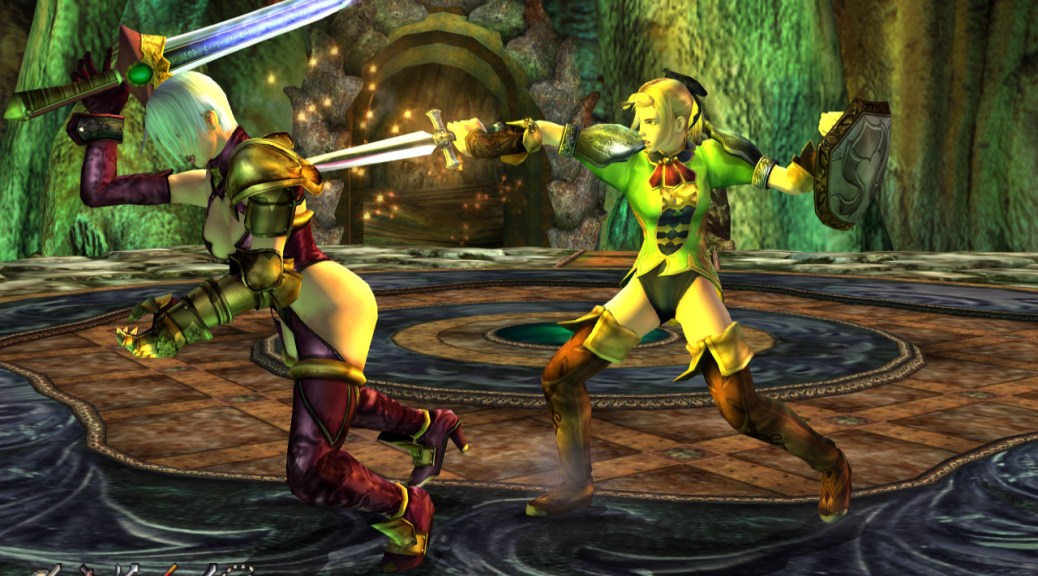
Soulcalibur II, GameCube
The Soulcalibur series is a line of classic arcade fighting games, created by Namco and their dedicated development team, “Project Soul“. And this is a conversion of Soulcalibur II – from arcade to GameCube – first published in 2003.
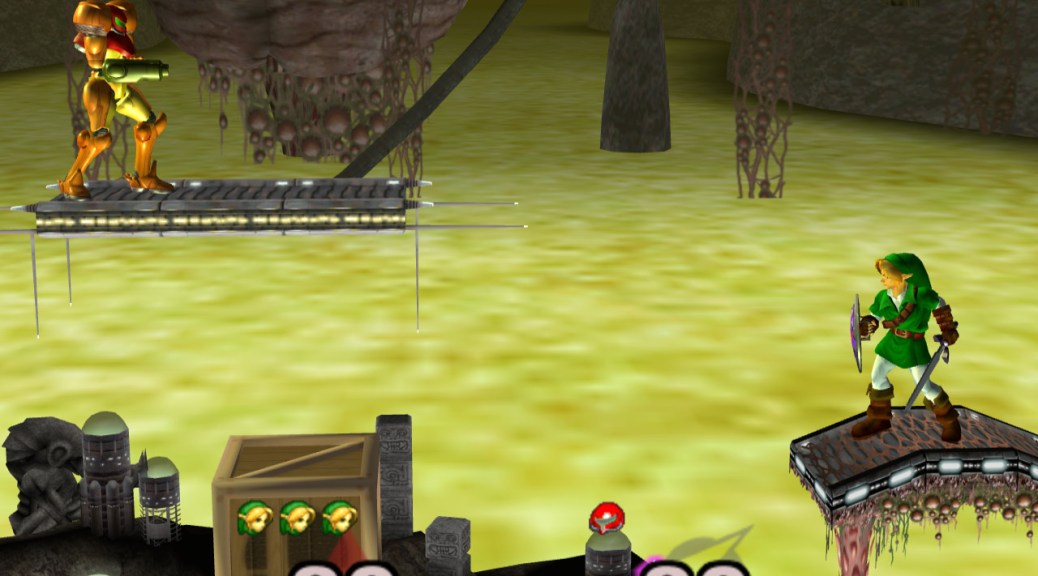
Super Smash Bros. Melee, GameCube
Super Smash Bros. Melee is a classic GameCube-exclusive fighting game, developed by HAL Laboratory and published by Nintendo in 2001. It is the sequel to HAL‘s 1999 Nintendo 64 game, Super Smash Bros. It features an array of historical Nintendo characters, taken from a range of classic Nintendo games, and it pits them against each other in a dynamic fighting arena.
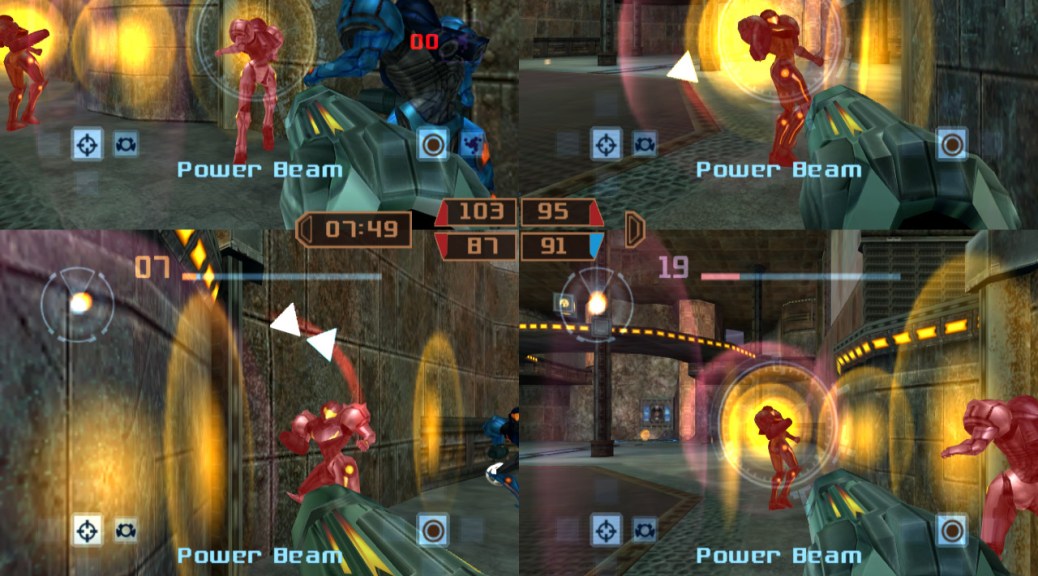
Metroid Prime 2: Echoes (Multiplayer), GameCube
This is a separate set of Metroid Prime 2: Echoes grabs (to the set showing the single-player campaign that I posted earlier); these are of the multiplayer side of the game, which is not shown very often.
Continue reading Metroid Prime 2: Echoes (Multiplayer), GameCube
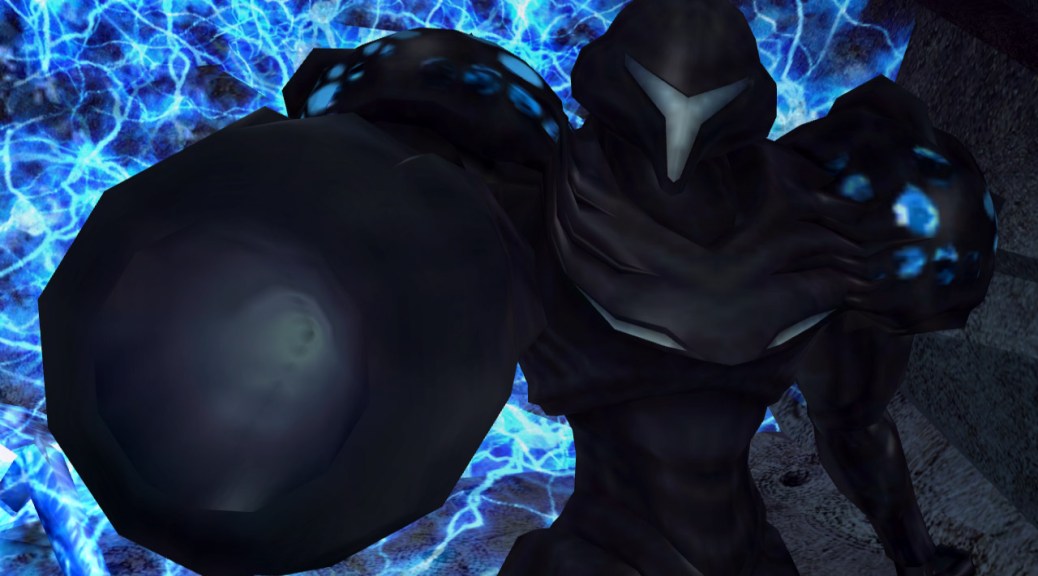
Metroid Prime 2: Echoes, GameCube
Developed by Retro Studios in collaboration with Nintendo, Metroid Prime 2: Echoes is the sequel to the classic Metroid Prime. It was first released in 2004 – to rave reviews – and it remains one of the best games ever made for the Nintendo GameCube.

Final Fantasy Crystal Chronicles, GameCube
Final Fantasy Crystal Chronicles is an action/RPG collaboration between Square Enix and The Game Designers Studio, Inc.
It was first released for the Nintendo GameCube in Japan in 2003, and in 2004 for the rest of the world.
 The King of Grabs