
The FM Towns version of Marble Madness is pretty damn special. Not only does it have a unique symphonic rendition of the game’s famous soundtrack, but it also has a Time Trial mode, and you can also choose the colour of your marble! It was only ever released in Japan, and – like the excellent X68000 version – it was ported by Tengen and published by Home Data Corporation in 1991.
Tag Archives: Jed Margolin

Marble Madness, Megadrive
The Japanese Megadrive release of Marble Madness is completely different to the North American and European release of the game and was developed and published by Tengen in 1993. It is far superior to the Western Megadrive/Genesis release and is more authentic to the arcade original. In fact: it is very, very close to the arcade game, in terms of graphics, sound and gameplay. If you didn’t know that the Japanese version of the game was different, I’d recommend checking it out as it may shock you to find out how good it is…
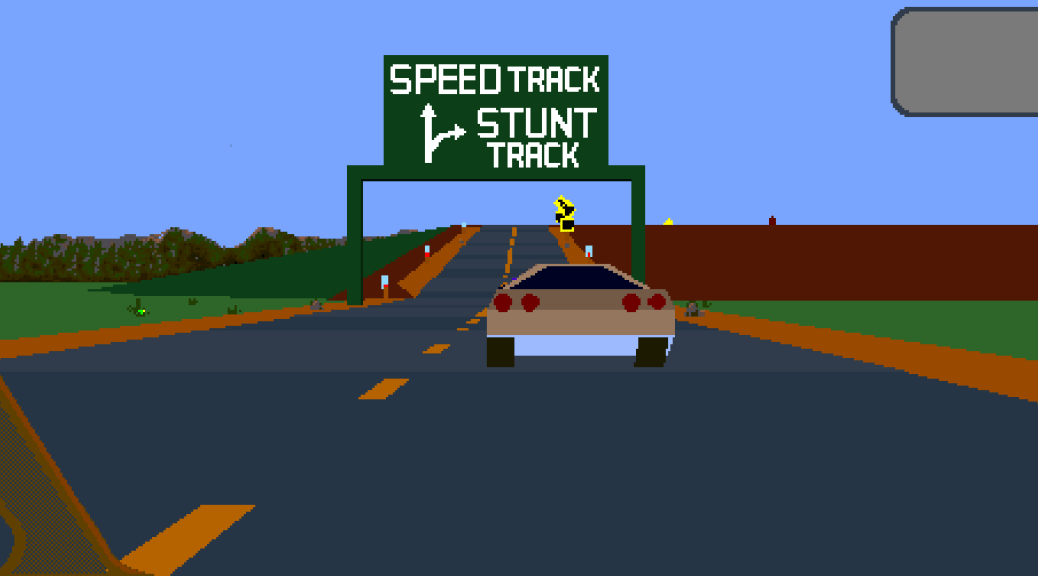
Hard Drivin’, Arcade
Hard Drivin’ is a 1989 arcade game developed and manufactured by Atari Games. It allows the player to drive a sports car on a track that emphasises speed and stunts, and was one of the first driving games with a fully 3D polygonal environment.
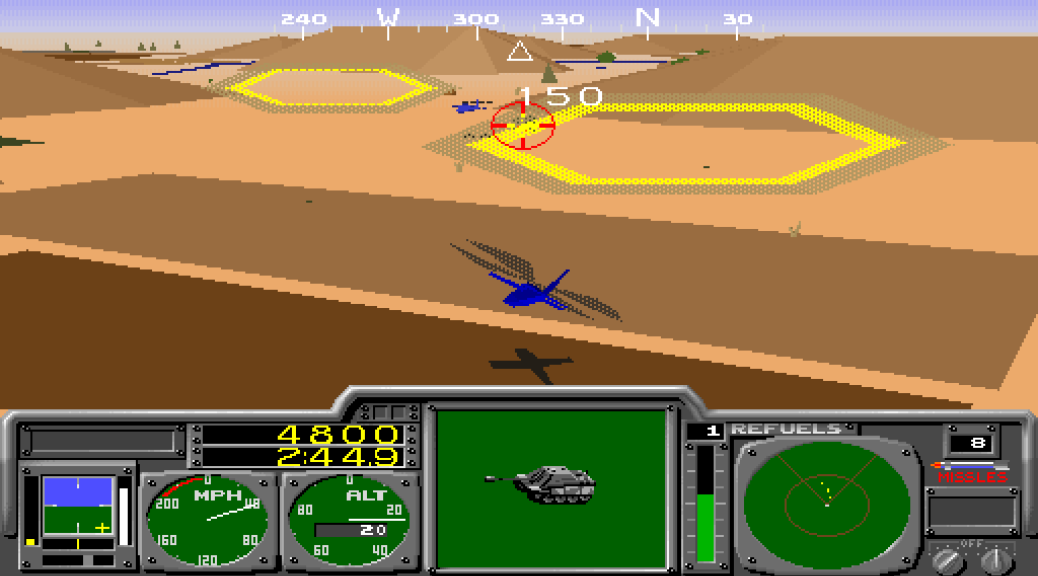
Steel Talons, Arcade
Steel Talons is a helicopter action game that uses 3D, polygonal graphics to represent the playing area. It was developed and manufactured by Atari Games in 1991.
This being from the early 1990s: the 3D graphics are quite simple, and Steel Talons does look complicated to play on first inspection, but the gameplay is actually fairly simple.

Marble Madness, X68000
The Sharp X68000 version of Atari‘s classic Marble Madness is pretty much arcade perfect – barring, of course, the trackball controls of the original arcade game. In fact: if you compare the graphics to the arcade game you might notice that they’re crisper and slightly higher resolution.

S.T.U.N. Runner, Arcade
S.T.U.N. Runner is a 1989 arcade game by Atari Games that uses 3D polygonal graphics to create a fast-paced tunnel shooter.
The “S.T.U.N.“, by the way, means “Spread Tunnel Underground Network“, which doesn’t mean a great deal in the grand scheme of things…

Star Wars: The Empire Strikes Back, Arcade
Star Wars: The Empire Strikes Back is the sequel to the timeless Atari, Inc. shooter, Star Wars, and it was first released into arcades in 1985. It is, of course, based on the classic 1980 film of the same name.

Marble Madness, Arcade
Atari’s 1984 arcade hit was a very early proponent of isometric (meaning: “equal measure“) graphics, with a viewpoint that takes an overhead, three-quarter perspective of the gameplay area, and as a result was a huge influence on many games that followed it.
 The King of Grabs