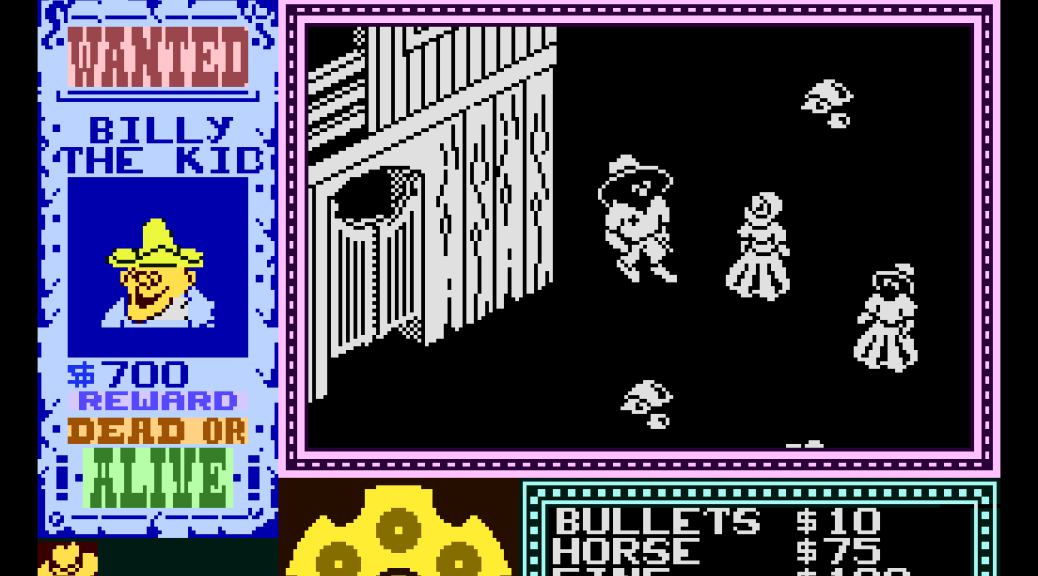
One of the better Atari 8-bit homebrew Ultimate conversions, Gunfright was ported by Mariusz, Jose Pereira, Emkay and Saul Cross in 2017. It plays pretty much the same as the ZX Spectrum original and looks similar to the Commodore 64 homebrew release of 2017. In fact there may be a connection between them since one of the people who worked on the C64 port also worked on this.
Tag Archives: influential

The Dragon Quest series
The Dragon Quest series is a pioneering series of Role-Playing Games that was initially developed by Chunsoft and published by Enix in Japan. This series was responsible for setting the standard for Japanese Role-Playing Games for decades to come.

Dragon Warrior VII, PlayStation
Released in Japan in 2000 as Dragon Quest VII: Fragments of the Forgotten Past, this PlayStation exclusive JRPG was re-titled as Dragon Warrior VII for its North American English language release in 2001. It was developed by Heartbeat and was the last Dragon Quest game to be published by Enix, before merging with Squaresoft in 2003 to form Square Enix.

Dragon Warrior IV, NES
Dragon Warrior IV is the localised American version of Dragon Quest IV: Chapters of the Chosen. It’s an RPG, developed by Chunsoft and initially published by Enix in 1990 in Japan (and 1992 in North America).

Dragon Warrior III, NES
Dragon Quest III: The Seeds of Salvation was developed by Chunsoft and published by Enix in Japan in 1988. It was translated into English and released as Dragon Warrior III in North America in 1992, some four years later.

Dragon Warrior II, NES
Dragon Quest II: Luminaries of the Legendary Line was developed by Chunsoft and published by Enix in Japan in 1987. The localised English version of this game was released as Dragon Warrior II in North America in 1990.

Complete list of Ultimate Play the Game releases
A list of all the official Ultimate Play the Game releases, plus known, completed homebrew conversions, remakes, and unreleased titles.
Continue reading Complete list of Ultimate Play the Game releases
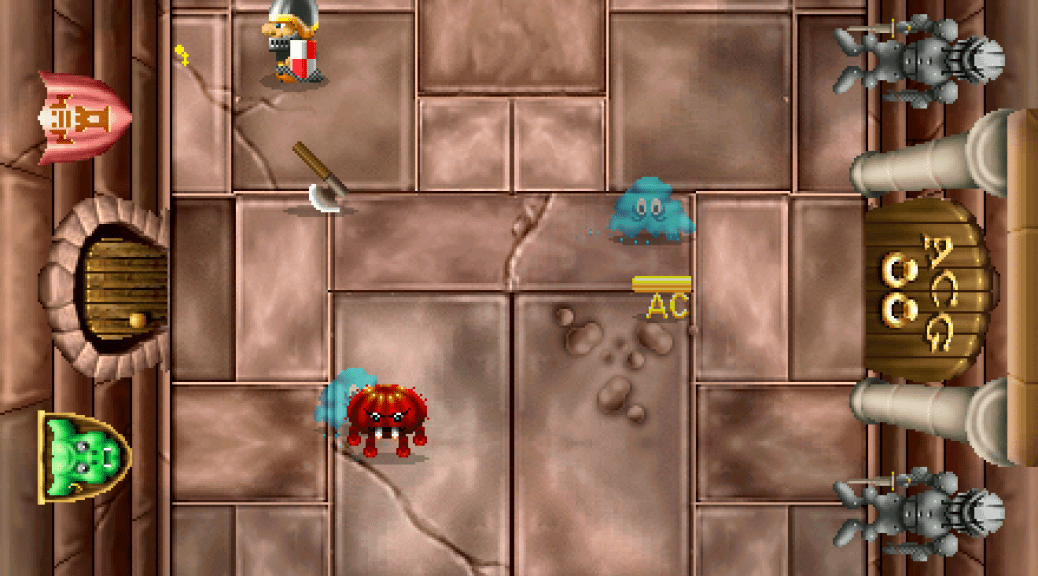
Atic Atac Retrospec Remake, PC
This homebrew PC remake of Ultimate Play the Game‘s 1983 Spectrum hit Atic Atac was published for free in 2006. It is one of Retrospec‘s better remakes.
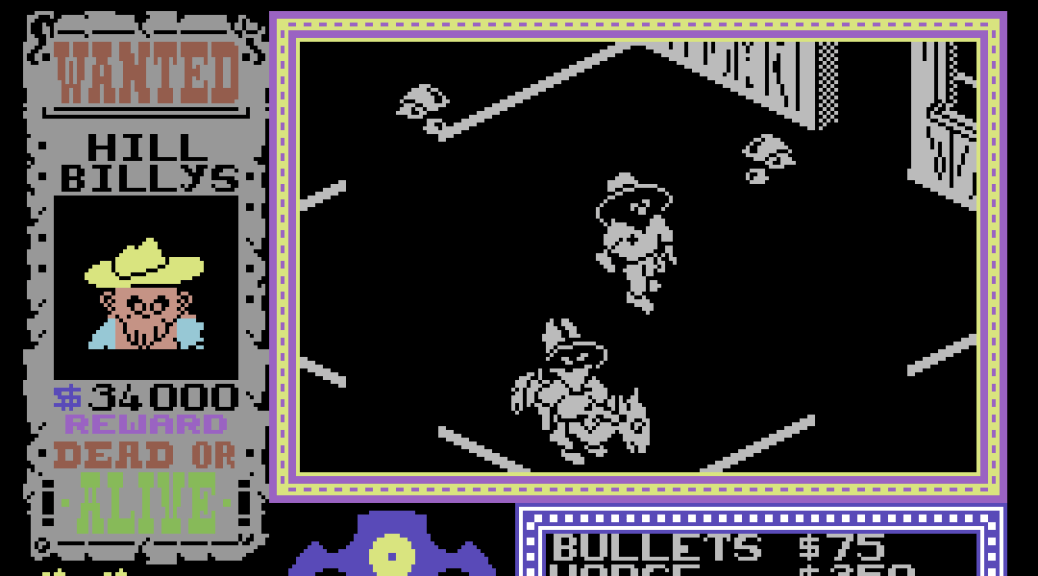
Gunfright, Commodore 64
This C64 homebrew conversion of Ultimate‘s 1986 ZX Spectrum hit Gunfright was developed by Rod & Emu and released in 2017, and it’s another decent modern port of a thirty year-old game.

Gunfright, MSX
The MSX version of Ultimate Play the Game‘s Gunfright is identical to the Spectrum original, except for the lack of a loading screen. It was initially released in 1986.
 The King of Grabs