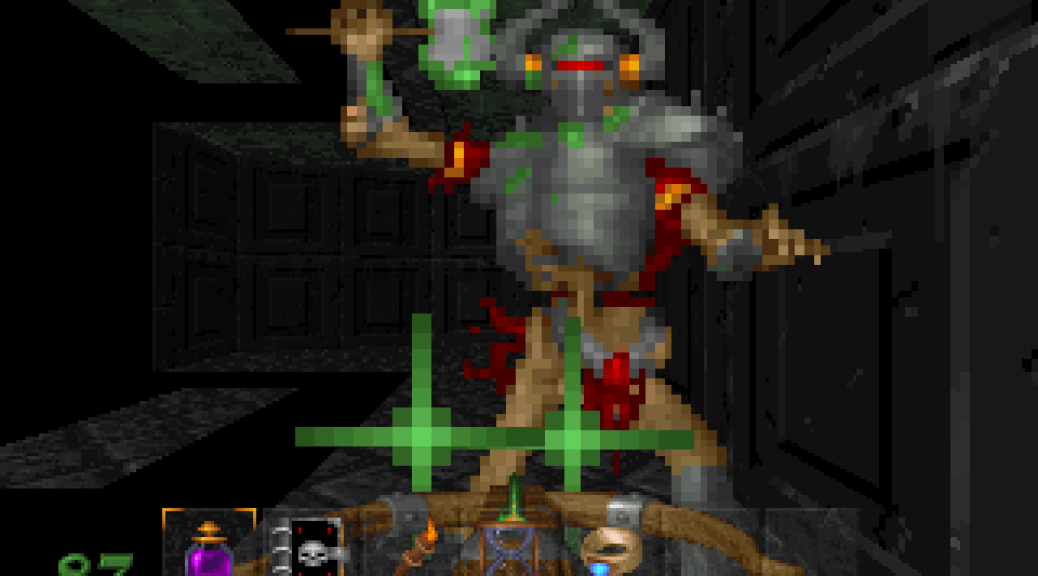
Heretic is a fantasy first-person shooter that uses a modified version of the Doom engine. It was developed by Raven Software and published by id Software for PC MS-DOS in 1994. John Romero acted as producer on the game (and on the sequel, Hexen).
Tag Archives: First-Person

TimeSplitters: Future Perfect, XBox
TimeSplitters: Future Perfect is a first-person shooter developed by Free Radical Design and published by Electronic Arts in 2005. It is the third game in the TimeSplitters series and was released for XBox (the version shown here), GameCube, and PlayStation 2.

Virtua Racing Deluxe, Sega 32X
This superb conversion of Sega‘s Virtua Racing arcade game required the 32X add-on peripheral for the Megadrive/Genesis and was first released in 1994. Called Virtua Racing Deluxe, it had features that were exclusive to this version, and it also had remarkable use of 3D polygonal graphics that were outstanding for the time.

Elektra Glide, Atari 8-bit
Elektra Glide is a futuristic first-person racing game written by Adam Billyard and published by English Software in 1985. Well, you could call it a “racing” game, but you’re not actually racing against other cars – just a timer.

Infiltrator, Atari 8-bit
Infiltrator is a classic helicopter action game designed and programmed by Chris Gray and published in 1986 by US Gold (in Europe) and Mindscape (everywhere else).
The aim is to fly a chopper (called the Gizmo DHX-3) to an enemy compound, then infiltrate the base on one of three separate missions. Each mission is split into two halves: a first-person flying game, then an isometric stealth/exploration game.

Apocalypse, Archimedes
Apocalypse is a fast-paced, overrated 3D shoot ’em up that was written by Gordon J. Key (the same guy who wrote E-Type) and published by The Fourth Dimension for the Acorn Archimedes in 1990.

Chocks Away, Archimedes
Chocks Away is a flight combat game for the Acorn Archimedes that is loosely set in the First World War, although it does mix elements from other timelines and simplifies the realism in a way that might not appeal to a historian. The game is meant to appeal to those who just like flying around and shooting things and it provides a fairly open-ended and enjoyable experience on that front.
Phantom Slayer, Dragon 32
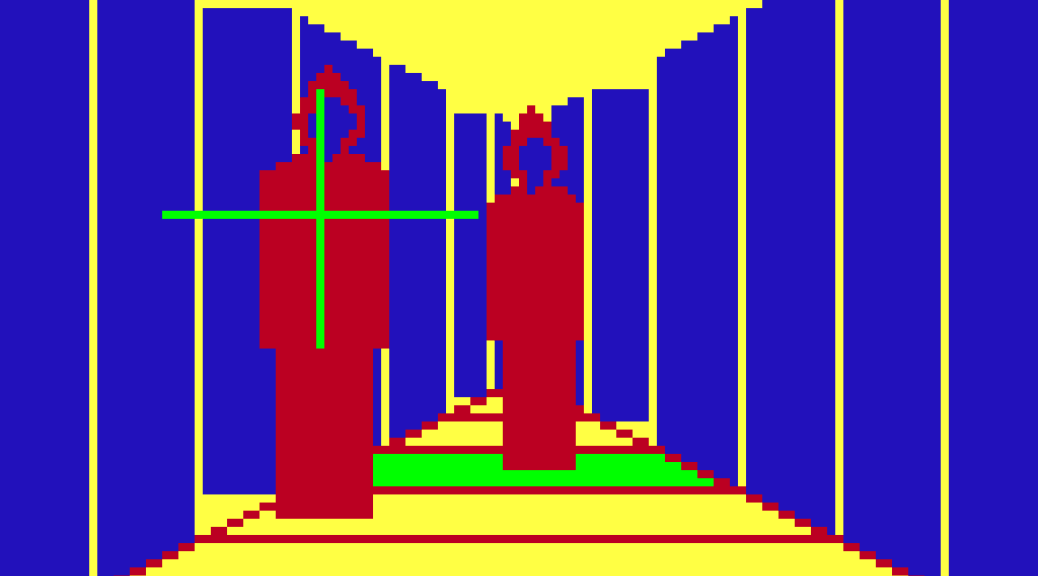
Phantom Slayer is an early 3D maze game where the aim is to kill sinister, hooded figures that are chasing you through a randomly-generated, first-person maze. It was written by Ken Kalish and published by Med Systems in 1982 for the TRS-80 (and its UK counterpart, the Dragon 32).

Metal Gear Solid 2: Substance, XBox
Metal Gear Solid 2: Substance is an expanded version of Metal Gear Solid 2: Sons of Liberty (which was released for the PlayStation 2 in 2001). Substance was released for the XBox by Konami in 2002.
It’s the fourth Metal Gear game co-written and designed by Hideo Koijima and the seventh game in the series as a whole.

Jumping Flash!, PlayStation
Jumping Flash! is a first-person platform shooter co-developed by Exact and Ultra and published by Sony in 1995.
You play as a jumping robot, called Robbit, who must collect a number of “Jet Pods” (which look more like big carrots) on each level, then stand on the exit pad. This must be done within a strict time limit.

