Tag Archives: 1986

Marble Madness: The Construction Set, Amstrad CPC

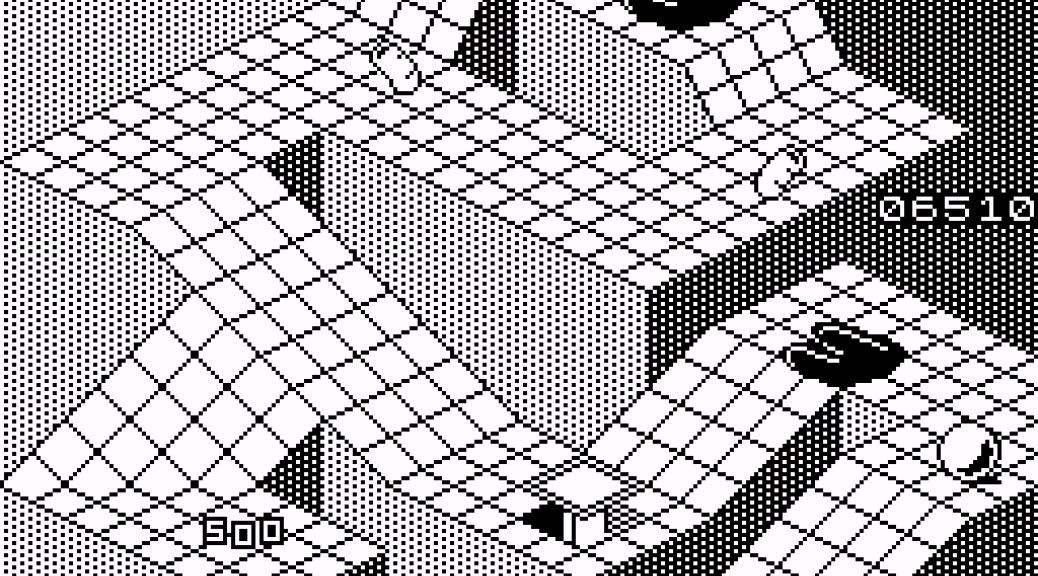
The Amstrad CPC version of Melbourne House‘s 1986 release of Marble Madness is more or less identical to the ZX Spectrum version, but with a bit more colour. It was coded by the same author – John F. Cain – and suffers from the same problems as the Spectrum version.

Continue reading Marble Madness: The Construction Set, Amstrad CPC

Marble Madness: Deluxe Edition, ZX Spectrum

The ‘Deluxe Edition‘ of Marble Madness on the Spectrum was again written by John F. Cain and published by Melbourne House in 1986, and it contains a new set of screens to play, as well as the ten screens from the previous release, plus the Construction Set editor, as a separate load on side ‘B’ of the cassette.

Continue reading Marble Madness: Deluxe Edition, ZX Spectrum

Marble Madness: The Construction Set, ZX Spectrum

Written by John F. Cain (who also made Booty, Moonlight Madness and Super Dragon Slayer on the Spectrum), and published by Melbourne House in 1986, the ‘official’ Marble Madness on the ZX Spectrum bears little resemblance to the classic arcade original.

Continue reading Marble Madness: The Construction Set, ZX Spectrum

Kiki Kaikai, Arcade

Kiki Kaikai (the literal translation being “Strange and Mysterious World“) is a shoot ’em up developed and distributed into Japanese arcades by Taito in 1986. Set in Feudal Japan, the player assumes the role of a Shinto shrine maiden, called Sayo-chan, who must use her ‘O-Fuda’ scrolls and ‘Gohei’ wand to defeat renegade spirits and monsters from Japanese mythology. Sayo’s ultimate aim is to free The Gods of Fortune who have been imprisoned by evil spirits.

Continue reading Kiki Kaikai, Arcade

Marble Madness, Apple II

The Apple II port of Atari Games‘ classic Marble Madness was first published by Electronic Arts in 1986. It was converted by Will Harvey of Sandcastle Productions, who also made the Commodore 64 version, of which this is basically a copy. Lack of colour aside, this conversion does have some playability issues that make it frustrating to play.

Continue reading Marble Madness, Apple II

Marble Madness, Commodore 64

The Commodore 64 version of Marble Madness was developed by Will Harvey and published by Electronic Arts in 1986. It has something unique that most other Marble Madness conversions don’t have, which is: a secret extra level that is accessible from the first stage. It also has the two player mode from the arcade original, where both marbles can race to the goal simultaneously.

Continue reading Marble Madness, Commodore 64

Marble Madness, Amiga

The Amiga version of Atari Gamesclassic arcade game, Marble Madness, was converted by Larry Reed and published by Electronic Arts in 1986. It is one of those relatively early 16-bit ports that is a little rough around the edges, presentation-wise, but plays perfectly well.

Continue reading Marble Madness, Amiga

Castlevania, NES/Famicom

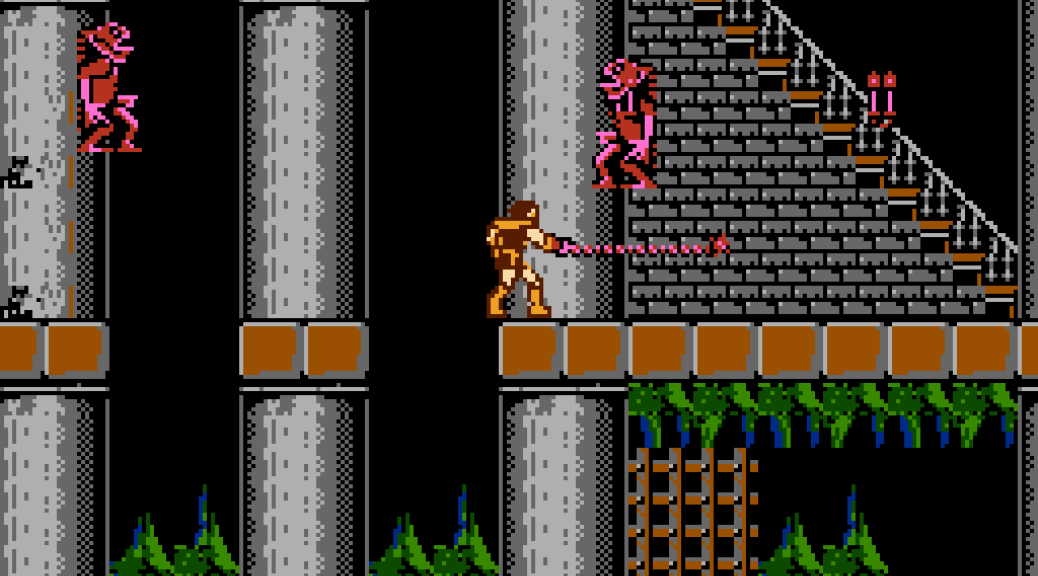
The first Castlevania game was initially released in Japan, by Konami, under the title of “Akumajō Dracula” in 1986. Versions for the MSX2 and Famicom Disk System were developed simultaneously, with the Famicom version coming out on 26th September, and the MSX version a month later, on 30th October. That same game was later released in Europe on 30th October 1987 – translated into English – under the title of “Vampire Killer“.

When it came time to convert the game to the Nintendo Entertainment System for a North American release it was decided to re-title the game as “Castlevania“*. This turned out to be a significant decision as it became a big hit and grew to become a popular and well-known series of video games. The name “Castlevania” entered into the lexicon of classic, instantly-recognisable game titles, later becoming a portmanteau of “Metroid” and “Castlevania” (“Metroidvania“) to describe an entire sub-genre of action/platform games that all share similar gameplay features.

*= Although it’s not clear who actually came up with the name “Castlevania” it has been reported that the change was due to Konami of America senior vice president Emil Heidkamp‘s discomfort with the religious connotations of the title “Akumajō Dracula“, which he believed translated as “Dracula Satanic Castle” (although some argue that it translates as “Demon Castle Dracula“).

Continue reading Castlevania, NES/Famicom

Black Belt, Sega Master System

Released for the Master System by Sega in 1986, Black Belt is a scrolling beat ’em up in the tradition of the classic Irem arcade game, Kung-Fu Master. And it is a challenging and fun game to play.

Continue reading Black Belt, Sega Master System

Alex Kidd: The Lost Stars, Arcade

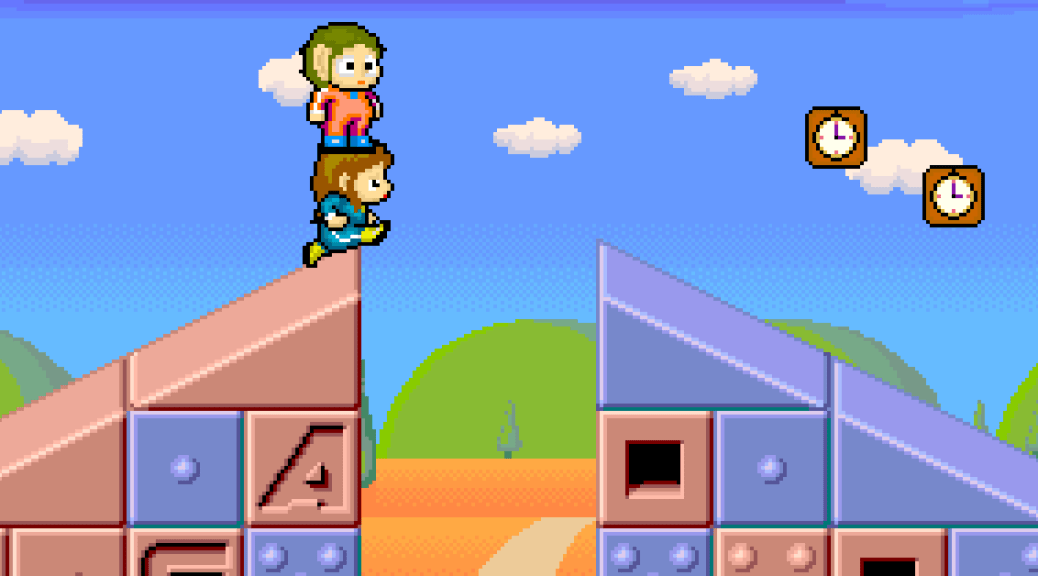
The second game in the Alex Kidd series, and the only one released as an arcade game, Alex Kidd: The Lost Stars is a one or simultaneous two-player platform game, developed by Sega and first released in 1986. It of course features the cute boy wonder, Alex Kidd, although this time he’s accompanied by his female partner, Stella. Stella can be played alone or cooperatively with Alex.

Continue reading Alex Kidd: The Lost Stars, Arcade