
The Commodore 64 version of Grange Hill is only marginally more crap than the ZX Spectrum version. The chunkier sprites in this make it look even more amateurish.

Grange Hill, ZX Spectrum
Argus Press Software released this licensed adventure game, based on the successful BBC TV series of the same name, in 1987. It is infamous for being one of the worst games ever made, and it truly is, for a number of different reasons…

Bad Games Week
This week – something a little different… I’m only going to be featuring truly terrible video games for publication on the blog.
Yes, this is “Bad Games Week” at The King of Grabs!
If it’s rubbish, but has something interesting about it, then I’ll consider including it. Every system has its collection of howlers – I’m just picking a few of my favourites.
Seven days of the worst video games in history!
Starting today… ending Sunday. Enjoy!
Here’s a summary of links to what was published:
Grange Hill ZX Spectrum
Grange Hill, Commodore 64
Grange Hill, Amstrad CPC
Ultra Vortek, Atari Jaguar
Rise of the Robots, PC
Black Crystal, ZX Spectrum
Black Crystal, Commodore 64
Scuba Dive, Commodore 64
Kung Food, Atari Lynx
Toilet Kids, PC Engine
Quarantine, PC
Enjoy!
The King of Grabs
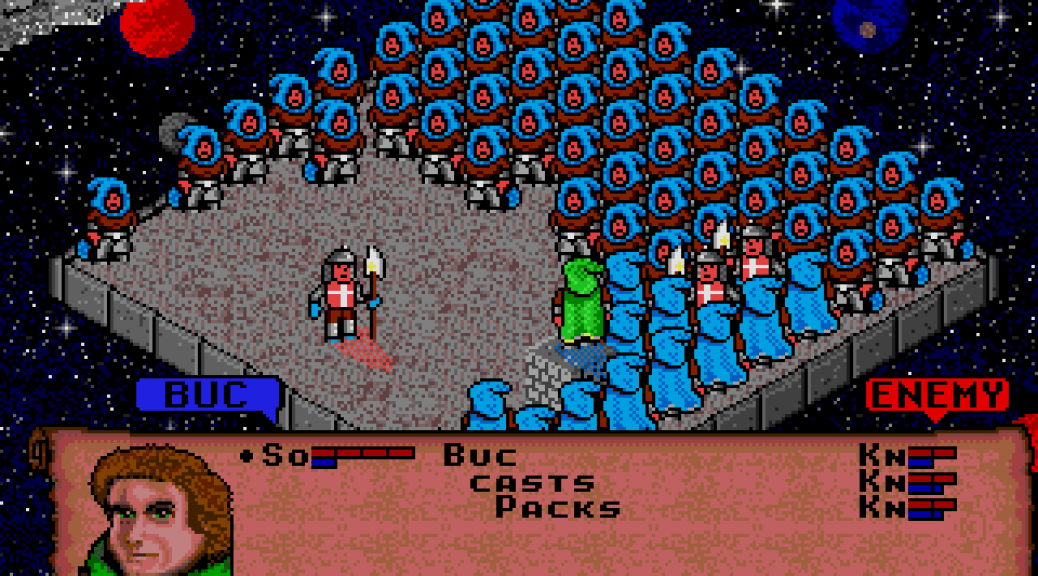
Rings of Power, Megadrive/Genesis
Rings of Power is an isometric Role-Playing Game developed by Naughty Dog and published by Electronic Arts for the Sega Megadrive in 1991.
Unlike many RPGs of the time, Rings of Power is very open-ended.

Questprobe 3: Human Torch and The Thing, ZX Spectrum
The third and final Questprobe adventure game, released by Adventure International in 1985.
Continue reading Questprobe 3: Human Torch and The Thing, ZX Spectrum

Questprobe 2: Spider-Man, ZX Spectrum
The second Questprobe adventure game – featuring Spider-Man – is just as difficult as The Hulk, and only marginally more entertaining.

Questprobe 1: The Hulk, ZX Spectrum
Text adventures, with graphics and complex command parsers, were very popular back in the early days of home computing.
You would sit there, typing instructions into a fantasy world on your computer, climbing imaginary trees, and walking imaginary north. It was all “imaginary” because you had to have an imagination to play these games. Your average moron with no imagination would never play a text adventure, like they would never read a book. Because they cannot read the text and construct a world in their imagination.

H.E.R.O., Commodore 64
The Commodore 64 version of John Van Ryzin‘s 1984 classic H.E.R.O. plays just as good as the Atari 2600 original, although the graphics are a little messier.

H.E.R.O., Atari 2600
John Van Ryzin‘s popular H.E.R.O. (Helicopter Emergency Rescue Operation) first made its appearance on the Atari 2600 (aka Atari VCS), via Activision, way back in 1984.
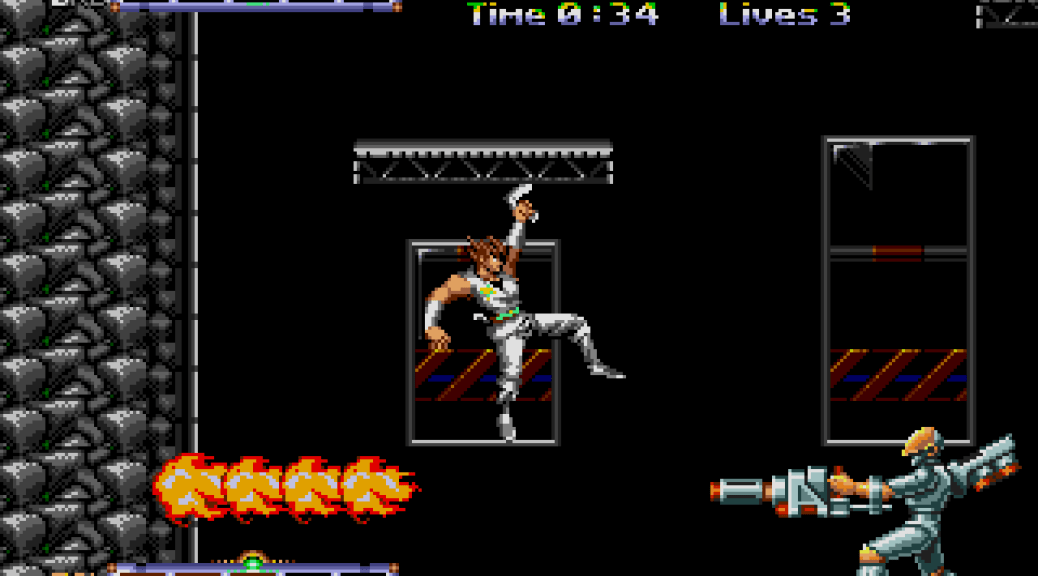
Strider II, Megadrive/Genesis
Strider II is a console-only sequel to the great Capcom arcade game of 1989. It was developed by British company Tiertex and published by U.S. Gold in 1990. A Sega Megadrive version followed later in 1992.

