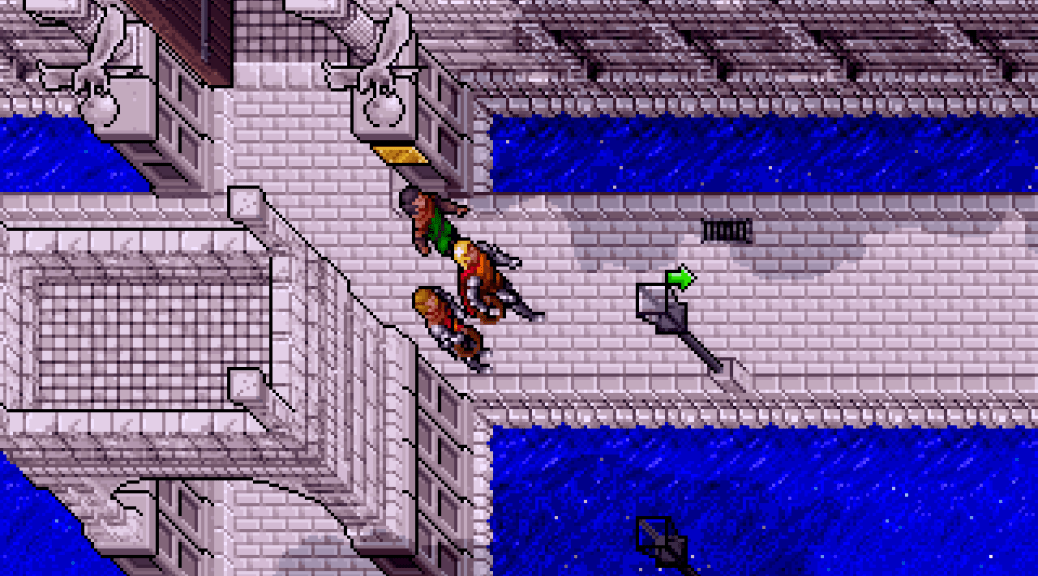
Serpent Isle is an oddity in the Ultima series in that it is a direct sequel to the previous game – Ultima VII: The Black Gate – which uses the same game engine, but with a few enhancements. It was published by Origin Systems in 1993 and only ever appeared on the PC, running under MS-DOS.
Tag Archives: influential

Ultima VII: The Black Gate, PC
Ultima VII: The Black Gate is the seventh game in the Ultima series and the first part of the “Age of Armageddon” trilogy, and was first released for PC MS-DOS by Origin Systems in 1992. The game is highly-rated among RPG fans and even series creator, Richard Garriott, describes Ultima VII as “the most masterfully-executed” of the Ultima series.

Ultima VI: The False Prophet, PC
Ultima VI: The False Prophet is the sixth game in the Ultima series and the third and final game in the “Age of Enlightenment” trilogy. It was first released by Origin Systems in 1990 and the PC MS-DOS version was the original target platform. There is no Apple II version of this game. It is also the most complex game in the series so far.

Ultima: Warriors of Destiny, NES/Famicom
Ultima: Warriors of Destiny on the NES/Famicom was developed by FCI and first published by Pony Canyon in 1992. It is the fifth entry in the Ultima series and this console port is a simplification of the original game.

Ultima V: Warriors of Destiny, Amiga
The Amiga version of Ultima V: Warriors of Destiny was converted by Keith Jackson of DMA Systems Ltd. and was first published by Origin Systems in 1990.

Ultima V: Warriors of Destiny, Commodore 64
Ultima V: Warriors of Destiny was originally released by Origin Systems in 1988 for the Commodore 128, with a Commodore 64 version following in 1989. The game was remastered in 2020 by Drunella, to provide CRT (cartridge) and d81 versions for fastloading, although the graphics remain the same as the original (there are no enhanced graphics, like in the remaster of Ultima IV). The music from the C128 version of Ultima V has been included in the remaster, though.
Continue reading Ultima V: Warriors of Destiny, Commodore 64

Ultima V: Warriors of Destiny, Atari ST
The Atari ST version of Ultima V: Warriors of Destiny was programmed by Binary Vision and first published by Origin Systems in 1989.

Ultima V: Warriors of Destiny, PC
The PC MS-DOS version of Ultima V: Warriors of Destiny was first published by Origin Systems in 1988 and it is arguably the best version of this classic RPG available for any system.

Ultima V: Warriors of Destiny, Apple II
Ultima V: Warriors of Destiny was first released in 1988 for the Apple II through Origin Systems. It was the last Ultima game to be developed for the Apple II and it comes on eight floppy disks. It is the second game in the “Age of Enlightenment” trilogy and is similar in style to the previous game, with character creation done by answering a series of virtue-based questions. You can also import a character from Ultima IV if you have one, which is an interesting new feature in the series.
Ultima I: The First Age of Darkness, PC
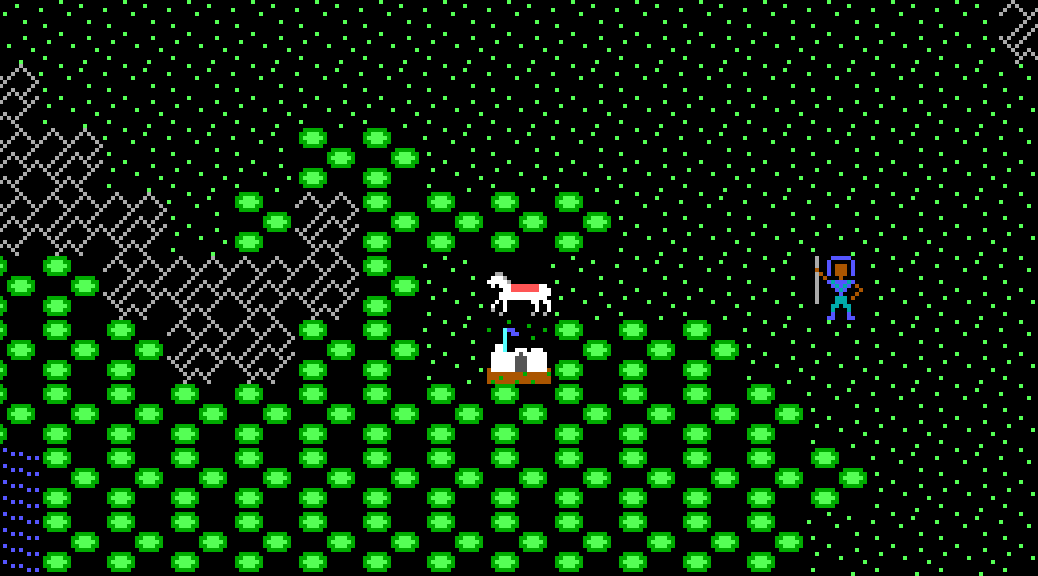
The first game in the Ultima series was initially released for the Apple II in 1981 by California Pacific Computer and was later completely re-coded and re-named as “Ultima I: The First Age of Darkness” for a re-release through Origin Systems. The 1987 MS-DOS re-code – shown here – is still available to buy as part of an Ultima 1+2+3 package on GOG.com (at the time of writing).
 The King of Grabs