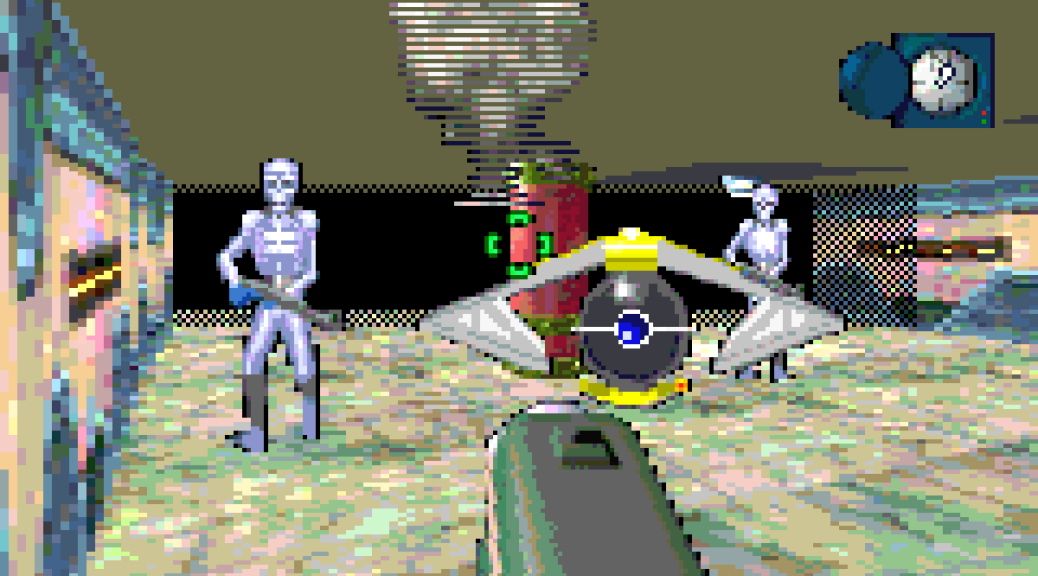
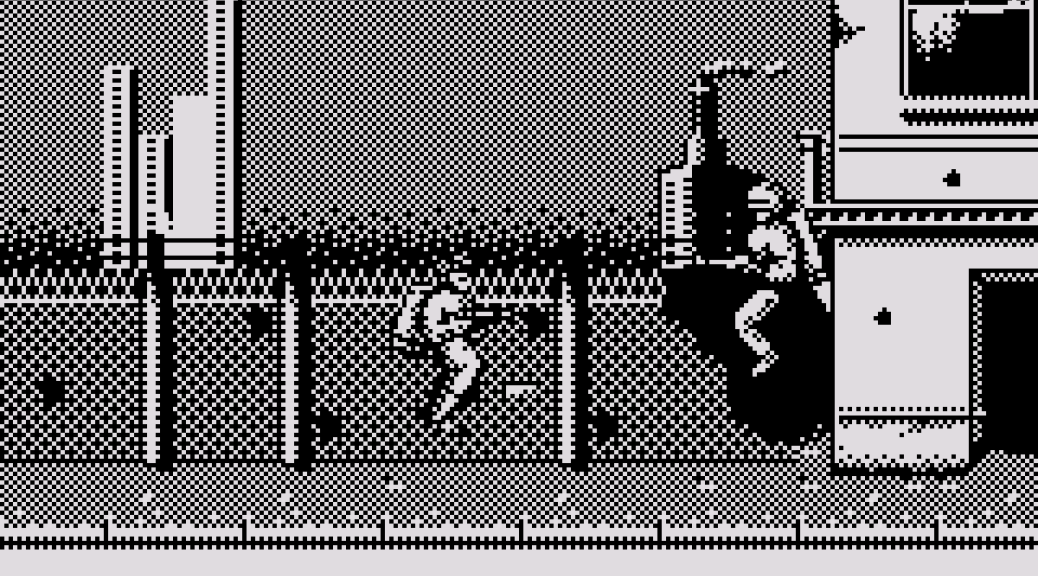
When I first played Back Track, my instincts screamed at me that this was a terrible game. The graphics are messy; the enemies look awful; the explosions have a really bad horizontal raster-style visual effect; health packs are called “Band-Aids“; the weapons are unimpressive; the draw distance is masked with a solid black shadow, which is disconcerting; the environments appear flat, empty and uninteresting, and the premise of the game – to rescue kidnapped humans from inside tubes – doesn’t seem very exciting. BUT… I persisted with it and found Back Track to actually be quite absorbing and challenging, when I eventually got into it.
Tag Archives: elevators
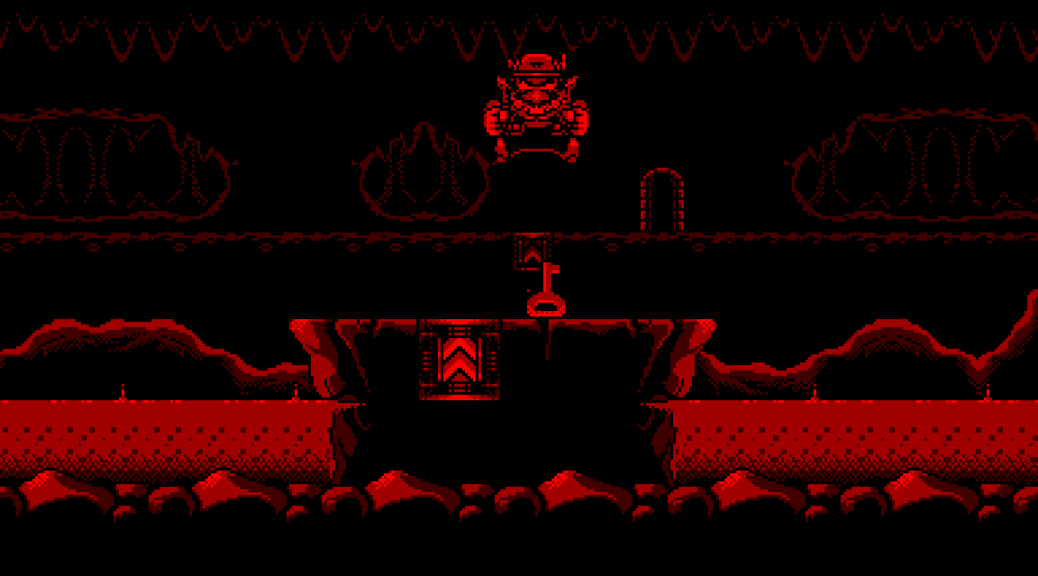
Wario Land, Virtual Boy
Wario Land on the Nintendo Virtual Boy (aka Virtual Boy Wario Land) was developed by Nintendo R&D1 and first released in 1995. It’s a platform game that was designed to utilise the Virtual Boy‘s stereoscopic 3D capabilities, and therefore features objects that swing in and out of the screen, and also allows the player (as Wario) to explore foreground and background areas.

RoboCop, PC
The 1989 MS-DOS version of RoboCop is part conversion of the Data East arcade game, and partly does it own thing, with level structures that connect rooms above and below, with staircases that instantly flip the screen, rather than scroll it. The majority of levels do scroll horizontally, though, although the scrolling is very jerky.

RoboCop, Amstrad CPC
The Amstrad version of Ocean‘s RoboCop came out in 1989, and it is much like the Commodore 64 version, but with a smaller play window and chunkier graphics.

RoboCop, Commodore 64
The Commodore 64 version of RoboCop was first released by Ocean Software in 1988, and it is well-presented, but does have one major fault that I find completely puzzling…

RoboCop, Amiga
Ocean Software‘s Amiga port of RoboCop was fairly impressive when it first came out in 1989, but – playing it now – it hasn’t stood the test of time particularly well. It’s a scrolling run-and-gun shooter that is loosely-based on the Data East arcade game of the same name (although the arcade game and the home computer versions were developed in parallel).

Nebulus, ZX Spectrum
The ZX Spectrum port of Nebulus was coded by John M. Phillips – the author of the original C64 version – and is therefore a very authentic conversion of this excellent platform/puzzle game. It was first published by Hewson Consultants in 1987.
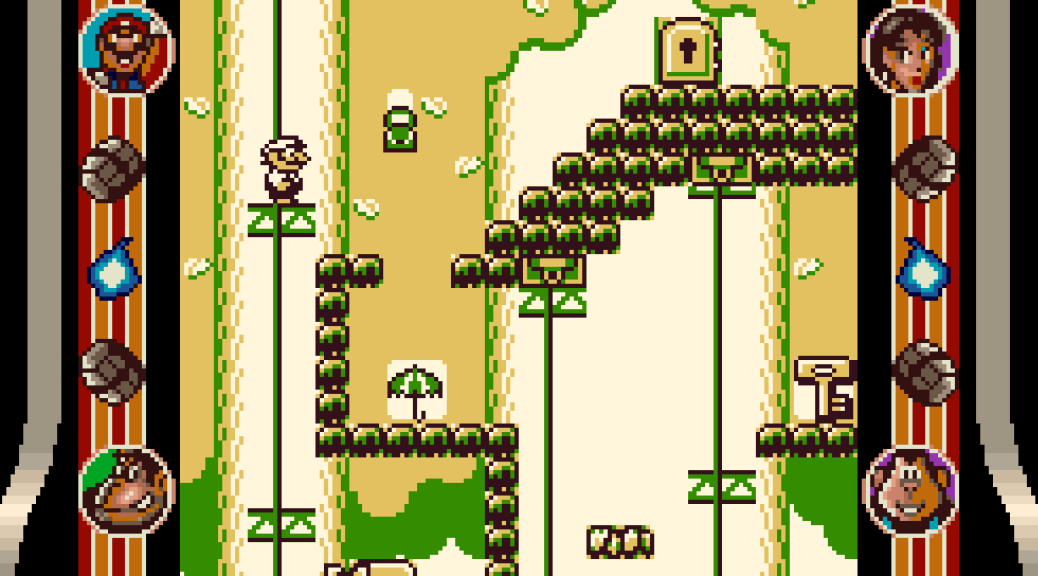
Donkey Kong, Super Game Boy
The Game Boy port of Donkey Kong was first released by Nintendo in 1994 and it really is something special. I’m showing the Super Game Boy version of Donkey Kong here, with its special arcade bezel border and enhanced colour palette. It was, in fact, the first Game Boy cartridge released with Super Game Boy enhancements. If you want to see the original B&W version, click here.
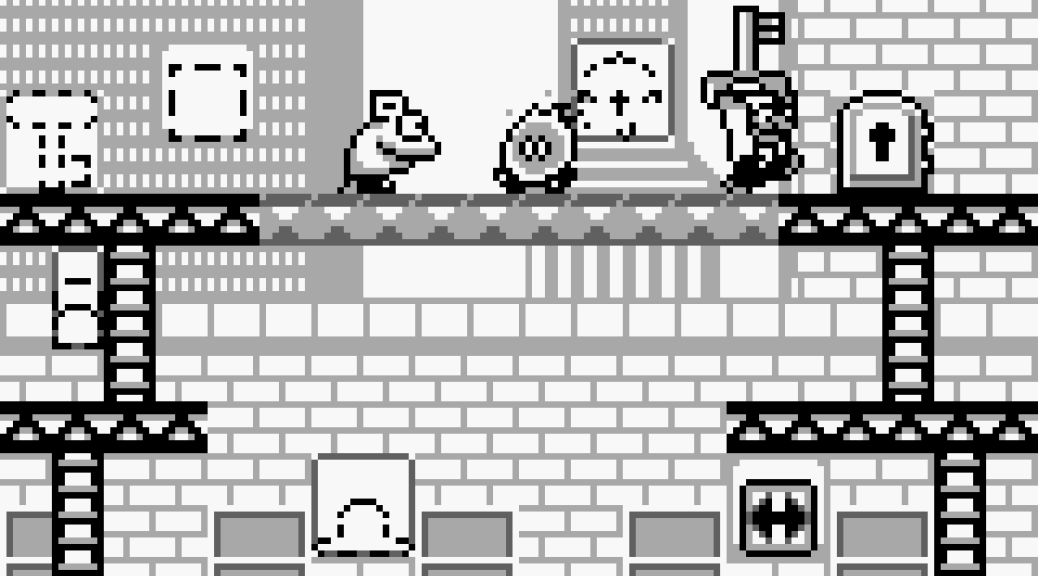
Donkey Kong, Game Boy
The 1994 Game Boy remake of Nintendo‘s iconic arcade game is something very special. It is an enhanced re-imagining of Donkey Kong that begins with the original game and then transforms into something amazing – a brand new game with nine themed stages and 95 individual levels.
 The King of Grabs