The second Magic Knight game by David Jones, released by Mastertronic Added Dimension at the budget price of £2.99 in 1985.
The screenshots shown here are from the enhanced 128K version, released in 1986.
The second Magic Knight game by David Jones, released by Mastertronic Added Dimension at the budget price of £2.99 in 1985.
The screenshots shown here are from the enhanced 128K version, released in 1986.
The first Magic Knight game by David Jones, released by Mastertronic at the budget price of £1.99 in 1985.
Finders Keepers is much more of a platform/maze game than the other games in the Magic Knight series, which are all menu-driven graphical adventures. This one is much more straightforward.
Coming some ten years after the release of the arcade original, Q*bert for the Game Boy was developed by Gottlieb and published by Jaleco in 1992.
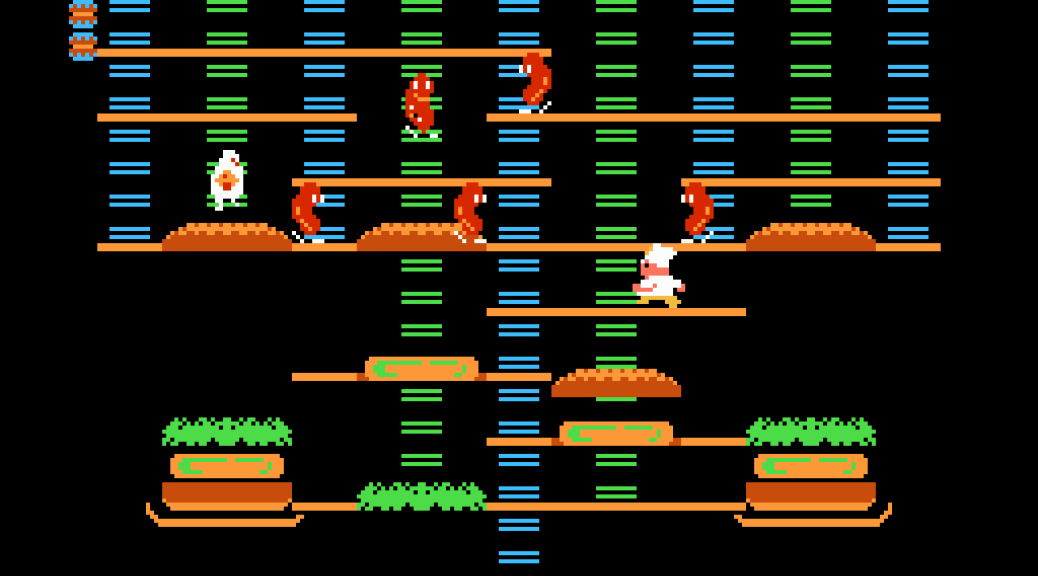
This 1985 Famicom Disk System conversion of BurgerTime is just as good as the arcade original – excepting for the slightly less colourful graphics.
The official conversion of BurgerTime for the MSX was created by Dempa Shimbunsha and Data East in 1986.
It looks a bit like a Spectrum game, which is ironic because there is no official BurgerTime on the ZX Spectrum (there are plenty of bad clones though).
Mattel Electronics produced this ColecoVision console conversion of BurgerTime in 1984.
It is arguably the most authentic – and most impressive-looking – of the early console conversions of BurgerTime and it retains the vertical screen-style design of the arcade game levels (which is most welcome).
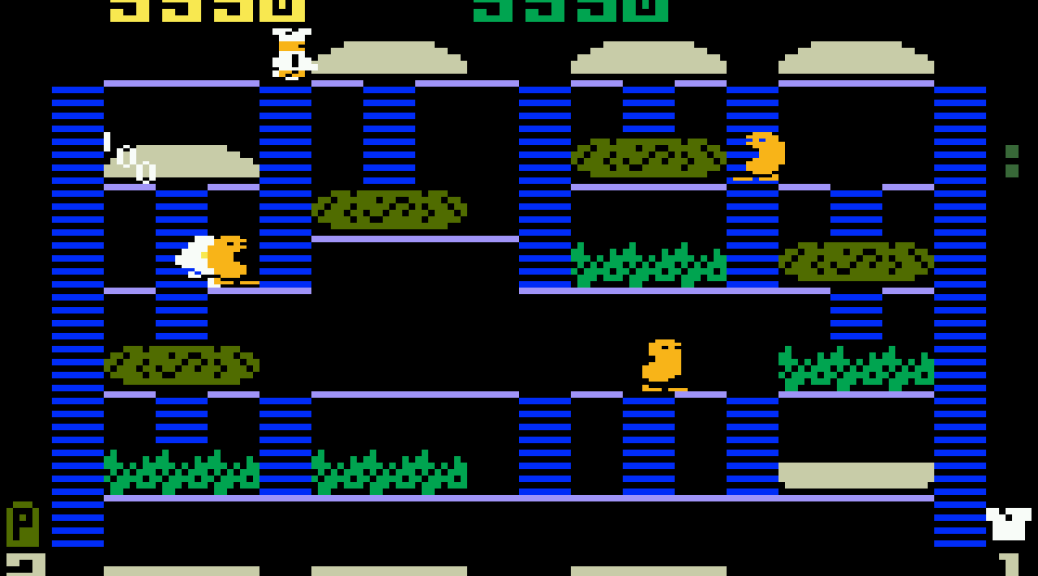
The Atari 2600 version of BurgerTime is extremely basic and contains little of the character and playability of the arcade original.
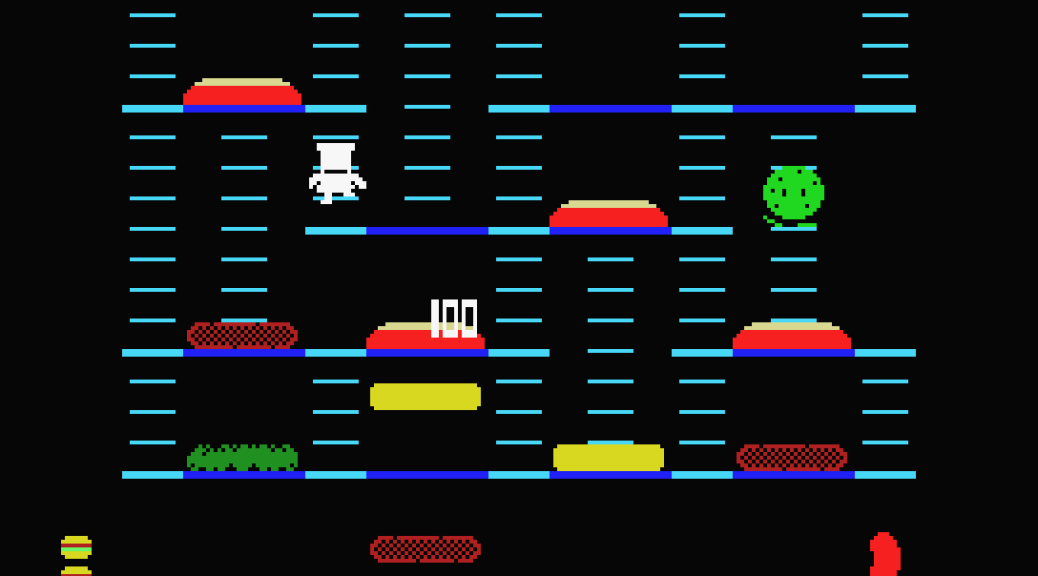
BurgerTime for PC MS-DOS was released by Mattel Electronics in 1982* and it is on a par with the Apple II version – at least graphically – and plays extremely well.
It might look very chunky, but BurgerTime on the Mattel Intellivision console is a surprisingly authentic representation of the classic arcade original.
The graphics might be a bit indistinct, but the basic BurgerTime gameplay is mostly intact in this supposedly 1982 conversion.
I say ‘supposedly’ because I doubt very much that this Apple II conversion was released the same year as the arcade game. It’s much more likely to have been released in either 1983 or 1984. I’m pretty sure that the majority of the internet are wrong on this and that the ‘1982’ reference goes back to the original arcade game.