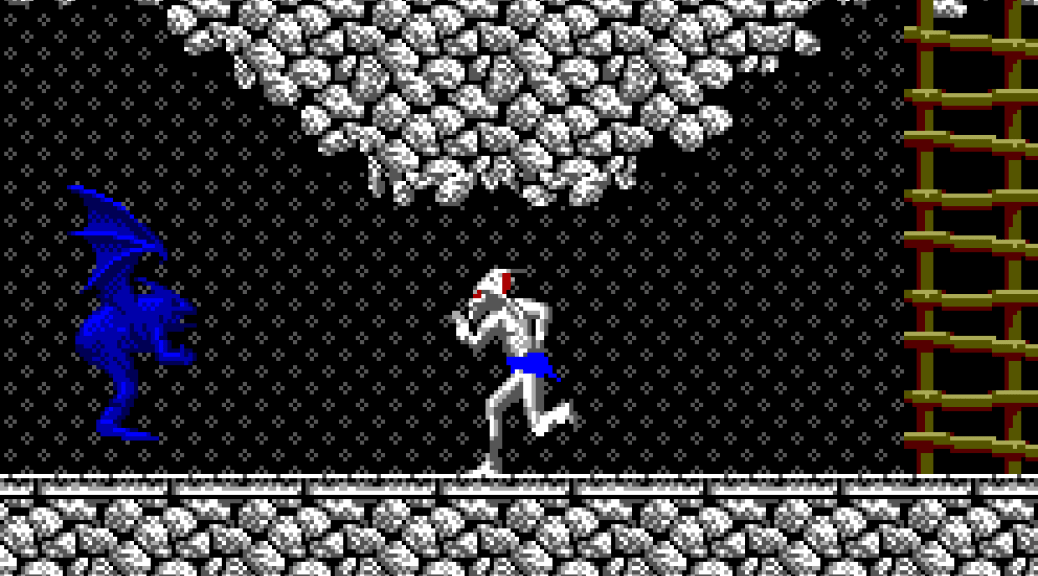
Shadow of the Beast for the Sega Master System was developed by TecMagik and published by Psygnosis in 1992, and this port has some differences to the Amiga original – arguably to its detriment.
Tag Archives: climbing
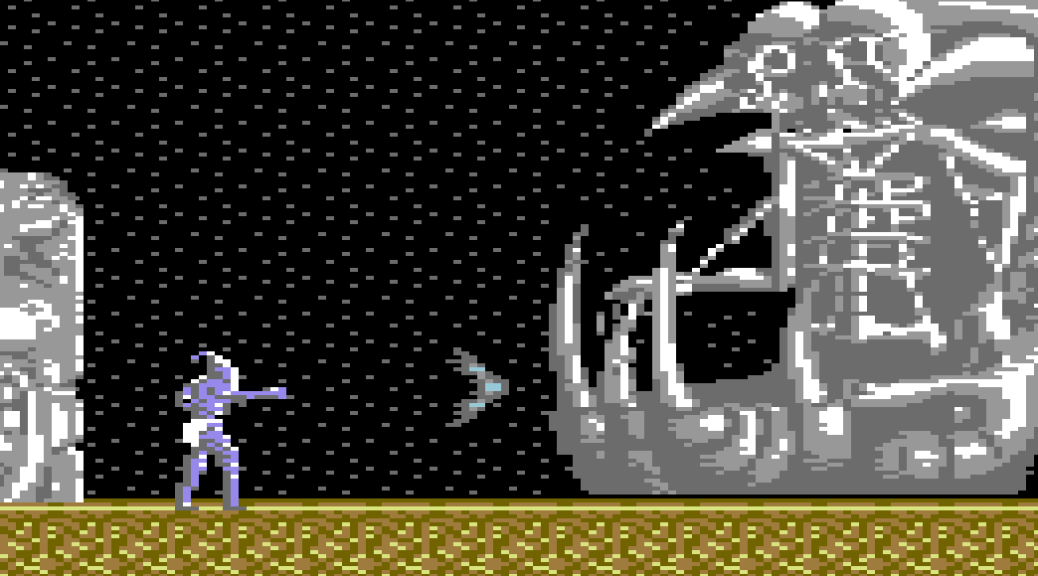
Shadow of the Beast, Commodore 64
The Commodore 64 conversion of Shadow of the Beast was developed by DMA Design and published by Ocean Software in 1990. And it’s a reasonably good port of the scrolling fighting game, with decent graphics and atmospheric music.

Shadow of the Beast, Super Nintendo
***CANNED GAME***
The Super Nintendo version of Shadow of the Beast was prefixed with the word “Super” to differentiate it from other ports, and… it was cancelled before release and never officially made it out. It was developed by IGS (Information Global Service) and an unfinished prototype of the game was leaked in 1993.

Shatterhand, NES/Famicom
Shatterhand is a scrolling action game in which you play a young police officer – called Steve Hermann – who has lost his arms and has had them replaced with enhanced, cybernetic limbs, and is in pursuit of a group of military renegades called “Metal Command“.
Shatterhand was developed by Natsume and originally published for the Nintendo Famicom by Angel under the title of “Tokkyū Shirei Soruburein” in 1991. That version of the game is based on the Japanese TV series “Super Rescue Solbrain“. The US and European versions, published by Jaleco, removed the licensed elements, changed the backstory, and re-titled the game as “Shatterhand” for Western audiences. One level was also completely changed – from a carnival level in the Japanese version, to a submarine level in the American version. The gameplay in both versions is identical, though.

Shadow of the Beast, ZX Spectrum
Shadow of the Beast is a scrolling fighting/action game originating on the Amiga. It was enough of a success for publisher Psygnosis to convert it to various home computers and consoles. The ZX Spectrum version was developed by Gremlin Graphics and published in 1990, and it is not a bad port overall.

Ghouls ‘N Ghosts, Sega Master System
The Sega Master System version of Capcom‘s classic arcade game, Ghouls ‘N Ghosts, was developed and published by Sega in 1989, and it is a cut-down version of the original and is also easier to play.

Shadow of the Beast II, Amiga
In Shadow of the Beast II you again play as ‘Aarbron‘, the bipedal being who was turned into a half-beast by the evil wizard Maletoth (who you defeated in the first Shadow of the Beast), and who is now in half-beast, mostly human, form and who is searching for his kidnapped sister.

Shadow of the Beast, Amiga
Shadow of the Beast is a side-scrolling action game developed by Reflections and published by Psygnosis in 1989. When the game first came out it was praised for its graphics, but not for its gameplay, which is frankly paper thin.

Akumajō Dracula, X68000
The 1993 Sharp X68000 version of “Akumajō Dracula” is arguably the best version of the first Castlevania game available, with improved graphics and sound, and redesigned gameplay to accomodate new and more dramatic situations.
Also known as “Vampire Killer” in Europe; also known as “Castlevania” in North America; but known in its native Japan as “Akumajō Dracula“, this is an updated remake of the first game in the Castlevania series. And it is known for being two things: 1. REALLY GOOD, and 2. REALLY HARD!

Vampire Killer, MSX
Konami‘s “Akumajō Dracula” was first released in 1986 for the MSX2. It helped set the template for a series that is still going (relatively) strong to this day – the Castlevania series.
This MSX game was also the first game in the Castlevania series to be given an English language release, and it was released in 1987 in Europe under the title of “Vampire Killer“, which then changed to “Castlevania” when the North American NES version of this game was released on cartridge.
 The King of Grabs