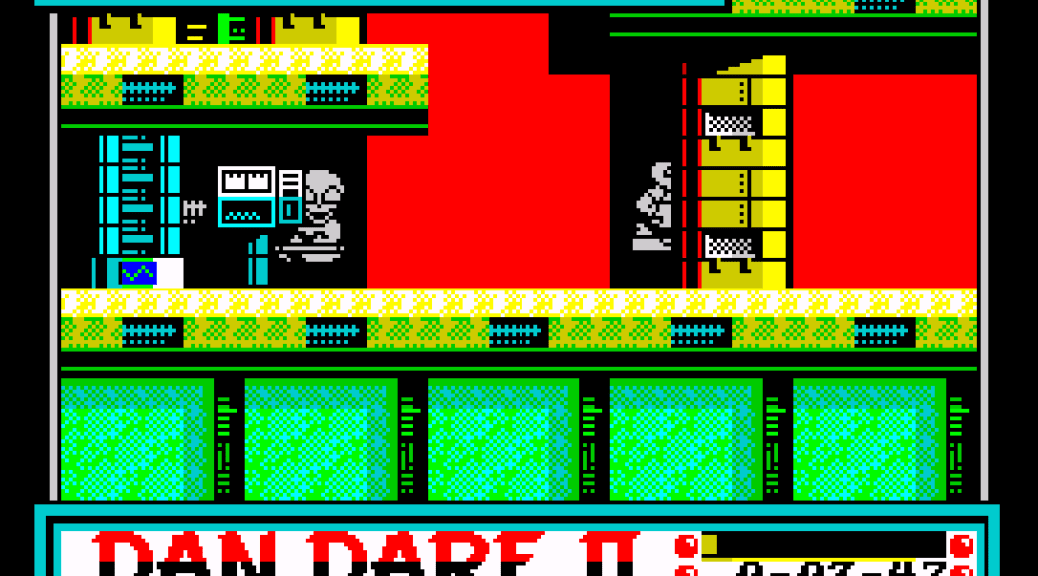
This 1988 sequel to Dan Dan: Pilot of the Future was again developed by Gang of Five and published by Virgin Games.
Tag Archives: 8-bit

Dan Dare: Pilot of the Future, ZX Spectrum
Developed by Gang of Five in 1986, Dan Dare: Pilot of the Future is a simple run-and-gun platform shooter based on the famous character from Britain’s famous science fiction comic, Eagle.

Lunar Jetman, BBC Micro
The BBC Micro conversion of Ultimate‘s classic Lunar Jetman is a very good one, using a high res display mode for the graphics, which are mostly monochrome (just like the Spectrum original).

Inside Outing, ZX Spectrum
The ZX Spectrum conversion of Michael St. Aubyn‘s Inside Outing was programmed by Pamela Roberts with graphics by Mike Smith.
Inside Outing, Commodore 64
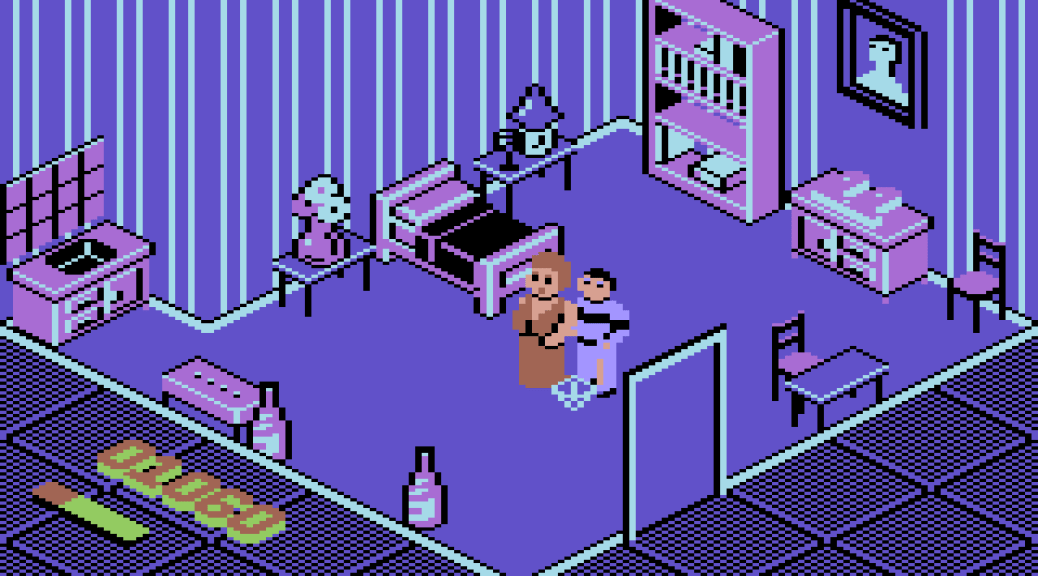
The Commodore 64 version of Inside Outing features graphics by the game’s original designer – Michael St. Aubyn – although the coding itself was done by Timedata/Pamela Roberts.

Inside Outing, Amstrad CPC
Inside Outing is an interesting isometric action/adventure game initially published by The Edge in 1988. It was designed by Michael St. Aubyn and converted to a number of different platforms, with this Amstrad version being the original.

Spindizzy, Apple II
I’m not sure if it’s the game or the emulator – or something else – but controlling the spinning top-like device, GERALD, in the Apple II version of Spindizzy is like trying to navigate Cape Horn in a rowing boat in the depths of winter. It’s suicidal…

Spindizzy, Commodore 64
In my mind: one of the best 8-bit games ever made. Spindizzy is part Marble Madness tribute; part completely original game, with you controlling a spinning top-like device, called GERALD, exploring a large, isometric game world that is suspended in space.
Sabre Wulf, Commodore 64
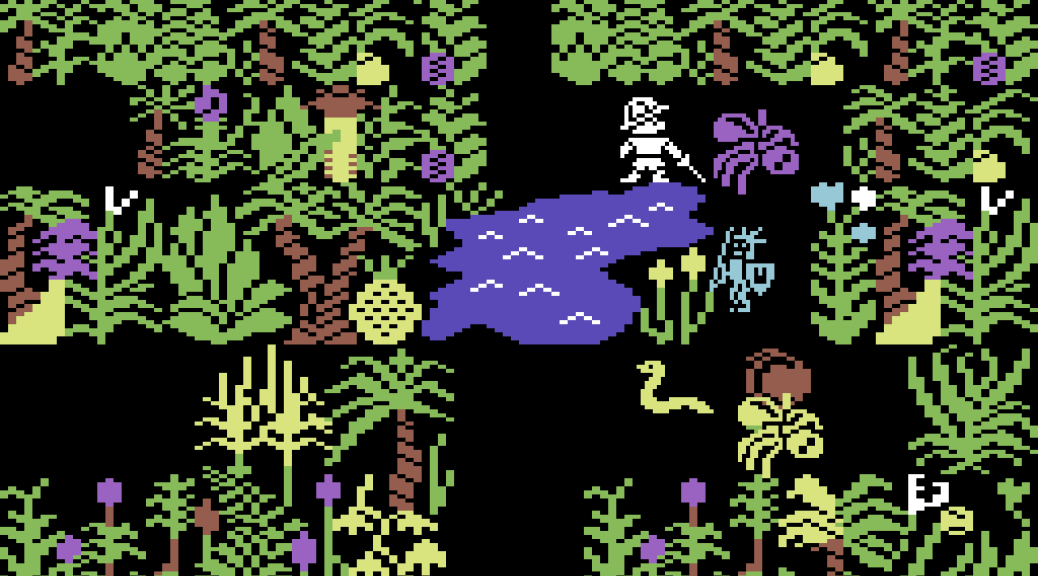
The Commodore 64 version of Ultimate‘s classic Sabre Wulf was made by Greg Duddle of Mr. Micro for Firebird Software, who published the game in 1985.
Sabre Wulf, Amstrad CPC
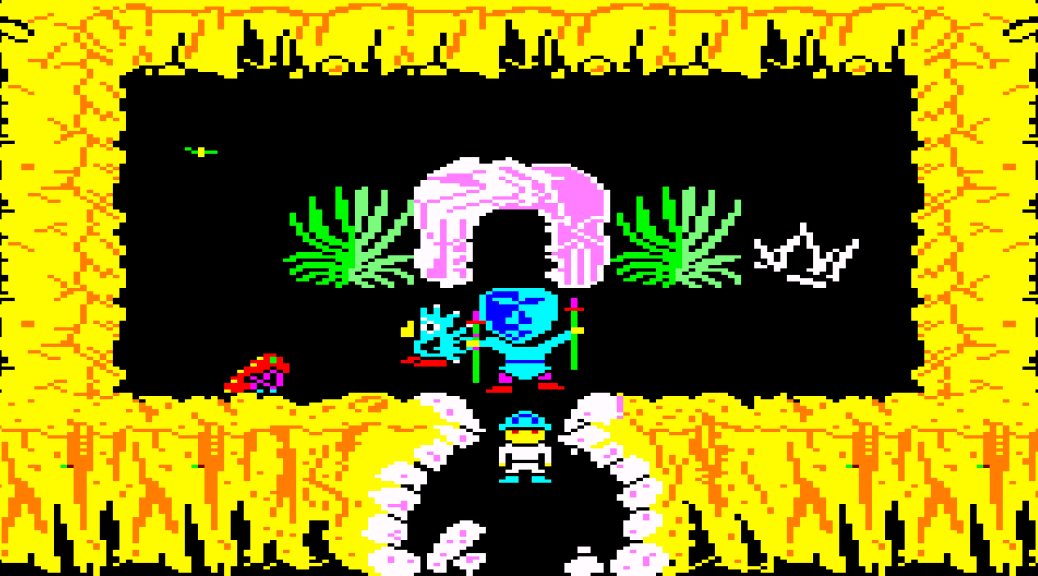
The Amstrad conversion of Sabre Wulf features the same chunky graphics as the BBC version, except with some extra colouring. It does make make a difference though. The Amstrad version doesn’t look quite as harsh as the BBC version.
 The King of Grabs