
This 2005 tennis game is one of my favourite sports games of all time.
Mario Tennis: Power Tour was developed by Camelot for Nintendo and is known as Mario Power Tennis in Europe and Australia, but I’m sticking to the original title.
Video gaming systems.
This 2005 tennis game is one of my favourite sports games of all time.
Mario Tennis: Power Tour was developed by Camelot for Nintendo and is known as Mario Power Tennis in Europe and Australia, but I’m sticking to the original title.
Sega‘s Pengo is an arcade classic from 1982 and is a block-pushing maze game starring a cute penguin called – you guessed it – Pengo.
Millipede is a direct sequel to Atari‘s Centipede and was first distributed into video game arcades in 1982.
It’s basically the same trackball-controlled gameplay as before, but with a few changes and enhancements.
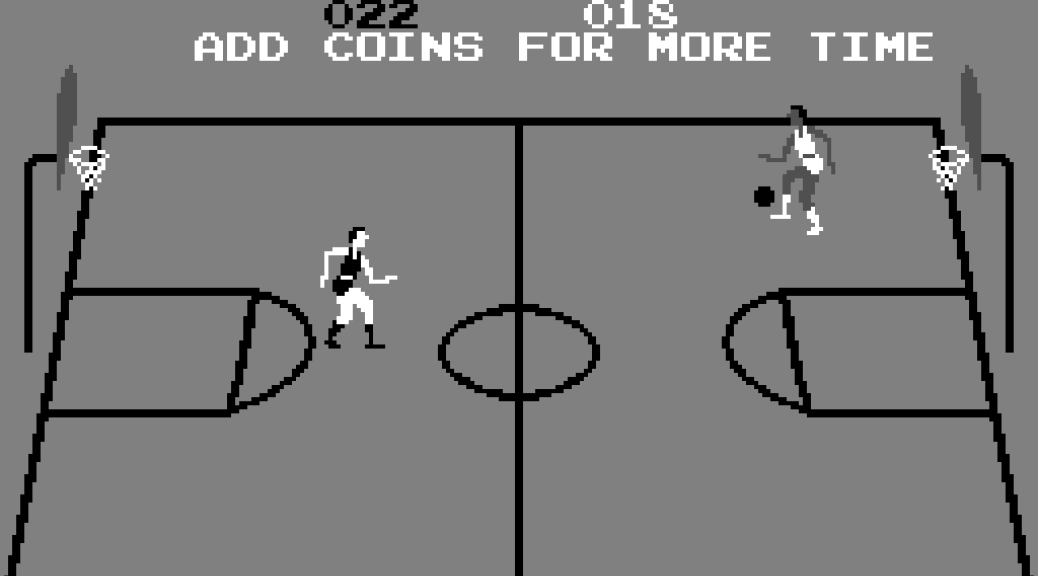
This is the 1979, black and white arcade game, Basketball, as developed and manufactured by Atari Inc. It had two trackballs on the cabinet – one for each player.
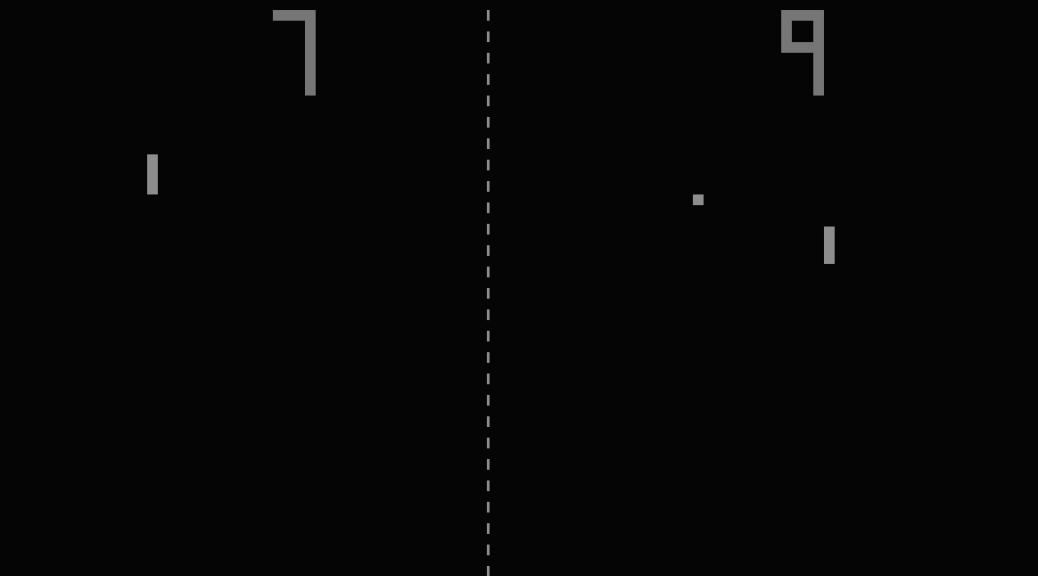
Atari‘s Pong is a legendary black and white ‘bat and ball’ game from 1972, and was one of the earliest video game successes.
It’s basically a two-player table tennis simulation, with two ‘bats’ on either side of the screen, moving vertically to return a bouncing ball. If you fail to return the ball your opponent scores a point, and the first to eleven points wins.
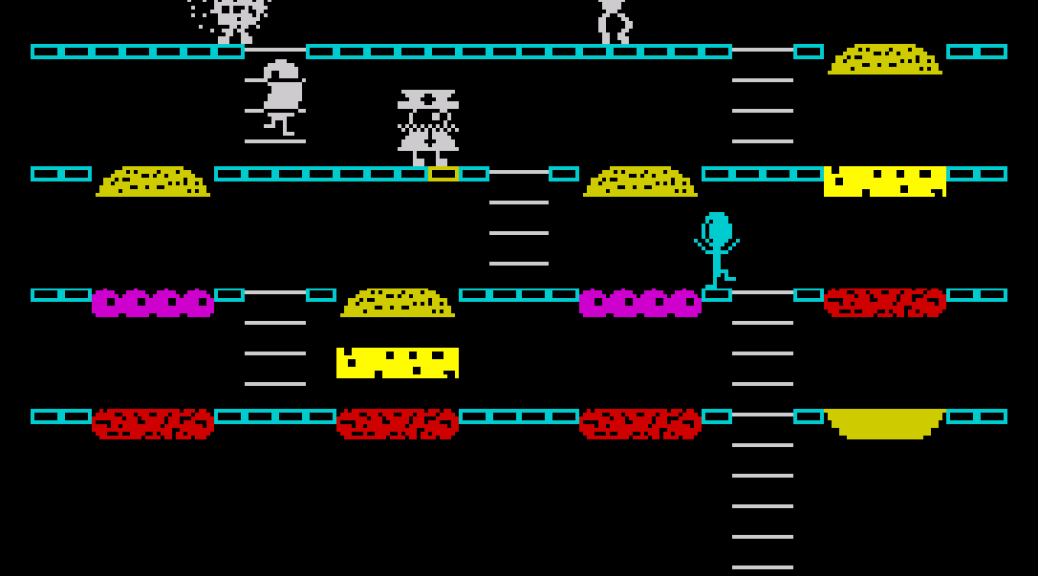
It could be argued that the Oric version of Mr. Wimpy is better than the ZX Spectrum version. It does look slightly better graphically, but I think that a more diplomatic solution would be to say that both are as bad as each other…
Mr. Wimpy is an early ZX Spectrum game from Ocean Software, first published in 1984. It is based on (and licensed from) the Wimpy chain of restaurants – in particular their mascot: Mr. Wimpy. Wimpy restaurants were more widespread in the 1980s than they are today, but this was still a surprising release from Ocean.
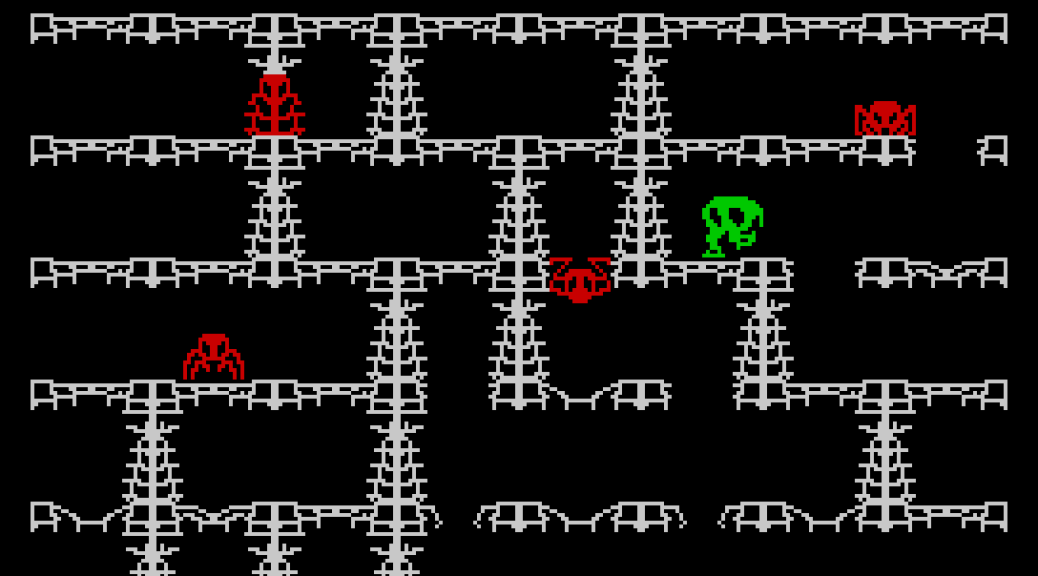
Konami‘s 1981 arcade classic, Amidar, is a maze game with a difference.
The third and final Horace game on the ZX Spectrum, written by William Tang and published by Sinclair/Psion in 1983.
Hungry Horace author, William Tang, also produced this sequel – Horace Goes Skiing – the same year as its predecessor: 1982. It was again published by Sinclair/Psion.
This one is part Frogger clone and part skiing game, and is slightly more playable and enjoyable than its predecessor.





 The King of Grabs