
Herbert’s Dummy Run is the fourth game in the Wally Week series and was published by Mikro-Gen in 1985. It was written by Dave Perry and features Herbert Week – Wally’s baby son.
Category Archives: ZX Spectrum
ZX Spectrum games.

Pyjamarama, ZX Spectrum
Pyjamarama is the 1984 follow-up to Automania, and features the same lead character – Wally Week. Which makes it the second game in the Wally Week series.
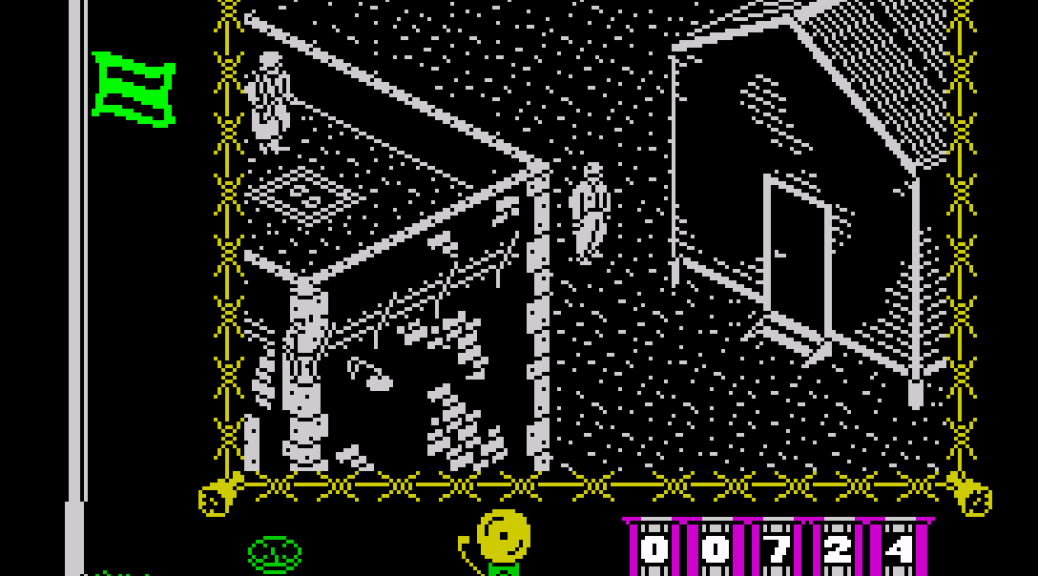
The Great Escape, ZX Spectrum
Denton Designs made this smart little POW game for Ocean Software in 1986. It basically re-enacts the risky life of being a Prisoner of War during the Second World War, with a planned escape being top of the list of things to do, and is loosely-based on the 1963 film starring Steve McQueen.

Ad Astra, ZX Spectrum
This early Spectrum shooter by Gargoyle Games might look a bit archaic by today’s standards, but back in 1984 when it was first released it really set the gaming world alight. Well, the Spectrum gaming world – at least…

Saboteur II: Avenging Angel, ZX Spectrum
This 1987 sequel to the pioneering Saboteur is so much bigger in scope than its predecessor, but retains much of what made it good in the first place.

Saboteur, ZX Spectrum
Written by Clive Townsend and published by Durell Software in 1985, Saboteur is a stealth action platform game that was something of a hit with ZX Spectrum users back in the day.

Amaurote, ZX Spectrum
Amaurote is a strange, isometric action game, developed by Binary Design and published by Mastertronic in 1987. It first appeared on the ZX Spectrum and was later ported to other systems.

Abu Simbel Profanation, ZX Spectrum
This 1985 release from Spanish company Dinamic Software is an obscure ZX Spectrum platform game about Egyptian tomb-raiding.

Travel With Trashman, ZX Spectrum
The sequel to the classic Trashman is another excellent ‘leftfield’ Spectrum game from Malcolm Evans and New Generation Software.
In Travel With Trashman you’re again controlling Trashman – a bin man – and one who is on holiday and also who is incapable of walking away from litter he finds on the ground.

Dan Dare III: The Escape, ZX Spectrum
One of Dave Perry‘s early commercial games, the third Dan Dan Spectrum game was developed by Probe Software, instead of Gang of Five (who did the first two Dan Dare games), and published by Virgin Games in 1990.
 The King of Grabs