
Written by Siegfried Kurtz and published exclusively for the ZX Spectrum in 1986 by Addictive Games, Kirel is a simple but playable isometric platform/puzzle game with attractive graphics and presentation.
Tag Archives: 8-bit

I, of the Mask, ZX Spectrum
I, of the Mask is a strange 3D action game written by Ant Attack author, Sandy White. It was published in 1985 by Electric Dreams Software, and it still confuses games-players to this day…

Total Eclipse 2: The Sphinx Jinx, ZX Spectrum
Published by Incentive Software in 1991, Total Eclipse 2: The Sphinx Jinx is a direct follow-up to the 1988 Freescape classic, Total Eclipse.
Continue reading Total Eclipse 2: The Sphinx Jinx, ZX Spectrum

Total Eclipse, ZX Spectrum
The ZX Spectrum version of Total Eclipse was the first version of the game released.
Using the legendary Freescape Engine, Total Eclipse is an Egyptian-themed exploration/puzzle game set in a primitive 3D world. Primitive because it was one of the first ever games to allow games-players to explore a 3D world in this way, and it worked quite well, in spite of the low frame rate and slowdown.
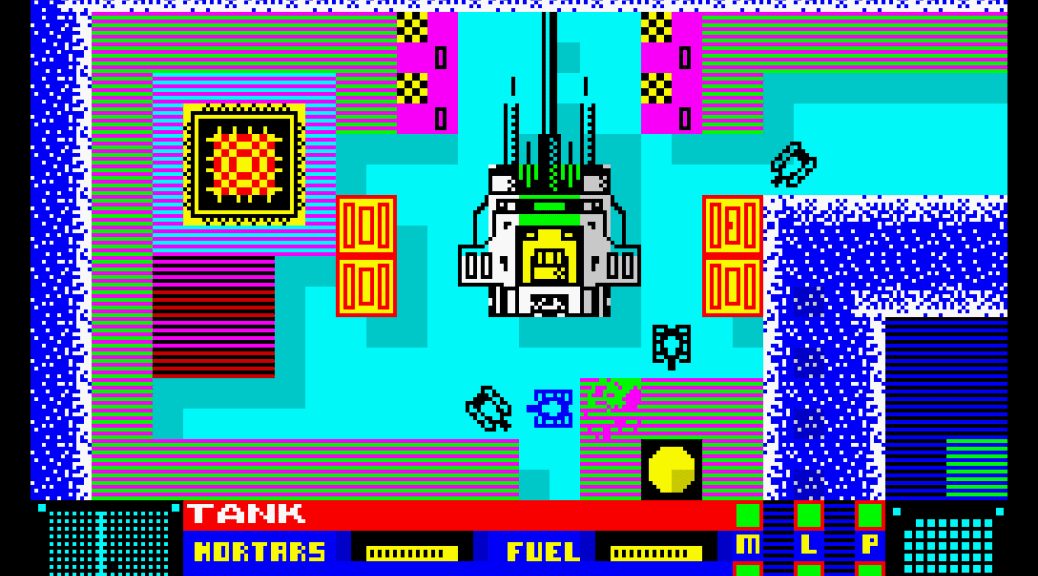
Panzadrome, ZX Spectrum
Developed by The RamJam Corporation and published by Ariolasoft in 1985, Panzadrome is an overhead maze shooter involving tanks, and it is not a bad game, as far as Speccy tank/maze games go.

Tribble Trubble, ZX Spectrum
Written by Jim Scarlett and published by Software Projects in 1984, Tribble Trubble was a minor hit at the time of release, garnering some critical acclaim (I remember it getting a Smash in an early issue of Crash magazine, which was a big deal) and doing okay sales-wise.
Looking at it now: it still has charm, and some appeal, and is still worth playing – if you like tearing your hair out trying to beat insignificant tasks… 🙂

Hercules, ZX Spectrum
The ZX Spectrum also had a version of Steve Bak‘s bonkers C64 platform game, Hercules. It was written by Quantum Productions and published by Alpha Omega Software in 1986.
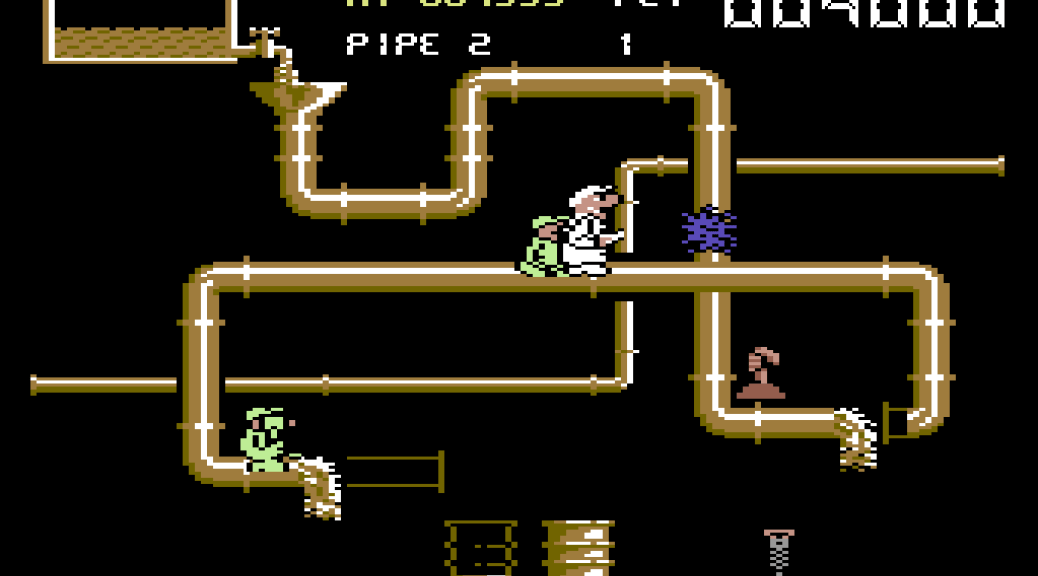
Super Pipeline II, Commodore 64
The sequel to the superb Super Pipeline is more of the same frantic pipe-fixing action, with you playing a foreman, directing helpers to fix holes in order to keep the water flowing.
Actually, is it water, or is it oil? I don’t know…
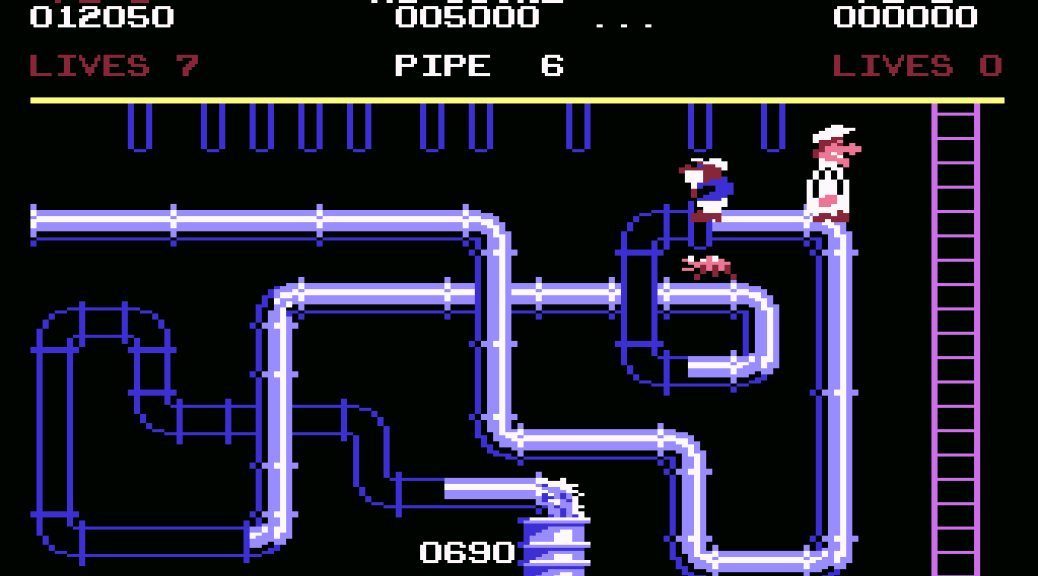
Super Pipeline, Commodore 64
In the early 1980s a Bridlington-based company called Taskset made some stand-out Commodore 64 games and Super Pipeline is one of their best.
In fact, only the sequel – Super Pipeline II – is on a par with this entertaining game, at least as far as Taskset output is concerned.

Tau Ceti, Commodore 64
John Twiddy‘s C64 conversion of Pete Cooke‘s classic space shooter is arguably even better than the Spectrum original.
Graphically it’s a little chunkier, but the extra colours make a difference.

