
The 1986 Commodore 64 version of Cobra – based on the Sylvester Stallone film of the same name – is infamous for its sheer awfulness. It is based on the more successful ZX Spectrum game, designed and programmed by the late Jonathan Smith, but has lost a great deal in translation to the C64.
Tag Archives: 8-bit

Batman, Amstrad CPC
The Amstrad CPC version of Jon Ritman and Bernie Drummond‘s classic isometric platform game is arguably even better than the ZX Spectrum original it is based upon. Mainly because of the extra colours, which make a big difference.

Chip Factory, Commodore 64
Chip Factory, by Supersoft, was first released for the Commodore 64 in 1984 and is a BurgerTime variant that at least tries to do something different with the concept of dropping objects down a series of platforms and ladders.

Beef Drop, Atari 8-Bit
Beef Drop is a homebrew BurgerTime clone programmed by the late Ken Siders and released through AtariAge in 2005. As far as home ports of Data East‘s classic arcade game go, it’s arguably one of the most authentic.

Burger Time ’97, Commodore 64
Burger Time ’97 is another unofficial Commodore 64 clone of Data East‘s classic arcade game, BurgerTime, and it is arguably better than most other rip-offs of the famous burger-dropping platform game – at least on 8-bit home computers. It was programmed by Ruben Spaans, with graphics by Roy Widding, and was first published by Loadstar in 1997.

Burger Time, Commodore 64
This Commodore 64 clone of Data East‘s classic BurgerTime was coded by Lee Braine, with music by Chris Cox, and was first published Interceptor Software in 1984.

Bear Bovver, ZX Spectrum
Bear Bovver was created by well-known coder Jon Ritman, with music by Guy Stevens, and was published for the ZX Spectrum by Artic Computing in 1983. It’s basically a BurgerTime clone, except you’re dropping batteries down a series of platforms, onto a car at the bottom of the screen, instead of burger buns and patties onto plates.

Mr. Wimpy, Commodore 64
The Commodore 64 version of Ocean Software‘s Mr. Wimpy was programmed by David Selwood and was first published in 1984. And unfortunately this simple BurgerTime rip-off has a similar problem to the terrible BBC Micro version, although this time it’s an issue getting on to ladders – not off of them (which is a big problem in the BBC version). In the C64 version you’ll lose lives unnecessarily, because the fast-moving enemies will often get you while you’re struggling to line yourself up to climb a ladder. Which can be hugely frustrating. It’s not quite as bad as the BBC version, but it’s still a tangible problem with the controls.

Mr. Wimpy, BBC Micro
The BBC Micro conversion of Ocean Software‘s infamous BurgerTime rip-off, Mr. Wimpy, was coded by Richard Kay and first released in 1984. And – without any hesitation – I can say that it is absolutely terrible.
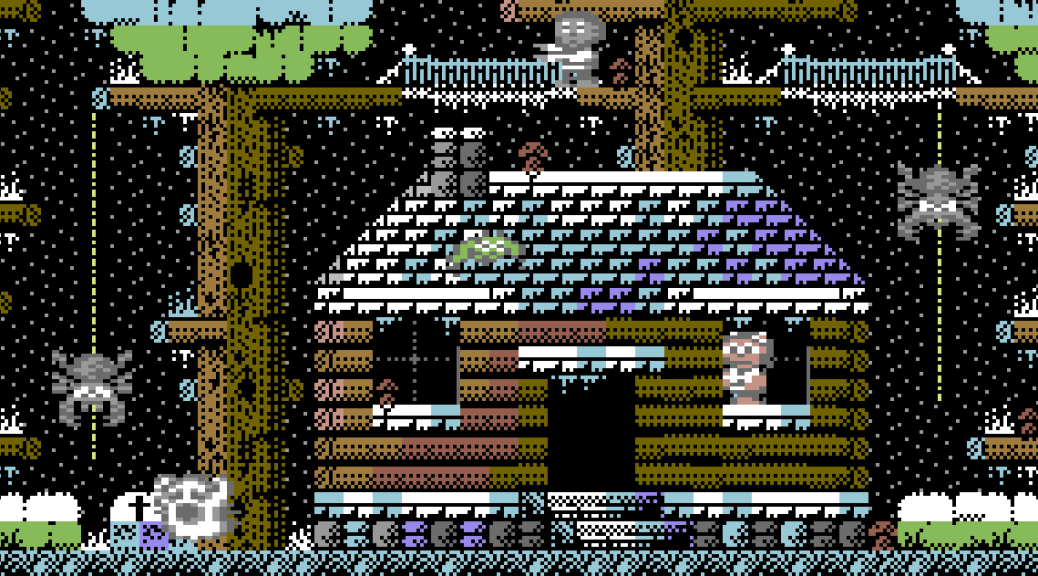
Chiller 2, Commodore 64
Chiller 2 is a homebrew Commodore 64 release based on the Mastertronic game, Chiller. It was created by Andy Vaisey and first released in 2020.

